Can Spotify Fitness and its new Peloton partnership turn a sharp share-price pullback into the next leg of Spotify’s growth story?

How is the market reacting today?
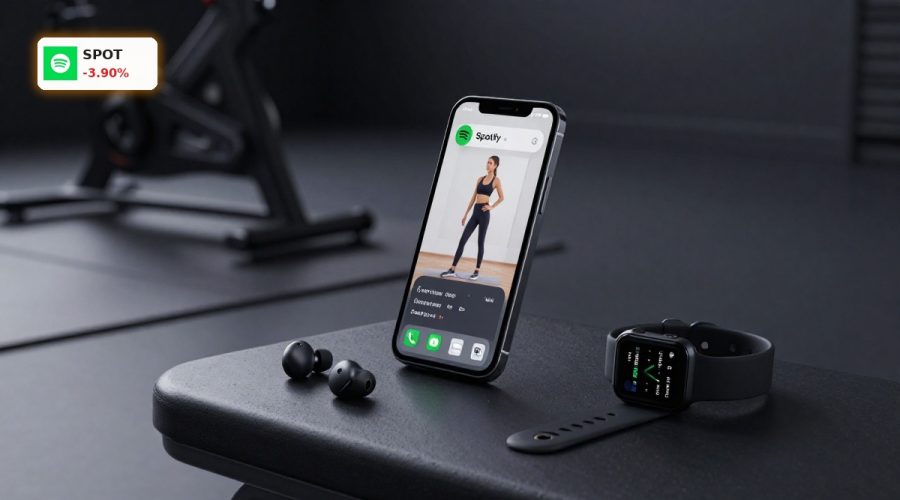
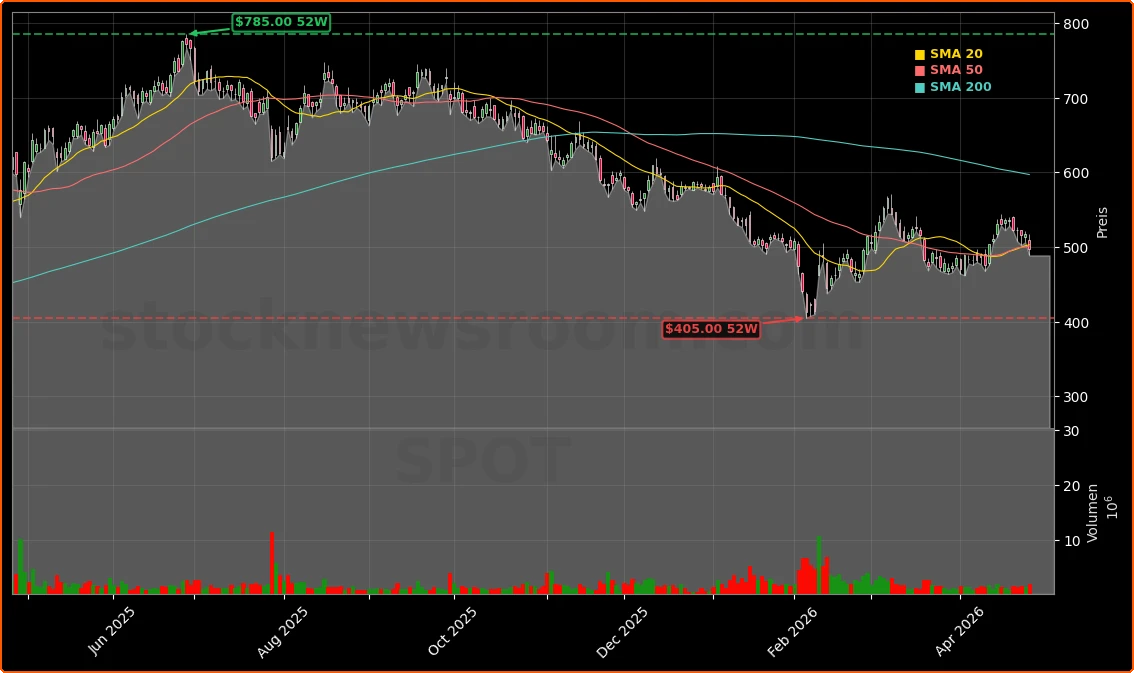
Spotify Technology S.A. (SPOT) fell about 3.9% to $497.80 on Monday, retreating from a previous close of $519.49 as traders positioned ahead of Tuesday’s pre‑market Q1 2026 earnings report. The pullback leaves the stock well below last year’s peak but still up sharply versus 2024, after a multi‑year rally that saw investors reward improving margins, price hikes and a push into podcasts and audiobooks. Some technicians note the stock has been consolidating after its surge, with key resistance zones flagged around $550 and deeper support in the low‑$400s.
Valuation is increasingly in focus. IndeRes recently downgraded SPOT from Buy to Accumulate, maintaining a $595 price target and arguing that the prior rally compressed upside potential even as the fundamental story remains intact. Other research outfits remain constructive, pointing to rising free cash flow, share buybacks and the potential for higher long‑term operating margins if engagement from initiatives such as Spotify Fitness keeps improving.
What exactly is Spotify Fitness?
The new Spotify Fitness category formalizes how users already behave on the platform: more than 150 million fitness‑focused playlists exist, and roughly 70% of users say they work out at least once a month. Now, instead of just music mixes, Spotify is layering in structured, instructor‑led workout sessions and guided wellness content that can be streamed or downloaded for offline use. The experience combines audio and video, positioning the app as a companion for strength training, Pilates, barre, yoga, stretching, meditation, floor cardio and outdoor runs or walks.
Spotify Fitness will also feature content from well‑known creators such as Yoga With Kassandra, Cailin K’eli Yoga, Sweaty Studio, Chloe Ting, Pilates Body by Raven, Abi Mills Wellness and Sophiereidfit. Classes are initially offered primarily in English, with additional options in Spanish and German, and are accessible to both free and Premium users. For the core Premium base, the Peloton catalog is the main draw; for freemium users, curated workout playlists and creator content expand the top of the funnel and add new advertising inventory.
How does the Peloton partnership work?
Peloton Interactive is the launch partner for the new category and supplies more than 1,400 video and audio classes to Premium subscribers in most countries where Spotify operates. The library spans strength, Pilates, barre, yoga, stretching, meditation, floor cardio and outdoor running and walking, fronted by Peloton’s roster of globally known instructors. New classes will be added regularly, and all will live natively in Spotify’s interface, reducing friction for users who already open the app to work out with music.
Financial terms of the deal have not been disclosed, but strategically the tie‑up is significant for both sides. Peloton gets instant international exposure beyond its shrinking base of hardware subscribers, supporting its shift toward a more diversified, content‑ and software‑driven business. Spotify, meanwhile, uses Peloton’s brand and production quality as an anchor tenant for Spotify Fitness, helping to legitimize the new wellness push and differentiate its offering from rivals like Apple Fitness+ that are tightly bound to specific devices or subscription bundles.
What does this mean versus Apple and other rivals?
For U.S. investors, the Spotify Fitness rollout intensifies competition with Big Tech in a key engagement category. Apple already sells Fitness+ alongside Apple Music and Apple Podcasts inside its ecosystem, while YouTube and other Alphabet properties compete heavily for workout and wellness viewing time. Unlike Apple’s subscription‑only model, Spotify’s strategy blends a global freemium tier with Premium upsells, using fitness both as an engagement lever and a way to justify recent and future price hikes on subscriptions.
Strategically, the company is betting that deeper wellness use cases can lengthen daily session times, support higher advertising yields, and improve retention as it nudges more users into higher‑priced plans. Recent commentary from institutional investors, including Baron Capital’s Baron Focused Growth Fund, has emphasized that SPOT’s long‑term margin story rests on exactly this kind of high‑margin, engagement‑rich vertical layered on top of its music core. If Spotify Fitness successfully keeps users inside the app instead of defecting to closed ecosystems from Apple or hardware‑tied platforms like Peloton’s own, the initiative could strengthen SPOT’s negotiating hand with labels and advertisers.
How does fitness fit into the earnings story?
Wall Street expects Spotify to show strong year‑over‑year gains in both revenue and EPS when it reports Q1 2026, driven by price increases, steady user growth and better monetization of podcasts and audiobooks. Analysts tracked by ChartMill carry an average SPOT price target around the mid‑$600s, implying double‑digit upside from current levels if management can sustain margin expansion. GuruFocus recently highlighted a bullish case that sees gross margins climbing above 35% by 2028, underpinned by content diversification and operating leverage across the platform.
The new fitness vertical adds another potential revenue pillar. In the near term, the contribution is more about engagement and ad inventory than direct subscription upsell, but over time Spotify could layer in premium class tiers, branded sponsorships, in‑app purchases or partnerships with hardware makers. For now, investors will be listening closely on Tuesday’s call for any color on early usage metrics, monetization plans around Spotify Fitness, and how management views competition from NVIDIA-powered AI recommendation engines and rival services as it personalizes workouts and wellness journeys.
Related Coverage
For a deeper dive into whether this wellness strategy can move the financial needle, readers can explore our companion analysis “Spotify Fitness -4.8%: Can Wellness Pivot Pay Off?”. That piece examines how the Peloton partnership, emerging creator ecosystem and pricing strategy might translate into higher margins and long‑term shareholder value.
Today, we are expanding Spotify to become a true daily wellness companion.— Roman Wasenmüller, VP Global Head of Podcasts at Spotify
In summary, Spotify Fitness marks a high‑profile step in Spotify’s evolution from a music app into a broader wellness and lifestyle platform at a time when SPOT shares have pulled back ahead of earnings. For U.S. and global investors, the initiative adds another vector for engagement and monetization that could support the bullish margin and growth forecasts many analysts still hold. The next few quarters, starting with Tuesday’s report, will reveal whether this fitness push can become a durable growth driver and help SPOT close the valuation gap implied by Wall Street’s price targets.