Has Uber Regulation finally removed the biggest risk hanging over the stock just as delivery growth and robotaxis accelerate?

What Does Uber Regulation Mean for U.S. Investors?
The resolution of California’s SB 623 marks a pivotal inflection point for Uber Technologies, Inc. Under the agreement, Uber avoids reclassification as a public transit provider — preserving its asset-light, platform-based operating model — and instead implements annual criminal background checks targeting violent offenses, DUIs, and sexual misconduct. Crucially, medical liability caps have been set at regional averages, eliminating unpredictable jury verdict exposure. This removes the single largest overhang on U.S. earnings visibility and capital allocation flexibility. For investors holding Uber in S&P 500 and NASDAQ-focused portfolios, the settlement validates the company’s path to sustained free cash flow generation — now running at over $3 billion annually — and supports its $5 billion share repurchase program authorized in Q1 2026.
How Is Uber Eats Outpacing DoorDash and Delivery Hero?
Uber Eats is no longer just food — it’s becoming America’s on-demand convenience layer. Since January 2026, Uber has added over 5,000 retail locations, including Kiehl’s, FedEx Office, Blick Art Materials, Academy Sports + Outdoors, and Choice Pet — all accessible via the Uber app with Uber One’s $0 delivery fee benefit. This multi-category strategy directly challenges DoorDash’s food-only focus and Delivery Hero’s fragmented international footprint. Unlike competitors, Uber leverages its mobility network for cross-platform logistics, enabling same-hour delivery of non-perishables, beauty, and pet supplies without dedicated dark stores. Revenue from non-food retail deliveries grew 42% year-over-year in Q1 2026 — outpacing food delivery growth by 18 percentage points — and now contributes 22% of Delivery segment gross bookings.
Are Uber’s Robotaxi Partnerships Ready for Scale?
Uber Regulation certainty in the U.S. coincides with aggressive international robotaxi deployment. In London, Uber will launch the UK’s first public robotaxi service with Wayve’s AI system — with human operators onboard initially — pending final regulatory sign-off expected this summer. In Munich, Uber and Autobrains are integrating their ‘agentic AI’ stack on NVIDIA’s Drive Hyperion platform, while in Madrid, Uber and WeRide begin commercial operations this fall under government partnership. Rothschild & Co Redburn recently reaffirmed its Buy rating on Uber, lowering its price target from $120 to $112 — citing “increased execution risk in AV rollout timelines” but reaffirming Uber’s “irreplaceable platform position” as the dominant mobility aggregator for autonomous fleets. This positions Uber ahead of Tesla’s Full Self-Driving rollout, which remains limited to private vehicle ownership rather than shared, on-demand scale.
Why Is This the Best Technical Setup in Years?
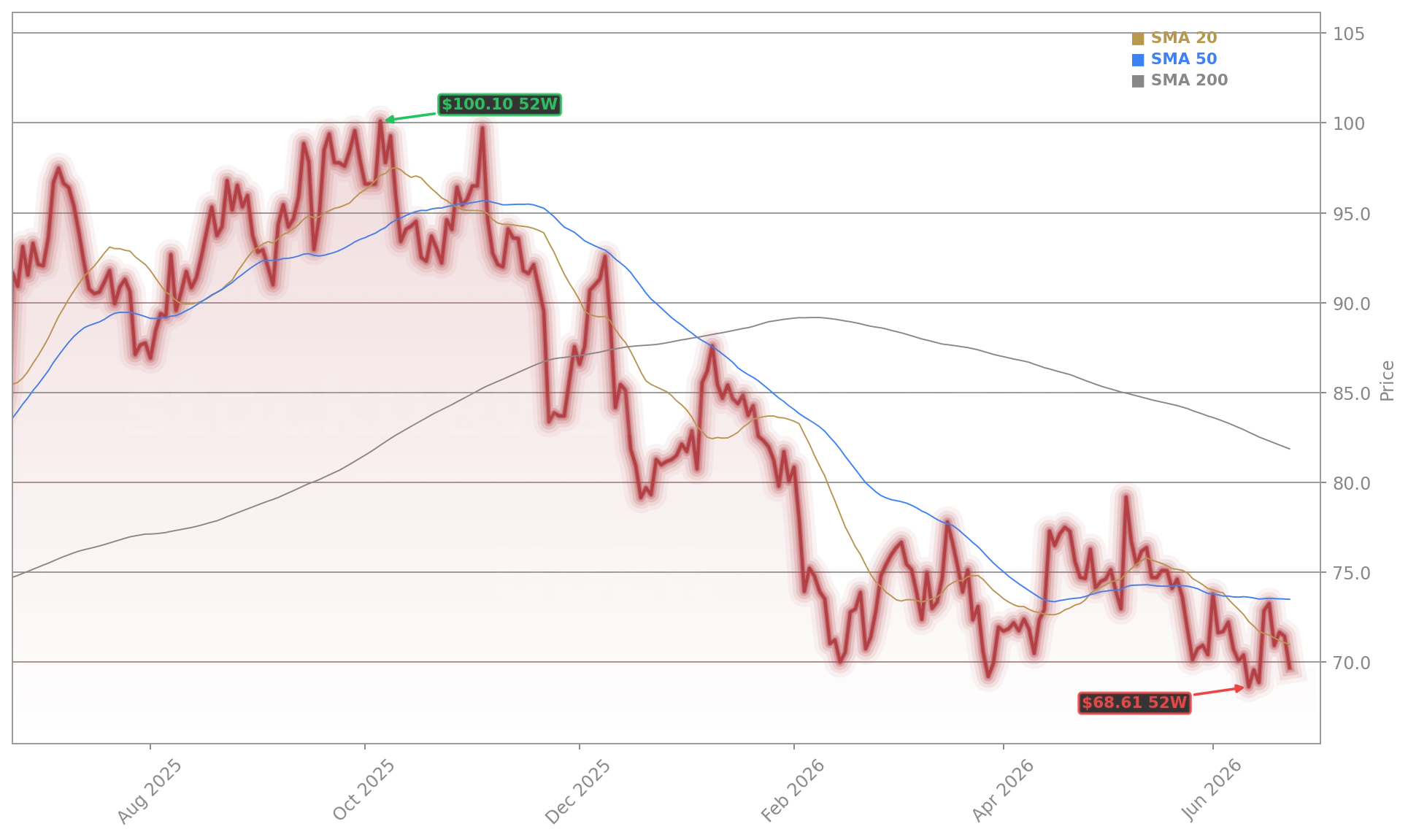
At $74.66, Uber shares have surged 7.15% intraday — breaking above their 50-day moving average and completing a five-wave Elliott correction from $102 to $67. The current rally targets the 38.2% retracement at $82.46, then the 50–61.8% zone between $87.14 and $91.81 — a range aligned with Citigroup’s $90 price target and RBC Capital Markets’ $93 call. The invalidation level remains $67.00: a sustained break below would undermine the bullish wave count. With Q2 2026 earnings due August 5, analysts expect continued margin expansion — Uber Mobility’s adjusted EBITDA margin hit 34% in Q1, while Delivery’s turned positive at 8.2%. That profitability — rare among peers — makes Uber a standout in the NASDAQ’s tech growth cohort.
What Do Pelosi’s Options Say About Confidence?
This marks the first time the general public will be able to hail an autonomous vehicle in the UK.— Kaity Fischer, VP of Commercial and Operations, Wayve
Representative Nancy Pelosi’s May 29, 2026 purchase of 200 Uber call options — granting control of 20,000 shares at a $50 strike through March 2027 — signals strong conviction at a valuation well below current levels. Paired with her $5 million Intel (INTC) options bet, the move underscores institutional confidence in both AI infrastructure and AI-enabled platform execution. While congressional trades aren’t investment advice, Pelosi’s history of market-beating returns — and her timing just before the California settlement — adds qualitative weight to the technical and fundamental setup. Her $50 strike is now $24.66 in-the-money, highlighting how deeply undervalued Uber appeared even two weeks ago.