Can Xiaomi’s surging EV deliveries really justify the latest jump in XIACF, or are investors racing ahead of the fundamentals?

Why did Xiaomi Corporation jump today?
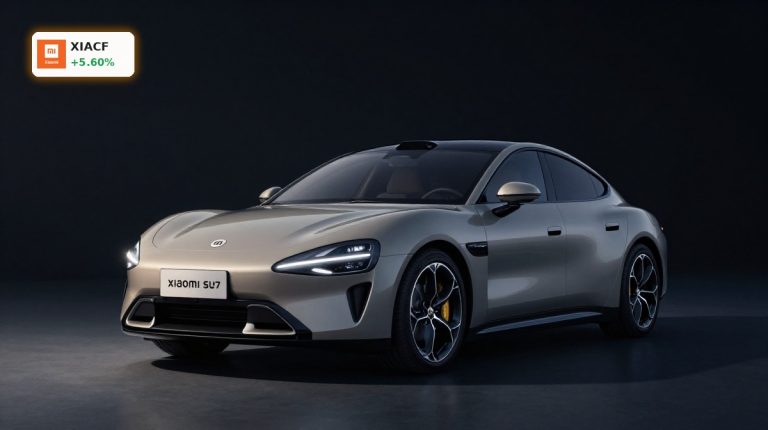
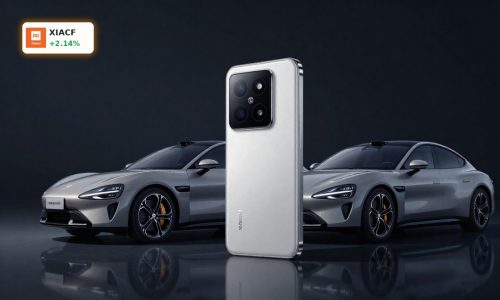
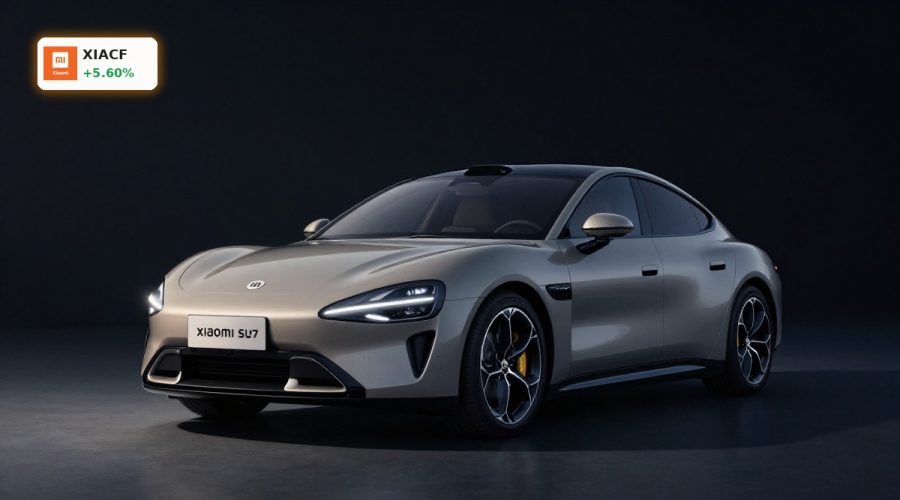
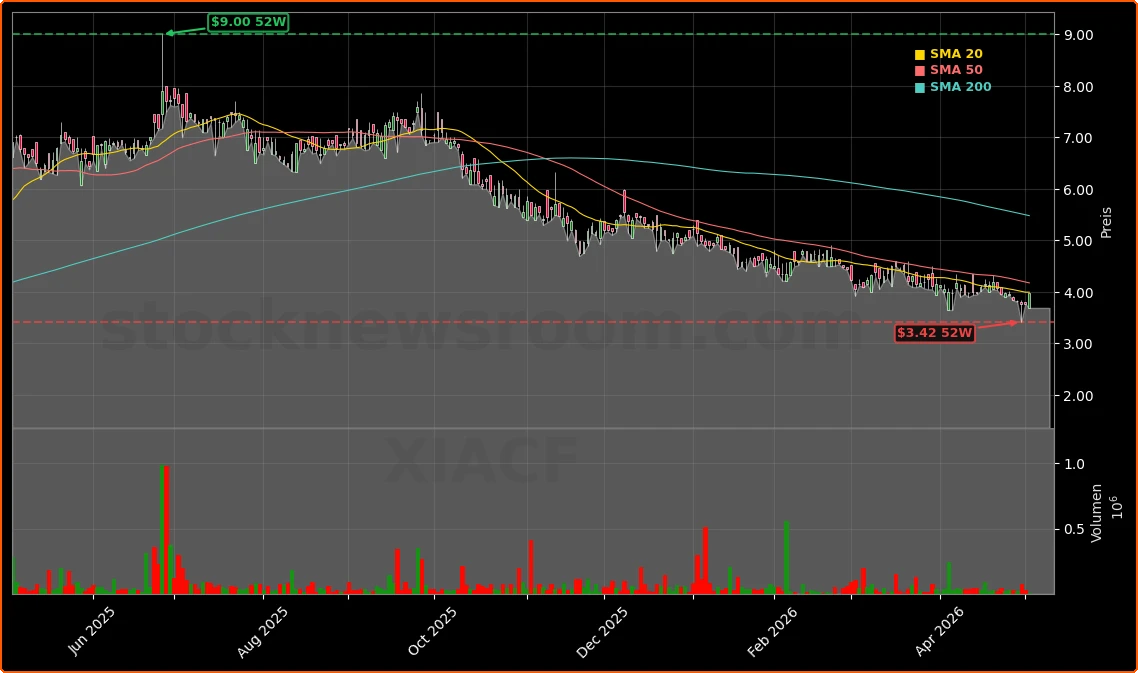
Shares of Xiaomi Corporation (XIACF) traded around $3.98, up about 5.6% from the previous close of $3.77, as investors reacted to a sharp acceleration in the company’s electric-vehicle unit. In Hong Kong, the stock had spiked by as much as 11% in early trading before settling back, but still closed with a strong gain and ranked among the day’s best performers. The move stands out at a time when many China-related names on Wall Street remain under pressure and the NASDAQ’s big AI leaders dominate headlines.
The catalyst: Xiaomi reported that it delivered more than 30,000 EVs in April, a roughly 50% increase versus March and the strongest monthly performance so far in 2026. Cumulative deliveries for the first four months of the year reached about 109,000 units, up roughly 11% year on year, signaling that the company’s EV ramp is gaining traction despite intense pricing battles in China.
How strong are Xiaomi EV Deliveries really?
The latest Xiaomi EV Deliveries numbers are anchored by the SU7, a new-generation electric sedan launched at the end of March. April was the first full delivery month for the model, and CEO Lei Jun highlighted that orders have already surpassed 70,000 units. That order book gives Xiaomi a visible near-term volume pipeline, a key factor for investors comparing it with incumbents such as Tesla or legacy automakers listed on the NYSE and NASDAQ.
To shorten wait times and improve factory efficiency, Xiaomi plans to phase out certain SU7 configurations and concentrate production on higher-volume trims. At the same time, the company is leaning on time-limited incentives, including discounted financing and bundled equipment packages, to sustain order momentum. For U.S. investors used to Tesla’s frequent price cuts and promotions, these tactics will feel familiar: they can boost near-term demand but often squeeze margins.
From a global portfolio perspective, the pace of Xiaomi EV Deliveries puts the company into the second tier of Chinese EV makers by volume, behind domestic leaders but ahead of many smaller startups. The question is whether this current run rate can scale into sustainable, profitable mass production without overwhelming the company’s balance sheet or cannibalizing resources from its core electronics business.
What does this mean for Xiaomi’s broader business?
Despite the excitement around EVs, the overall picture for Xiaomi Corporation remains mixed. Analysts expect first-quarter revenue to decline, pointing to persistent weakness in the smartphone segment, still the backbone of the group’s sales. Rising costs for key components like memory chips are compressing hardware margins, just as Xiaomi pours billions into EV manufacturing capacity, advanced driver-assistance systems, and humanoid robotics research that could one day compete with efforts by Tesla and Apple.
That combination creates a tension that Wall Street knows well from other hardware-to-auto transitions: high capital expenditures and subsidies in the EV unit weigh on near-term profitability even as investors price in long-duration growth. While some China-focused funds are willing to tolerate earnings volatility for exposure to EV and AI ecosystems similar to NVIDIA’s, more conservative U.S. investors may hesitate until the company demonstrates a clearer path to positive auto margins.
So far, major global banks such as Morgan Stanley, Goldman Sachs, Citigroup, and RBC Capital Markets have treated Xiaomi as a high-beta, China-centric tech name rather than a core EV holding. Any shift in that stance—such as Morgan Stanley initiating explicit EV-led upside scenarios, or Citigroup raising its price target on evidence of sustainable auto margins—could draw fresh North American capital into XIACF.
How should U.S. investors view Xiaomi EV Deliveries?
For U.S. and international investors, the latest Xiaomi EV Deliveries data strengthen the thesis that the company is evolving into a diversified mobility and robotics platform rather than just a low-cost smartphone brand. The April surge confirms that consumer demand exists for the SU7 and that Xiaomi’s brand carries over into autos, an important intangible when competing with entrenched players such as Tesla.
However, the stock remains sensitive to swings in Chinese equity sentiment, regulatory risk, and global tech rotations on the NASDAQ and S&P 500. XIACF does not yet offer the earnings quality or scale of established EV names, and its legacy smartphone business is still under pressure. That leaves the shares positioned as a speculative satellite holding in a diversified portfolio—potentially attractive for investors seeking leveraged exposure to China’s EV boom, but less suitable as a core long-term compounder until margins stabilize.
Related coverage: what else should you read?
Recent earnings have already highlighted this push-and-pull between growth and profitability. In March, we analyzed how soft profits raised questions about Xiaomi’s ability to fund its EV ambitions in Xiaomi Earnings -2% Shock as Profit Rally Stalls Out. That piece dives deeper into margin pressures and explains why short-term earnings setbacks may be a necessary toll on the road to scaling autos and AI, giving important background context to today’s upbeat delivery numbers.
In summary, April’s robust Xiaomi EV Deliveries show that the company’s bet on electric vehicles is gaining real traction, even as smartphones drag on the top line. For investors, XIACF now offers a more credible EV growth angle, but one still intertwined with China risk and heavy upfront investments. The next few quarters of delivery data and margin trends will be crucial in determining whether Xiaomi can turn today’s volume momentum into a durable, globally relevant EV franchise.