Why would one of Big Tech’s richest companies sell $80 billion in stock just as the AI race gets even more expensive?

Why is the Alphabet Equity Raise moving shares?
The market reaction was immediate because the Alphabet Equity Raise changes the financing debate around big tech AI spending. Alphabet said proceeds will support general corporate purposes, including capital expenditures for AI infrastructure and global compute, after demand for its AI products grew beyond available capacity. Investors focused less on the growth message and more on dilution, especially because Alphabet is one of the world’s strongest cash generators and has already tapped debt markets repeatedly this year.
The structure is unusually large. Berkshire Hathaway is committing $10 billion through a private placement, while another $30 billion is expected from underwritten offerings, including mandatory convertible preferred-linked securities. A further $40 billion is set to come through an at-the-market program in Class A and Class C shares, expected to begin in the third quarter. Goldman Sachs is acting as placement agent for Berkshire’s investment, while Goldman Sachs, JPMorgan Chase, and Morgan Stanley are managing the underwritten tranche.
Can Alphabet justify this AI capital push?
Alphabet’s updated capital spending outlook of $180 billion to $190 billion this year helps explain the move. Management has also indicated 2027 spending will be higher, underscoring how costly AI data centers, compute clusters, power access, and custom silicon have become. For investors, this makes the Alphabet Equity Raise more than a financing event; it is a statement that underinvestment may now be the bigger risk than dilution.
That view also ripples across the sector. NVIDIA remains central to AI training economics, but Alphabet has increasingly pushed its own TPU strategy, benefiting suppliers and partners such as Broadcom. The company is trying to defend search, accelerate cloud growth, and reduce dependence on external chip vendors at the same time. That places Alphabet in a different strategic lane from Microsoft, which is more tightly linked to OpenAI, and from Amazon, which is pairing cloud scale with its own custom silicon roadmap.
What does Berkshire mean for Alphabet?
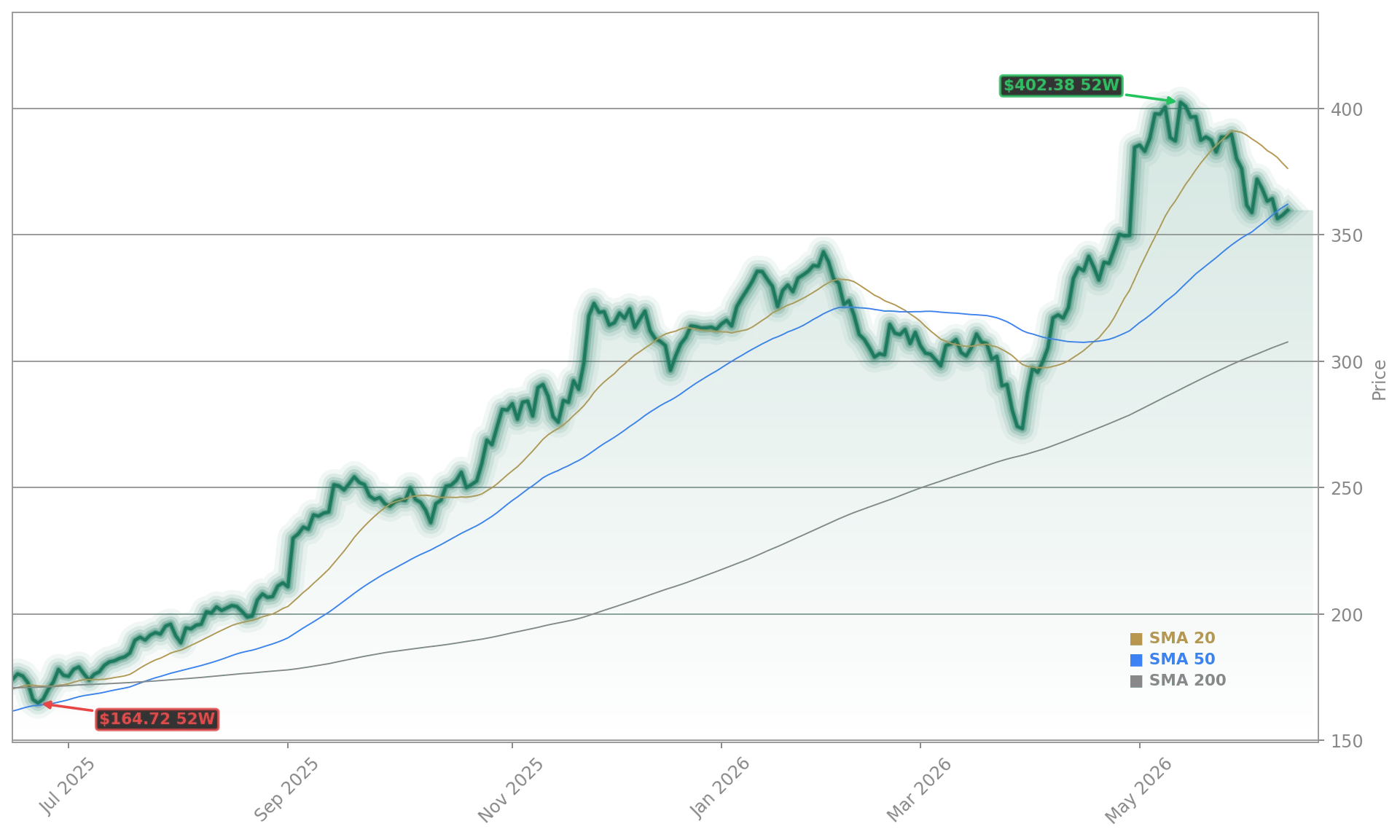
Berkshire Hathaway’s $10 billion participation matters because it gives the deal a powerful validation signal even as the stock weakens. CNBC reported Berkshire had already been building its Alphabet position since last year, and the latest purchase deepens that commitment. Still, the endorsement did not prevent selling pressure, suggesting investors are weighing the long-term AI opportunity against the near-term reality of more shares entering the market.
Wall Street remains constructive on fundamentals despite the financing shock. Piper Sandler recently raised its price target on Alphabet to $445 from $425 and kept an Overweight rating, citing stronger monetization potential in AI-assisted search. Wells Fargo has also maintained an Overweight stance with a $435 target, arguing the capital raise reflects financing mix rather than a new spending surprise. That said, critics such as Vital Knowledge’s Adam Crisafulli have questioned why a company with Alphabet’s cash generation needs outside equity at all.
How does Alphabet stack up against rivals?
Alphabet’s move may reset expectations for the whole hyperscaler group. Investors now have a fresh benchmark for what it could cost to compete with Apple, Tesla, and other mega-cap leaders for capital, talent, and long-duration growth. More directly, it raises the possibility that other AI infrastructure buyers could revisit their own funding mix if capex keeps rising across cloud and data center markets.
Related Coverage: Investors tracking the broader AI thesis may also want to read Google AI Search Boom as Alphabet Expands Gemini and TPUs. That report examines how Gemini, TPU investments, and AI search monetization could become a larger earnings driver for Alphabet, offering useful context for why the company is willing to pursue such a large capital plan now.
If the greatest business model in the history of capitalism can’t fund AI from its own internal operations, then who possibly can?— Adam Crisafulli
The Alphabet Equity Raise shows that the AI buildout is entering a new phase where even the largest tech platforms are turning aggressively to capital markets. For investors, the key question is whether Alphabet can convert this spending wave into stronger cloud, search, and infrastructure returns. If execution holds, the Alphabet Equity Raise could look less like dilution and more like an early move to secure long-term AI leadership.