
Can Google AI Search become Alphabet’s next growth engine before rivals turn AI hype into a margin war?

Can Alphabet turn Google AI Search into growth?
Alphabet Inc. (Google) used its developer conference to show that search is no longer just a box of links. Management is turning Google AI Search into a more agentic product that can handle tasks in the background, summarize results, and personalize shopping journeys. That matters because it could deepen user engagement and create new ad formats, but it also raises pressure on publishers that may lose traffic as answers stay inside Google’s ecosystem.
The broader strategic message was clear: Alphabet wants investors to see AI not as a cost center, but as a full-stack engine spanning Search, YouTube, Cloud, devices, and commerce. In Germany alone, Alphabet, Amazon, ByteDance, and Meta are projected to control 72% of instream video advertising revenue in 2026, underscoring how scale is concentrating across digital ad markets. If Google AI Search keeps users inside Alphabet properties longer, that concentration could become even more valuable.
Is Alphabet gaining on NVIDIA with TPUs?
Alphabet also highlighted its in-house TPU development and new data center buildout, including cloud infrastructure efforts tied to Blackstone. That gives investors another reason to compare the company with NVIDIA, whose AI accelerators still dominate the market but are increasingly challenged by custom silicon from hyperscalers. Alphabet’s argument is not that TPUs replace Nvidia everywhere; it is that owning the silicon stack can lower inference costs and improve cloud economics.
Google said Gemini 3.5 Flash could help major cloud clients save more than $1 billion annually if they shift 80% of workloads from other frontier models. If that claim translates into broader adoption, Google Cloud could become a more powerful earnings driver. Some investors still prefer Nvidia’s hardware exposure, and CNBC’s Jim Cramer argued this week that custom chips from Amazon and Alphabet do not hold value like Nvidia chips. Even so, several market commentators now view Alphabet as a stronger near-term setup because it combines AI demand with profitable software, ads, and cloud distribution.
What are analysts saying about Alphabet?
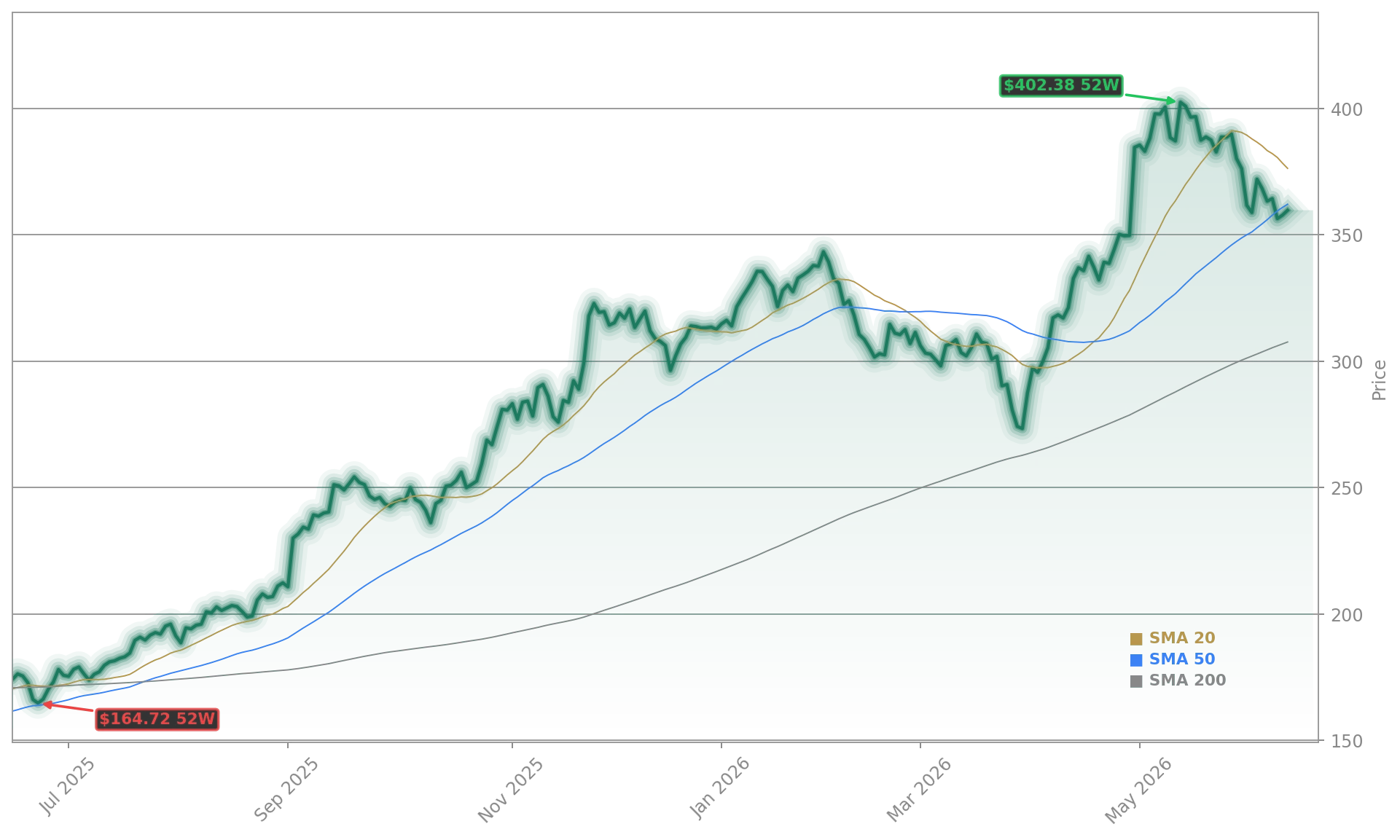
Wall Street sentiment remains constructive, even as valuation has climbed. BMO Capital’s Brian Pitz reiterated a Buy rating on Alphabet, while Scotiabank’s Nat Schindler also maintained a Buy stance on the company’s Class C shares. MarketBeat-listed consensus figures point to an average target price of about $412.65, above current intraday trading levels. That suggests investors still see upside despite a stock that is no longer the bargain it appeared to be a year ago.
Institutional positioning is more mixed. Bill Ackman’s Pershing Square cut its Alphabet stake by 95%, but Ackman stressed the sale was not a negative call on the business and was instead a source of funds for Microsoft. Other large holders have remained supportive, and STRS Ohio recently increased its position, citing Alphabet’s strong results, dividend growth, and AI product momentum. Berkshire Hathaway has also built a substantial stake, adding another high-profile endorsement.
Can Alphabet pressure Amazon, Meta, and Apple?
The biggest investment debate is whether Alphabet can convert product momentum into share gains against rivals. Google AI Search is a direct challenge to traditional web discovery, but it also has commerce implications. A more personalized shopping layer could pressure Amazon by keeping product searches and recommendations inside Google. At the same time, Alphabet may be better positioned than Meta because it can monetize AI through both advertising and cloud infrastructure.
Related Coverage: Investors following Alphabet’s financing strategy should also read this analysis of Alphabet’s record bond offering and AI expansion. That piece looks at whether aggressive capital spending can translate into durable returns, a question that now sits at the center of the Google AI Search story as Alphabet scales chips, data centers, and AI products together.
Alphabet’s latest push shows a company trying to defend its core franchise while opening new monetization paths across cloud and commerce. For investors, Google AI Search is now the clearest test of whether Alphabet can turn massive AI spending into sustained revenue growth and margin leverage. If adoption keeps building after I/O, Alphabet could strengthen its case as one of the most complete AI platforms on Wall Street.