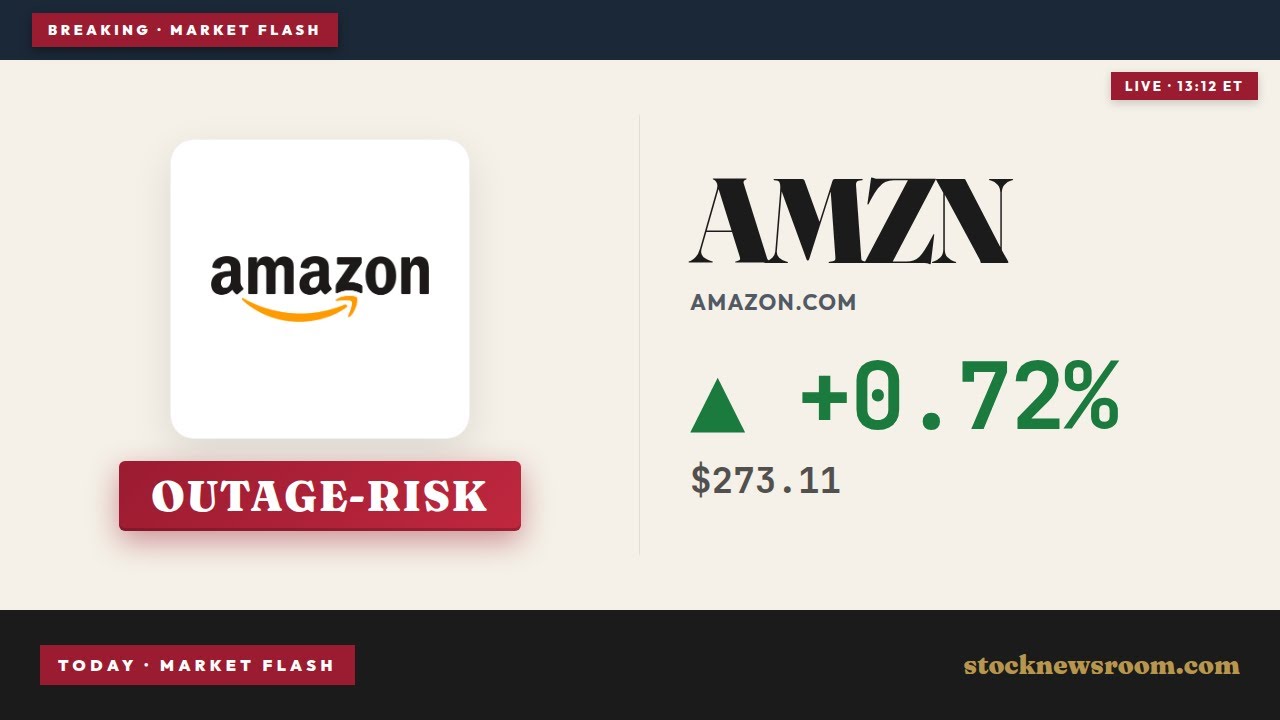

Can Amazon’s massive AI infrastructure gamble still pay off when a single Amazon AWS Outage exposes hidden risks in the cloud?

How serious is the Amazon AWS Outage?
The latest Amazon AWS Outage stems from a so‑called “thermal event” at a data center in the US‑EAST‑1 region in Northern Virginia, which triggered a loss of power in a single availability zone (use1‑az4). Cooling capacity was compromised, leaving some EC2 instances and EBS volumes impaired while engineers worked to safely restore hardware. AWS rerouted most traffic to other availability zones, but the disruption still rippled through key customers overnight.
One of the highest‑profile impacts came at Coinbase, which temporarily suspended crypto trading as error rates spiked across multiple services tied to the affected AWS zone. Coinbase later warned users that platform performance could remain degraded, though customer funds were secure. For institutional investors, this Amazon AWS Outage is a stark reminder that hyperscale cloud reliability is now systemic risk for fintech, crypto and other always‑on businesses that build directly on AWS.
Importantly, the problem appears localized, not a region‑wide failure. AWS emphasized that other availability zones in N. Virginia and in global regions were operating normally. However, the fact that a single data‑center cooling issue can knock services offline will feed into governance discussions as Amazon pursues ever more intensive AI workloads that draw significantly more power and generate more heat than traditional cloud compute.
Is Amazon overextending on AI infrastructure?
Behind the Amazon AWS Outage looms a far bigger question: can Amazon’s current AI spending spree deliver adequate returns? Management plans roughly $200 billion of capital expenditures this year, with the majority earmarked for AWS data centers, networking and custom silicon. Across the major hyperscalers, total AI‑related infrastructure outlays could approach $700 billion in 2026 alone, a number that rivals the annual GDP of mid‑sized developed economies.
That torrent of investment has already pushed the S&P 500 to fresh highs, but it is compressing free cash flow at the big platforms. Forecasts suggest the combined free cash flow of Amazon, Microsoft, Alphabet and Meta may sink toward $4 billion in Q3, far below the ~$45 billion quarterly average seen since the pandemic. Skeptics argue that if AI monetization lags, Amazon’s balance sheet is carrying one of the most aggressive risk profiles among the mega‑caps.
Still, bulls highlight that AWS is the company’s profit engine. In Q1 2026, AWS revenue jumped 28% year over year to about $37.6 billion, generating more than half of Amazon’s $23.9 billion operating profit, even though it accounts for only roughly one‑fifth of total sales. High‑margin cloud and advertising growth are helping fund the capex wave, while large anchor customers such as Meta Platforms and Anthropic have already committed to multi‑year consumption of Amazon’s Graviton‑based AI infrastructure.
What does the outage mean for AWS clients and competitors?
For enterprises building mission‑critical services on AWS, the Amazon AWS Outage will likely trigger fresh resilience reviews: multi‑AZ redundancy, cross‑region failover and even multi‑cloud strategies that include rivals such as Microsoft Azure and Google Cloud. The incident may strengthen the case for spreading workloads, particularly in financial services and crypto where downtime directly hits revenue.
Hardware and connectivity partners remain core to how Amazon tackles these reliability challenges. Hyperscaler data centers are turning to specialized networking vendors to move massive AI data flows efficiently, and companies like Credo Technology are securing design wins with both Amazon and Microsoft for high‑speed, low‑power connectivity in new facilities. At the chip level, Amazon’s move into homegrown Graviton and Trainium processors is partially about cost and performance, but also about deeper vertical control similar to what NVIDIA has built with its end‑to‑end AI stack.
On Wall Street, analysts at Goldman Sachs and Raymond James recently reiterated bullish views on Amazon after its Q1 beat, arguing that heavy AI capex is necessary to defend and extend AWS’s lead. Jim Cramer has likewise highlighted Amazon’s long‑term mindset, pointing to its logistics build‑out and now its cloud expansion as examples of front‑loaded spending that can create durable moats. The challenge is convincing investors that outages like this remain rare edge cases, not early warning signs of structural strain.
How do stablecoins and Anthropic change the AWS story?
Beyond the Amazon AWS Outage, two newer initiatives are reshaping how investors frame the AWS narrative. First, AWS has rolled out a system built with Coinbase and Stripe that allows autonomous AI agents to pay for APIs, data feeds, web content and MCP servers using stablecoins, without human authorization on each transaction. If widely adopted, that could create a new layer of high‑margin, machine‑to‑machine commerce on top of AWS, embedding the platform more deeply into both crypto and AI ecosystems.
Second, Amazon’s strategic partnership with Anthropic is emerging as a major demand driver. Anthropic has reportedly committed to spending more than $100 billion on AWS over the next decade, and its cutting‑edge foundation models are already being tested by enterprises such as Apple, Amazon itself, JPMorgan and Palo Alto Networks. As AI safety‑focused models like Claude become more central to corporate workflows, the compute footprint attached to them should reinforce AWS usage growth for years.
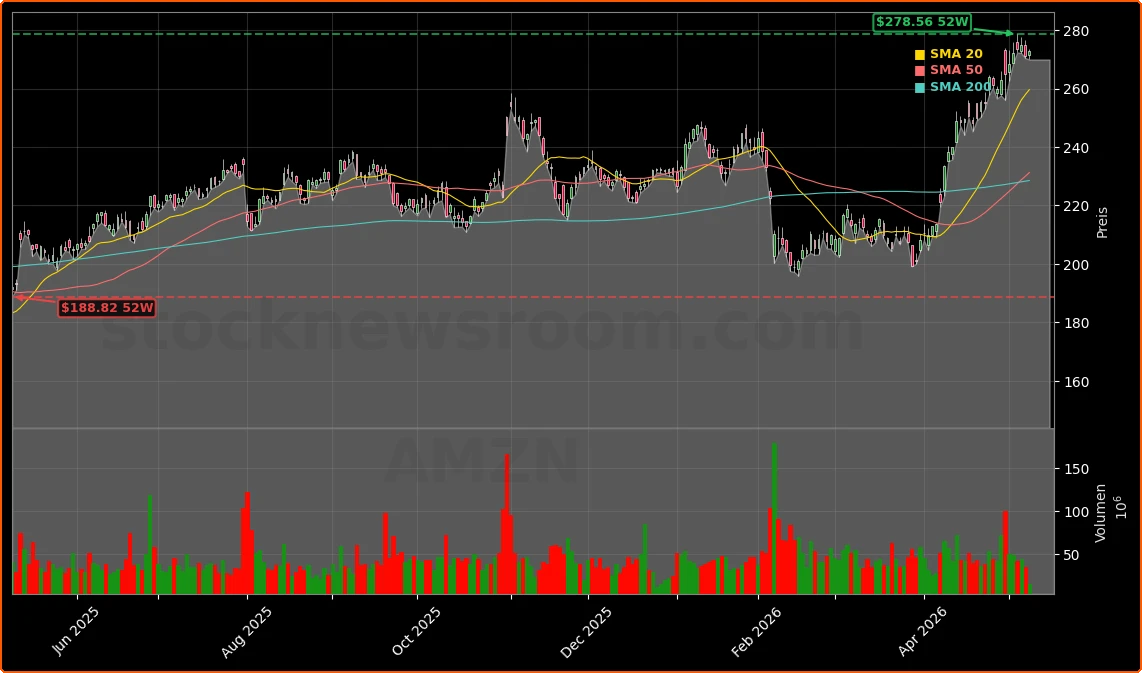
At the equity level, Amazon remains one of the top contributors to S&P 500 gains this year and is up about 17% year to date, making it a core holding in large‑cap growth vehicles such as the Vanguard Growth ETF, which also includes Tesla and Apple. Investment banks including Goldman Sachs and Citigroup have raised price targets following Q1, citing AWS momentum, ad growth and the potential for AI to expand margins over time, even with temporarily depressed free cash flow.
Related Coverage
Investors looking for a deeper dive into the earnings backdrop behind today’s Amazon AWS Outage headlines may want to read the recent analysis “Amazon Earnings Q1 2026: AWS AI Boom Resets Wall Street.” The piece at Amazon Earnings Q1 2026: AWS AI Boom Resets Wall Street examines how AWS’s 28% growth and surging AI demand are reshaping expectations for Amazon’s long‑term cash‑flow profile and valuation on the NASDAQ.
In sum, the latest Amazon AWS Outage exposes the operational risks that come with pushing data centers to the thermal and electrical limits required by next‑generation AI, even as AWS remains the main profit driver and strategic heart of Amazon.com, Inc.. For US investors, the story is still about weighing short‑term reliability concerns and record‑high capex against the prospect of a multi‑decade AI supercycle anchored in AWS, stablecoin‑enabled AI payments and deep partnerships with leading model providers. The next quarters will show whether Amazon can keep outages contained while turning its massive AI and cloud investments into the sustained free cash flow growth Wall Street is betting on.