Is the Amazon Meta AI Deal the moment AWS’s in-house chips turn from side bet into the core engine of Big Tech’s AI race?

How does the Amazon Meta AI Deal change the AI race?
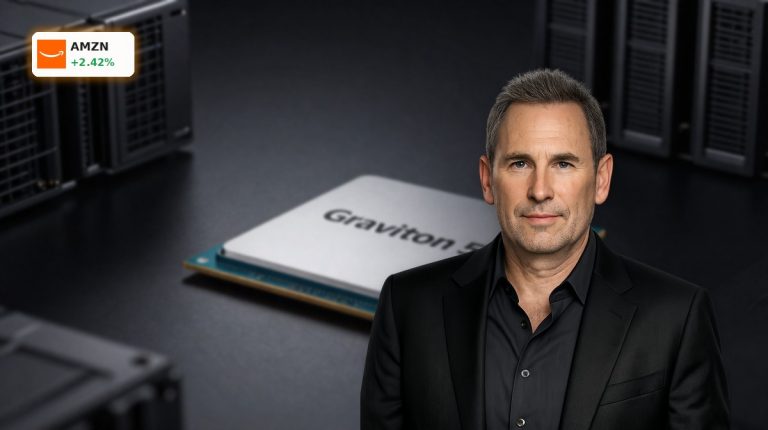
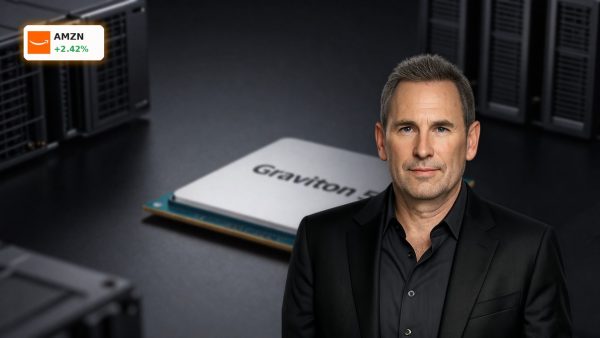
The Amazon Meta AI Deal marks one of the largest public commitments yet to CPU-based AI infrastructure. While GPUs from NVIDIA and others still dominate the training of frontier models, Meta will now lean on Amazon’s Arm‑based Graviton5 processors for real‑time reasoning, code generation, search and complex multi‑step agent workflows. These are exactly the CPU‑intensive tasks that are exploding as agentic AI moves from lab demos into production services.
Amazon executives say Meta will initially tap “tens of millions” of Graviton cores, with flexibility to scale higher as usage grows. Most of the capacity will sit in U.S. data centers and will make Meta one of AWS’s top five Graviton customers globally. Financial terms were not disclosed, but the multibillion‑dollar nature and three‑to‑five‑year term underscore how hyperscalers are locking in long‑dated compute commitments amid chronic AI capacity shortages.
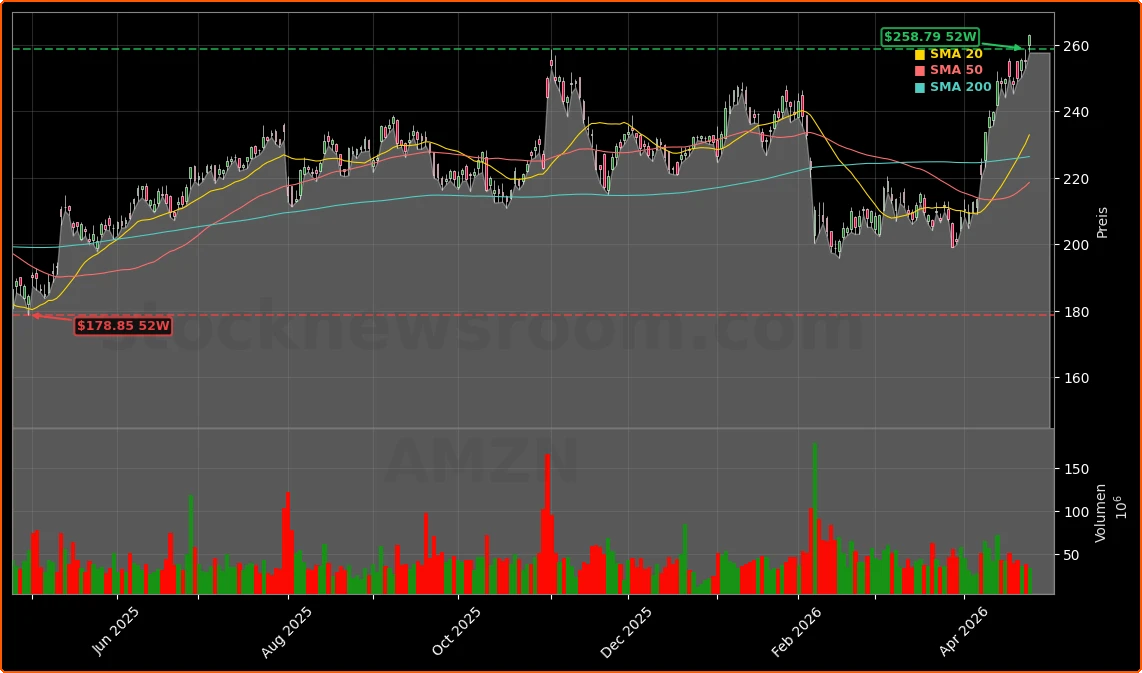
On the NASDAQ, AMZN now trades near all‑time highs, reversing a weak start to 2026. The deal lands just days before Amazon’s April 29 earnings, adding another upside catalyst on top of already strong expectations for AWS growth and AI‑driven margin expansion.
Why is Amazon betting so heavily on its own chips?
For AWS, the Amazon Meta AI Deal is a high‑profile validation of its in‑house silicon strategy. Graviton CPUs and Trainium AI accelerators are designed to lower total cost of ownership for cloud customers while reducing Amazon’s own dependence on third‑party GPU suppliers. CEO Andy Jassy recently described the chip business as “on fire,” highlighting an AI‑related revenue run rate above $20 billion for custom silicon.
CPUs had briefly fallen out of favor in the AI narrative as investors focused on GPU shortages and pricing power at NVIDIA. The surge of AI agents is changing that. Many real‑world AI tasks—browsing websites, querying databases, managing workflows—spend more time on CPUs than GPUs. AWS argues that Graviton delivers the best price‑performance on its EC2 platform and as much as 60% lower energy usage versus legacy x86 instances, a key selling point as power constraints become a bottleneck for data center build‑outs.
Meta already rented Nvidia GPU clusters from AWS and used Graviton at smaller scale. By ramping up to hundreds of thousands of chips, it signals that no single architecture can efficiently handle all AI workloads. That diversification is good news for Amazon, which can now monetize both GPU and CPU layers of the stack.
How does this position Amazon versus Microsoft and Alphabet?
The Amazon Meta AI Deal arrives as the hyperscaler arms race intensifies. Jefferies recently named Amazon, Microsoft and Alphabet among the key beneficiaries of AI compute demand, noting that infrastructure needs continue to outstrip supply and that capital expenditure across cloud providers could grow more than 50% annually in 2025 and 2026. Oracle is also trying to gain share with its high‑bandwidth Oracle Cloud Infrastructure, while specialized players like CoreWeave chase GPU‑heavy workloads.
Amazon has moved to secure demand on multiple fronts. Earlier this week, it expanded its partnership with Anthropic, committing up to $25 billion in funding tied to more than $100 billion in long‑term cloud and chip spending on AWS. Together with the Amazon Meta AI Deal, that creates a powerful demand lock for Amazon silicon and data centers, positioning AWS as a default platform for both consumer‑facing and enterprise AI deployments.
On the analyst side, UBS reiterated a Buy rating on Amazon with a $304 price target, while other Wall Street banks such as KeyBanc have floated upside scenarios toward $325 based on accelerating AWS growth. Hedge fund managers like Bill Ackman have also been building large positions, framing Amazon as a core long‑duration AI infrastructure play rather than just an e‑commerce story.
What are the risks for AMZN investors?
Despite the market euphoria around the Amazon Meta AI Deal, the strategy is not without risk. Building and powering the data centers needed for AI workloads is capital‑intensive. Amazon’s capex plans are now outpacing operating cash flow, prompting the company to lean more heavily on debt financing than in earlier phases of its history. Investors will scrutinize whether rising interest costs and regulatory headwinds—such as potential EU Digital Markets Act gatekeeper rules for AWS—could pressure margins in coming years.
There is also intensifying competition. Microsoft is tying OpenAI closely to Azure and pushing its own custom silicon; Alphabet is ramping its TPU roadmap and aggressively pricing Google Cloud AI services; and Oracle is courting high‑value AI contracts with a differentiated network architecture. At the same time, multiple chip vendors and cloud startups are racing to reduce unit compute costs, which could eventually compress pricing power at hyperscalers.
Still, Amazon’s integrated loop—cloud profits funding chip development, chips lowering customer costs, larger workloads generating more data to train better models—gives it a structural advantage that few can match. The Amazon Meta AI Deal strengthens that feedback loop by adding another mega‑customer to AWS’s roster and by showcasing Graviton as a central building block of production AI systems.
Related Coverage
For a deeper dive into how Amazon is using big ticket partnerships to cement its AI leadership, read our analysis of the Anthropic investment in “Amazon Anthropic Deal: $25B AI Boom Bet on AWS Growth”. That piece explains how Anthropic’s $100 billion long‑term spend commitment on AWS complements the Amazon Meta AI Deal and why together they could reshape the balance of power among the major AI hyperscalers.
The Amazon Meta AI Deal underscores that Amazon is no longer just a retailer but a core enabler of global AI infrastructure. For U.S. investors watching the S&P 500 and NASDAQ, AMZN’s breakout to record territory suggests the market is rewarding that shift and anticipating years of high‑margin cloud and chip growth. The next few quarters of earnings and capex guidance will show whether Amazon can execute on this ambitious build‑out while maintaining its financial discipline—and long‑term portfolios positioned for the AI cycle will be watching closely.