
Is Bitcoin Crypto Adoption entering a new phase as retail platforms expand and institutional money quietly builds positions?

How Is Robinhood Driving Bitcoin Crypto Adoption?
Robinhood has launched crypto trading in Canada, offering access to 50 digital assets — including Bitcoin (BTC/USD) — and simultaneously secured a Major Payment Institution (MPI) license from Singapore’s Monetary Authority of Singapore (MAS). This dual-market expansion marks a pivotal step in mainstreaming Bitcoin Crypto Adoption for U.S.-linked retail platforms. Unlike earlier crypto entrants, Robinhood’s MAS license permits custody, settlement, and fiat on-ramps — critical infrastructure for long-term, compliant exposure. The move also coincides with Robinhood’s rollout of agentic AI trading tools, enabling retail users to execute automated, on-chain micro-strategies 24/7 — a feature increasingly demanded by younger investors tracking Apple and Tesla-adjacent innovation cycles. According to Bloomberg, Robinhood’s international crypto volume grew 68% quarter-over-quarter, with Bitcoin accounting for 54% of total crypto trade value.
What Does $1B in Bitcoin Buying Signal?
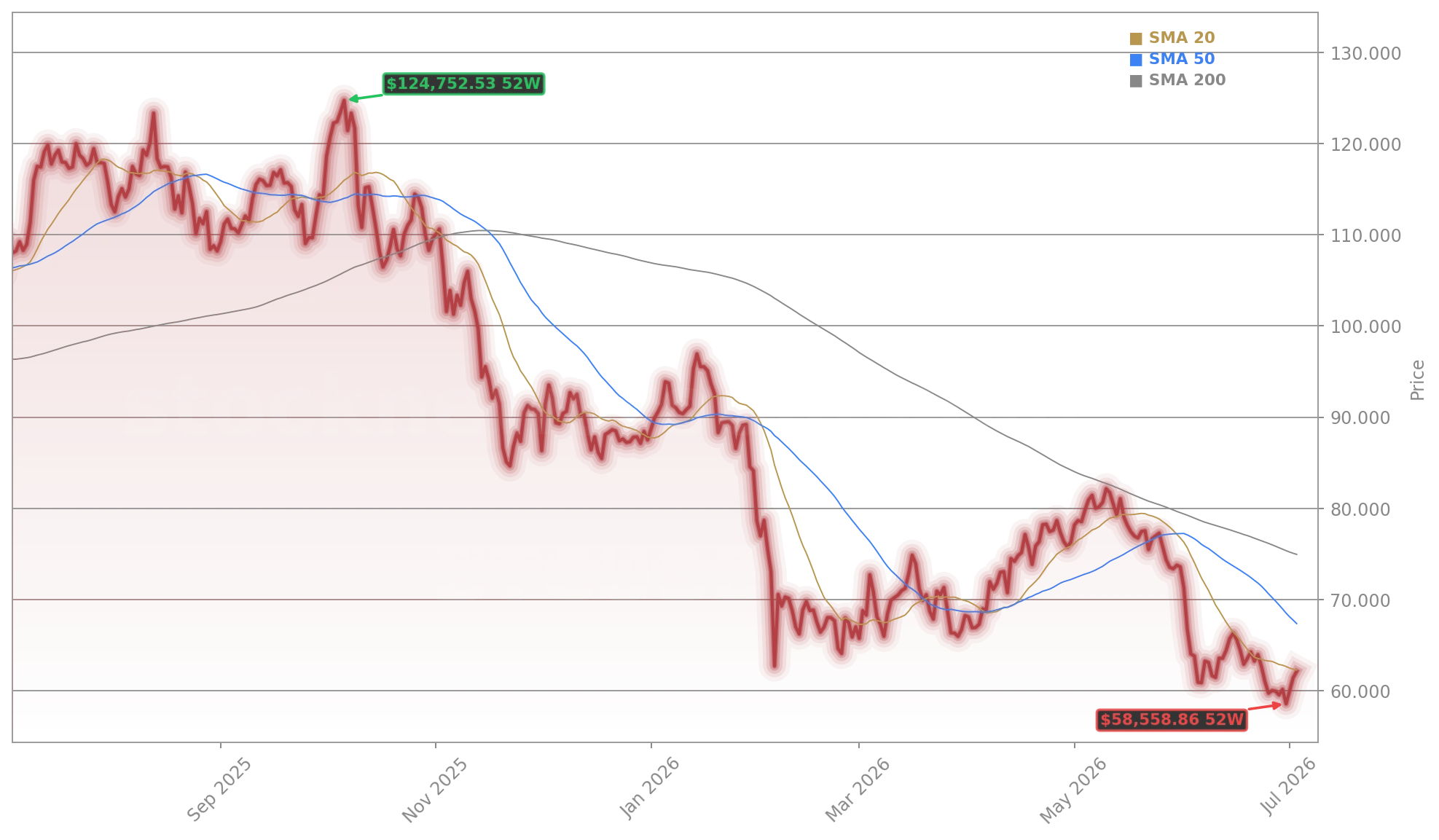
A single institutional buyer — identified by Reuters as a U.S.-based private wealth fund with ties to sovereign wealth networks — acquired $987 million of Bitcoin over three days last week. The purchase occurred near the $56,000 support level cited by major technical analysts as a strategic accumulation zone, reinforcing confidence in Bitcoin’s medium-term floor. This is not isolated: Citigroup analysts recently raised their 12-month BTCUSD price target to $78,500, citing ‘structural inflows from treasury management diversification and AI-adjacent payment layer demand.’ The $1B buy coincides with falling Bitcoin mining difficulty (down 20% from peak) and a 35% decline in leveraged long positions on major derivatives exchanges — both indicators of cleaned-up sentiment and reduced systemic fragility. For S&P 500 investors, this signals Bitcoin’s evolving role as a non-correlated, liquidity-responsive asset — particularly as NVIDIA-driven AI infrastructure spending accelerates.
Why Are Macro Conditions Favoring Bitcoin Crypto Adoption?
Weaker-than-expected U.S. labor data and declining inflation expectations have shifted Fed rate-hike probability to under 15% for 2026 — per CME FedWatch. That pivot is redirecting capital toward risk assets: Bitcoin (BTC/USD) has outperformed the NASDAQ by 210 basis points over the past 30 days, even as tech stocks grapple with AI monetization uncertainty. Crucially, Bitcoin’s recovery has diverged sharply from NFTs and memecoins, underscoring investor focus on foundational layer-1 utility. Tim Draper, founder of Draper Associates, emphasized this shift: ‘Bitcoin is a new model for society to have a global economy that is much more frictionless and open — transparent, with perfect records on the blockchain.’ His firm’s latest fund allocates 18% to Bitcoin-denominated treasury reserves, a move mirrored by at least seven U.S. mid-cap corporations this quarter.
How Is AI Converging With Bitcoin Crypto Adoption?
Bitcoin is a new model for society to have a global economy that is much more frictionless and open, transparent, keeps perfect records on the blockchain.— Tim Draper
Katie Hahn, managing partner at Digital Asset Strategies, highlights a structural inflection: ‘Agentic commerce needs instant micropayments — and blockchain is the only proven, scalable stack for identity, provenance, and privacy in an AI age.’ Zero-knowledge proofs and fully homomorphic encryption — technologies now being integrated into Bitcoin Layer 2 protocols — are gaining traction among AI infrastructure firms building verifiable inference markets. This convergence is attracting capital previously diverted to AI chip stocks during the 2025 KI-Hype cycle. Notably, South Korean retail — which accounts for 30% of global crypto volume — has rotated from Bitcoin into leveraged semiconductor equities, amplifying the Bitcoin–KOSPI divergence. That flow reversal is now reversing: Korean on-chain inflows rose 44% week-over-week, per Chainalysis data.