
Is Bitcoin building a durable base above $56,000, or is the market setting investors up for another brutal fakeout?

What’s Driving Robinhood’s Global Crypto Push?
Robinhood expanded crypto trading into Canada this week, offering 50 digital assets — including Bitcoin (BTC/USD) — to retail investors. The firm also secured a formal license in Singapore, marking its first regulated foothold in Asia. This move isn’t just geographic: it signals deeper integration of agentic AI tools for crypto trading — enabling real-time, 24/7 execution without manual intervention. For U.S. investors, Robinhood’s expansion dovetails with rising demand for self-custody alternatives amid tightening SEC oversight of centralized exchanges. According to Bloomberg, Robinhood’s crypto revenue rose 34% quarter-over-quarter — now representing 22% of total platform revenue. That growth is accelerating just as retail participation in Bitcoin options surged 41% last week, per Cboe data.
Bitcoin Market Analysis: Is $56,000 the Real Floor?
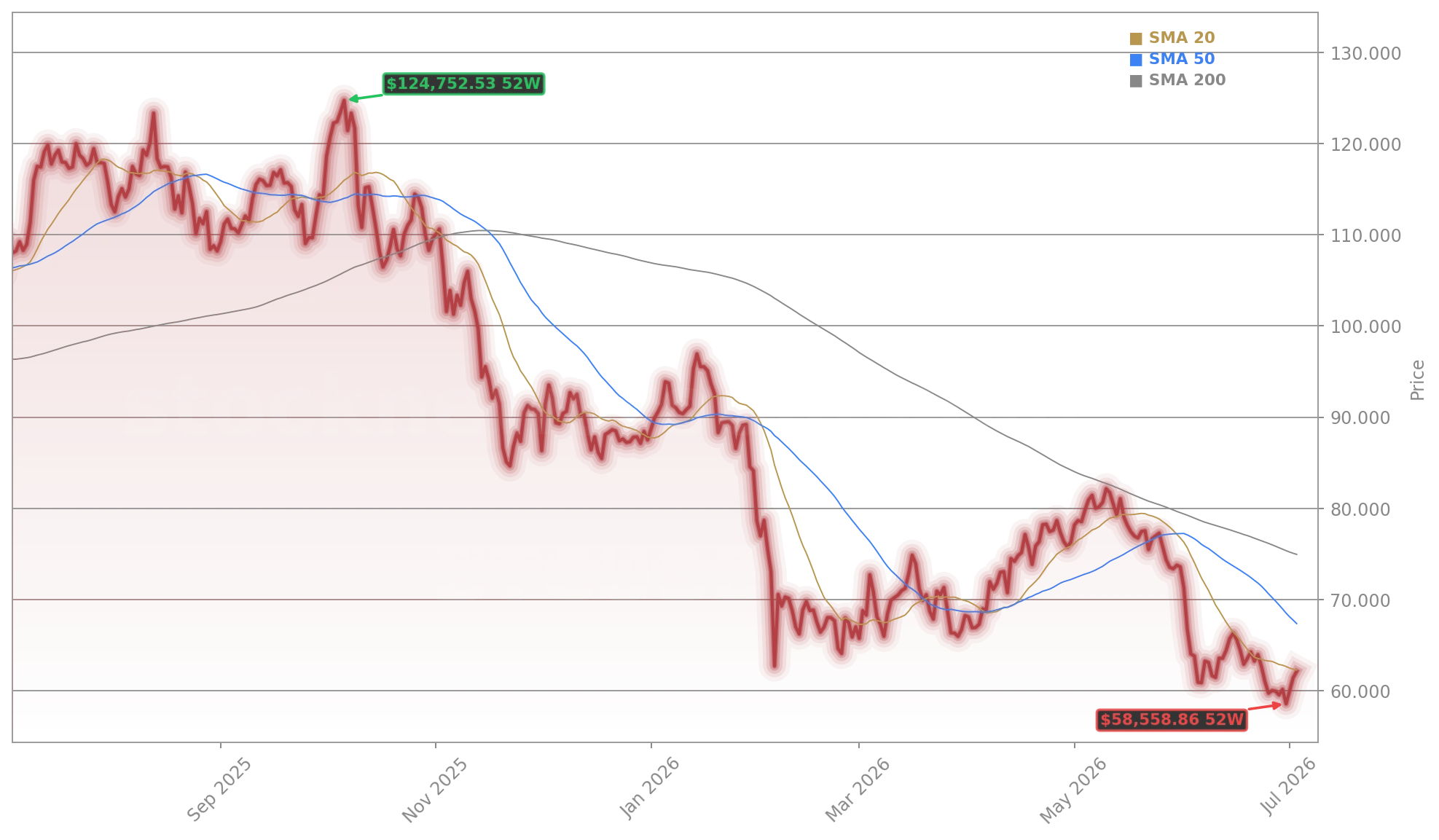
Bitcoin (BTC/USD) has held above $56,000 for 17 consecutive trading days — a level analysts at Morgan Stanley have identified as the ‘structural support zone’ where long-term holders absorb selling pressure. While short-term momentum remains fragile — with Citigroup warning of a potential ‘bull trap’ near $70,000 — the broader Bitcoin Market Analysis suggests bottoming behavior. BTC has absorbed negative news — including miner capitulation and a 20% network difficulty drop — without breaking lower. The CoinMarketCap Fear & Greed Index sits at 23, near its lowest reading since March 2023. That extreme pessimism, combined with a 52-week high in Bitcoin ETF inflows ($1.2B last week), hints at accumulation ahead of anticipated Q3 catalysts. RBC Capital Markets upgraded Bitcoin’s medium-term outlook to ‘Constructive’, citing improving liquidity conditions and falling U.S. Treasury yields.
How Is AI Reshaping Bitcoin’s Infrastructure?
Artificial intelligence isn’t just trading Bitcoin — it’s rebuilding its foundational layer. Katie Hahn, a digital assets strategist at Fidelity, emphasized that ‘agentic commerce requires instant, secure micropayments — and Bitcoin’s Lightning Network, paired with zero-knowledge proofs, is becoming the settlement rail of choice for AI agents.’ This convergence is accelerating investment: a newly formed infrastructure fund backed by Apple and NVIDIA executives recently committed $420M to Bitcoin Layer 2 scaling and privacy-enhancing cryptography. Meanwhile, Tesla’s Q2 2026 earnings call confirmed it’s evaluating Bitcoin as a treasury reserve asset again — a reversal from its 2022 divestment. The synergy between AI compute demand (driving NVIDIA’s data center growth) and Bitcoin’s energy-intense verification process is now a core theme for tech investors assessing long-term portfolio resilience.
What Do Macro Conditions Say About Bitcoin’s Next Move?
Bitcoin (BTC/USD) is responding to a pivot in U.S. monetary policy expectations. With June’s nonfarm payrolls coming in softer than forecast and core CPI cooling to 3.1% year-over-year, the market now prices a 68% probability of a Fed rate cut by September — up from 41% in early June. That shift has redirected capital flows: Bitcoin’s 30-day correlation with the NASDAQ jumped from 0.41 to 0.72, while its inverse correlation with the U.S. Dollar Index deepened to -0.64. Tim Draper, speaking at the Consensus 2026 summit, reinforced this view: ‘Bitcoin is not just digital gold — it’s the frictionless global ledger for an AI economy. Families, businesses, and governments all need it as fiat currencies lose purchasing power.’ That narrative is gaining traction with U.S. pension funds — two state retirement systems disclosed Bitcoin allocations in Q2 filings, totaling $890M.
Who Just Bought $1 Billion in Bitcoin?
Bitcoin is a new model for society to have a global economy that is much more frictionless and open, transparent, keeps perfect records on the blockchain.— Tim Draper
A major U.S.-based financial services firm — not MicroStrategy — acquired $987 million in Bitcoin (BTC/USD) over the past 10 days, according to on-chain analytics firm Chainalysis. The buyer used non-custodial infrastructure and split purchases across multiple wallets to avoid market impact. This follows a broader trend: corporate Bitcoin holdings rose 14% in Q2, with firms citing inflation hedging and treasury diversification as top drivers. Notably, the acquisition occurred while Bitcoin’s 30-day volatility dropped to 48% — its lowest since January — suggesting institutional confidence in price stability. As Bitcoin’s spot ETFs now hold over 1.02 million BTC — 5.3% of total supply — the line between retail sentiment and institutional positioning is blurring fast.