Can Cardano’s latest wallet scandal shake investor trust more than any blockchain upgrade can repair it?

What triggered the Cardano Wallet Exploit?
SecondFi’s vulnerability originated not in the Cardano blockchain itself, but in its wallet-generation layer: software that creates private keys and addresses. According to Immunefi CEO Mitchell Amador, the flaw exposed private keys during generation—a critical failure in infrastructure that ‘nobody audits like a contract.’ Unlike smart contract exploits, this was an address-level compromise: signing any transaction from an affected wallet activated the vulnerability. That means restoring the same recovery phrase into another Cardano wallet offers zero protection—a warning SecondFi emphasized in its X statement. The incident has drawn comparisons to past infrastructure failures at major exchanges and custodians, signaling a dangerous shift in attacker focus toward key-generation and custody tooling.
How is Cardano’s leadership responding?
Cardano founder Charles Hoskinson publicly clarified that Input Output Global (IOG) did not develop or maintain SecondFi’s code. ‘We didn’t write the code and we’re not connected to it,’ he stated in a Tuesday X video, underscoring the structural separation between IOG—the research arm—and Emurgo, the for-profit entity behind SecondFi (formerly Yoroi). Hoskinson confirmed IOG’s incident response team engaged with SecondFi immediately but stressed that governance and security accountability now rests with the wallet provider and its independent auditors. Notably, no major Wall Street firm has issued a rating or price target on ADA following the exploit—reflecting the token’s marginal role in traditional equity portfolios. Analysts at Morgan Stanley and RBC Capital Markets continue to exclude ADA from crypto-adjacent coverage, citing insufficient institutional adoption and liquidity depth relative to NVIDIA-driven AI infrastructure tokens or Apple-linked digital wallet ecosystems.
Is Leios enough to restore confidence?
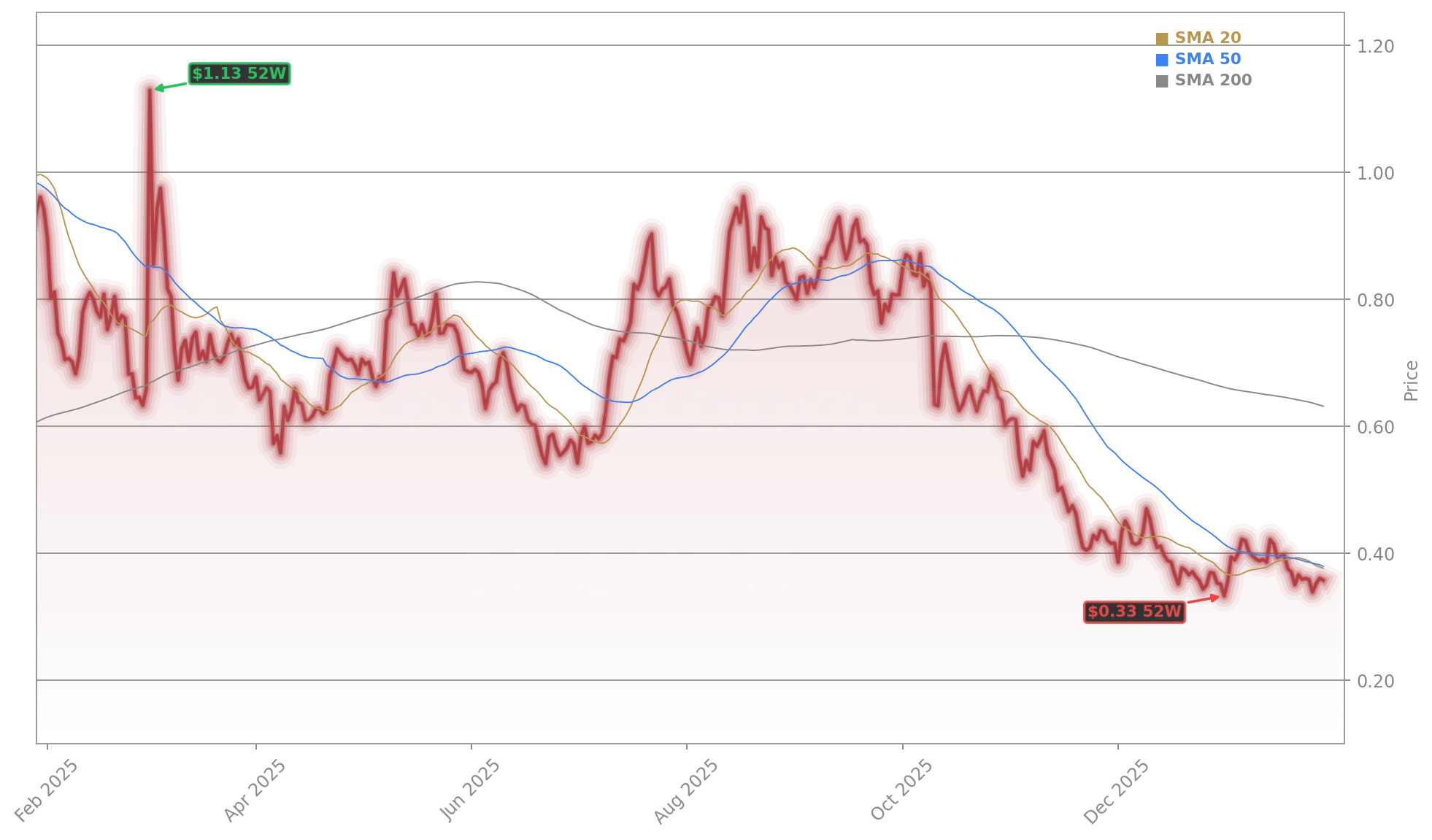
Despite the turmoil, Input Output launched the Musashi Dojo public testnet for Ouroboros Leios—a multi-year research initiative designed to increase Cardano’s throughput five to 20 times without overhauling its consensus layer. Leios introduces a second block type alongside Praos, enabling parallelized transaction processing. Early benchmarks target ~1,000 transactions per second (TPS), a leap from Cardano’s current 10–15 TPS—but still below Solana’s 1,625 TPS and far behind Tesla-backed payment rails in development. Crucially, Leios does not address wallet-layer security. Its success hinges on governance approval for the Van Rossem hard fork and rigorous adversarial testing—neither of which mitigates the immediate reputational damage from the Cardano Wallet Exploit. Market participants remain skeptical: ADA’s 52-week low and its near-exit from the top 20 crypto assets by market cap suggest technical progress alone cannot override trust deficits.
What’s the broader market impact for U.S. investors?
For U.S. portfolios, ADA’s volatility remains largely isolated—unlike Bitcoin or Ethereum, it carries no S&P 500 or NASDAQ index exposure and minimal correlation to tech sector ETFs. Yet the Cardano Wallet Exploit serves as a cautionary signal for investors holding crypto-adjacent equities. Firms like Coinbase Global (COIN) and MicroStrategy (MSTR) face indirect risk if ecosystem-wide confidence erosion spreads to infrastructure providers. Meanwhile, the exploit reinforces a trend observed by Bloomberg analysts: infrastructure-layer hacks now account for over 62% of crypto losses in 2026—up from 38% in 2024—highlighting growing exposure for publicly traded blockchain enablers. With ADA trading at $0.14—down from $0.31 at the start of Q2 2026—the token’s underperformance versus the NASDAQ Composite (-1.8% YTD) and S&P 500 (+12.3% YTD) underscores its status as a speculative, non-correlated asset rather than a strategic holding.
SecondFi’s wallet software exposed the private keys it generated, and our research has been tracking exactly this move for two years.— Mitchell Amador, CEO of Immunefi
Cardano remains a high-risk, high-complexity play for U.S. investors. The Cardano Wallet Exploit is not just a technical incident—it’s a stress test of the entire ecosystem’s resilience. For portfolios anchored in proven tech leaders like NVIDIA and Apple, ADA’s challenges highlight the chasm between theoretical scalability and real-world trust infrastructure. As Leios moves toward mainnet and SecondFi finalizes its independent audit, the path forward demands more than engineering—it demands restored credibility. Investors should monitor governance votes on Van Rossem, third-party audit findings, and ADA’s ability to hold above $0.135—its 2020 low—to gauge whether the network can pivot from crisis to conviction.