
Can Dell Earnings keep fueling the AI narrative after a brutal 6.3% pullback shakes out momentum traders?

Why are Dell Earnings still moving shares?
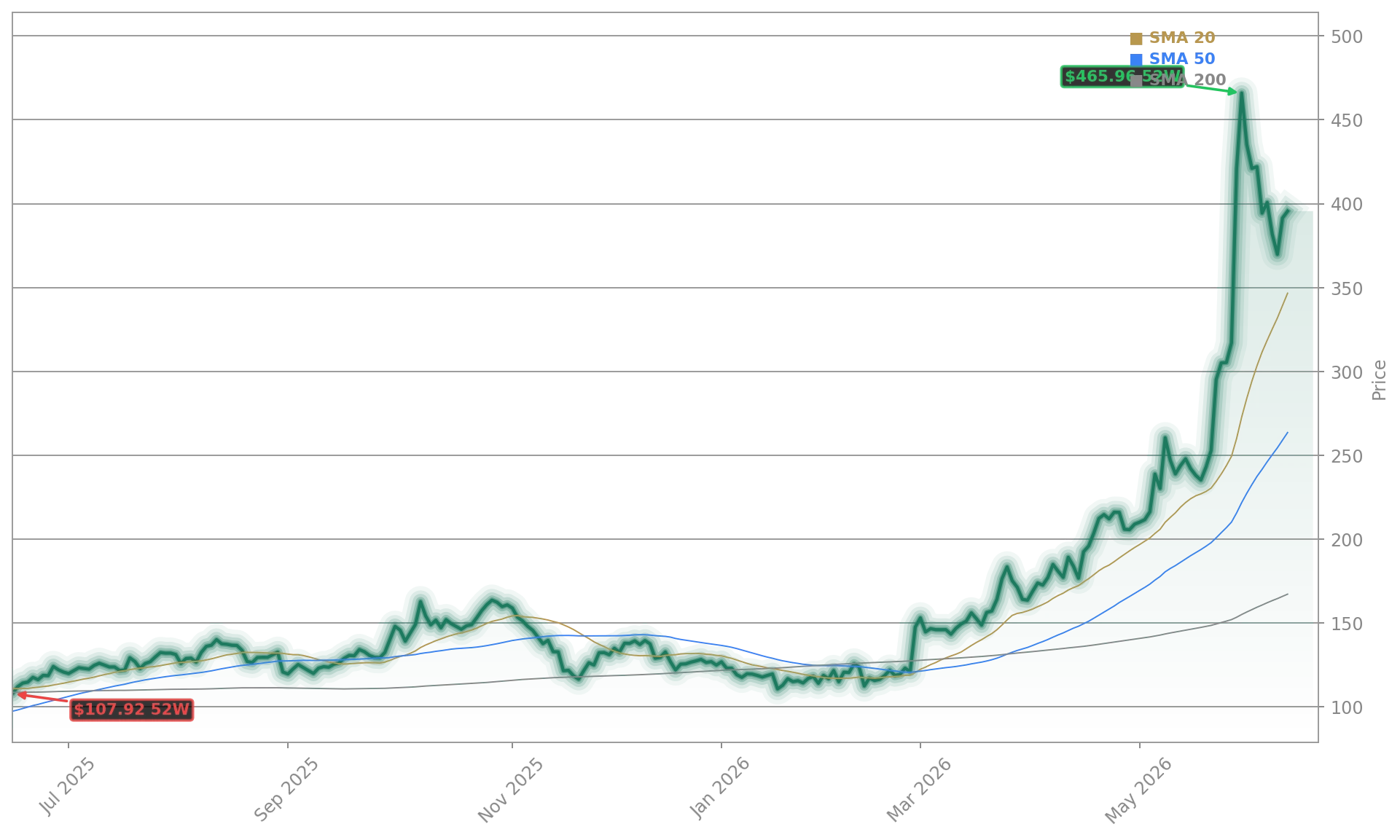
The market reaction shows how much optimism is now embedded in Dell Technologies Inc.. After last week’s quarterly report, the stock surged more than 30% as investors digested a dramatic acceleration in sales, margins, and AI-related orders. Tuesday’s decline looks more like a reset after a near-vertical run than a rejection of the broader thesis. Even at $436.51, the stock remains far above where it started the year, though still below the recent 52-week high of $469.41, so this is not a fresh high.
What made Dell Earnings stand out was the scale of the AI server demand. In the company’s most recently reported quarter, revenue jumped to $43.8 billion, up 88% year over year, while adjusted earnings per share reached $4.86. Infrastructure Solutions Group revenue climbed to $29 billion, and AI-optimized servers contributed $16.1 billion. Dell also disclosed $24.4 billion in new AI orders during the quarter, ending the period with an AI server backlog above $51 billion.
Can Dell outrun rivals in AI hardware?
Dell is no longer being valued mainly as a legacy PC maker. The market is increasingly treating it as a core supplier to the enterprise and hyperscale AI build-out, alongside names tied to the data center upgrade cycle. That includes partnerships and ecosystem relevance around NVIDIA, as well as exposure to spending from cloud giants such as Microsoft, Amazon, and Google.
The broader read-through has been reinforced by rival results. Hewlett Packard Enterprise posted its own strong quarter this week, adding support to the view that the surge in AI infrastructure demand is not isolated to one vendor. Analysts at Morgan Stanley framed the debate around durability: server demand is clearly strong, but investors will now test how long pricing power and order momentum can last. That matters not only for Dell, but also for peers like Super Micro Computer and networking players tied to enterprise AI deployments.
Dell’s positioning in inference infrastructure is especially important. While training clusters often dominate headlines, inference spending is becoming a more practical enterprise budget item, and Dell’s CPU-based and AI-optimized server lineup puts it in the center of that shift. Its relationships with Microsoft, Google, and Meta also strengthen the argument that Dell is participating across multiple layers of the AI spending wave.
What are analysts saying about Dell?
Wall Street has largely stayed constructive despite the stock’s sharp rise. Goldman Sachs analyst Katherine Murphy reiterated a Buy rating on Tuesday and set a $500 price target, implying further upside from current levels. Her view centers on three points: stronger enterprise hardware spending for AI, fiscal 2027 guidance that appears constrained more by supply than demand, and margin leverage from Dell’s scale and supply chain execution.
Evercore ISI analyst Amit Daryanani also resumed coverage with an Outperform rating and a $450 price target, arguing that Dell’s latest results reflect the shape of an AI supercycle. Consensus targets are now mixed because the stock has moved so far so fast, but the more bullish firms still see room for upside if backlog converts into revenue without major supply disruptions. For investors, that means Dell Earnings have shifted from a one-quarter surprise to a test of execution over several quarters.
How should investors frame the next move?
The key issue now is sustainability. Dell has said it sees $167 billion in fiscal 2027 revenue, including about $60 billion from AI server sales, a huge step up from earlier expectations. If that forecast holds, today’s valuation may look less stretched than the recent price action suggests. But with the stock having run far ahead of its moving averages, volatility should not surprise anyone.
Related Coverage: Investors looking for a deeper breakdown of the latest quarter can read this analysis of how Dell Earnings and AI infrastructure demand are reshaping the company’s outlook. That piece explores why Wall Street is increasingly comparing Dell to other AI hardware winners rather than traditional PC names like Apple. It also highlights how the raised outlook changed the debate from cyclical recovery to structural growth.
This is what an AI supercycle looks like.— Amit Daryanani
Dell Earnings have clearly reset expectations for the stock and for the wider AI hardware trade. The next phase for investors is watching whether backlog conversion, margin discipline, and enterprise AI demand keep supporting the story as the market digests one of 2026’s most dramatic rallies.