
Can the bold GameStop Acquisition of eBay really work, or will financing doubts turn this meme-fueled mega deal into a crash landing?

Can GameStop really buy a bigger rival?
GameStop Corp. confirmed it has submitted a non-binding offer to acquire eBay for $125 per share, implying a roughly 46% premium to where eBay traded on February 4, when GameStop quietly began building its stake. The proposal, structured as roughly half cash and half stock, would see GameStop roll up an online marketplace with a market value nearly four times its own.
GameStop says it already controls about 5% of eBay’s shares and believes the combined business could unlock approximately $2 billion in annual cost synergies, primarily in marketing, product development, and corporate overhead. CEO Ryan Cohen would run the merged company, positioning it as a more focused rival to Amazon’s third-party marketplace and potentially to platforms operated by Apple and NVIDIA-powered cloud rivals.
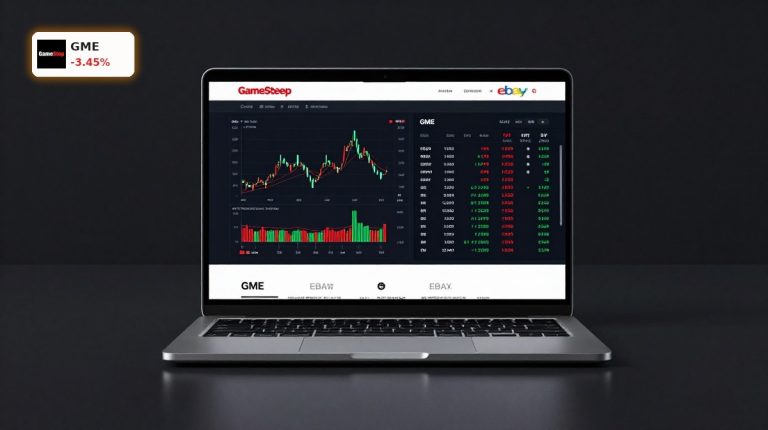
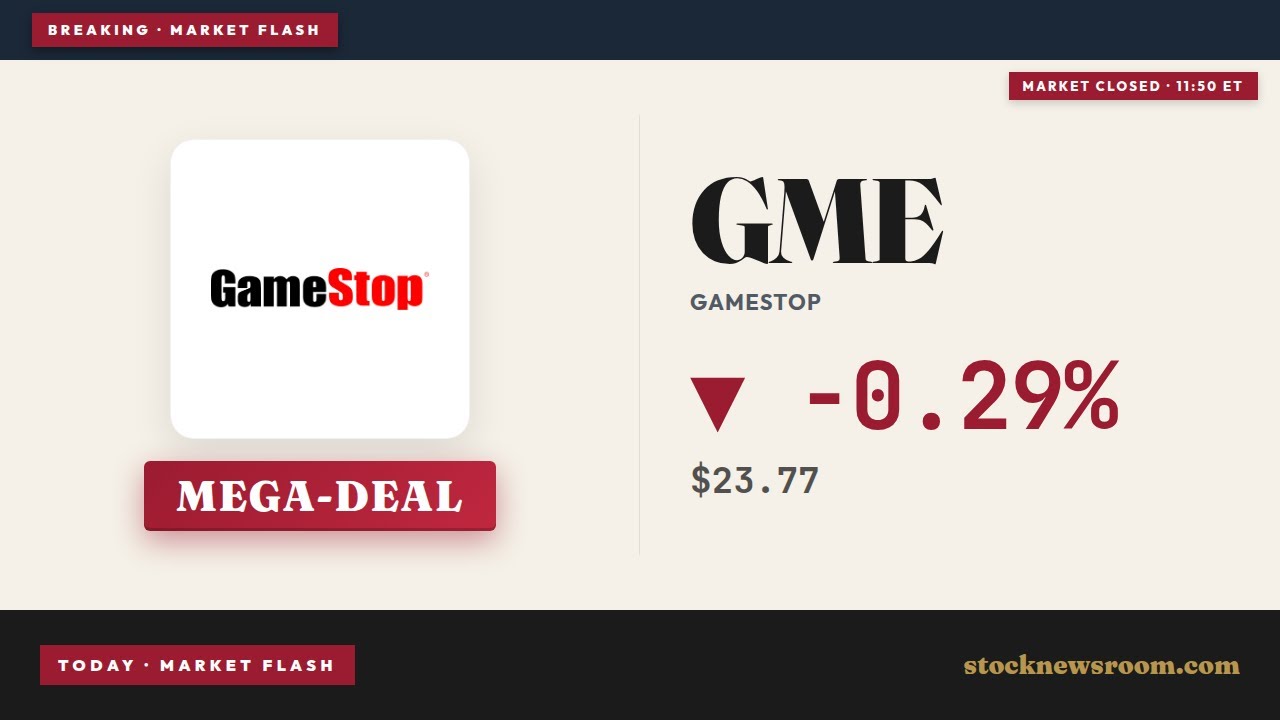
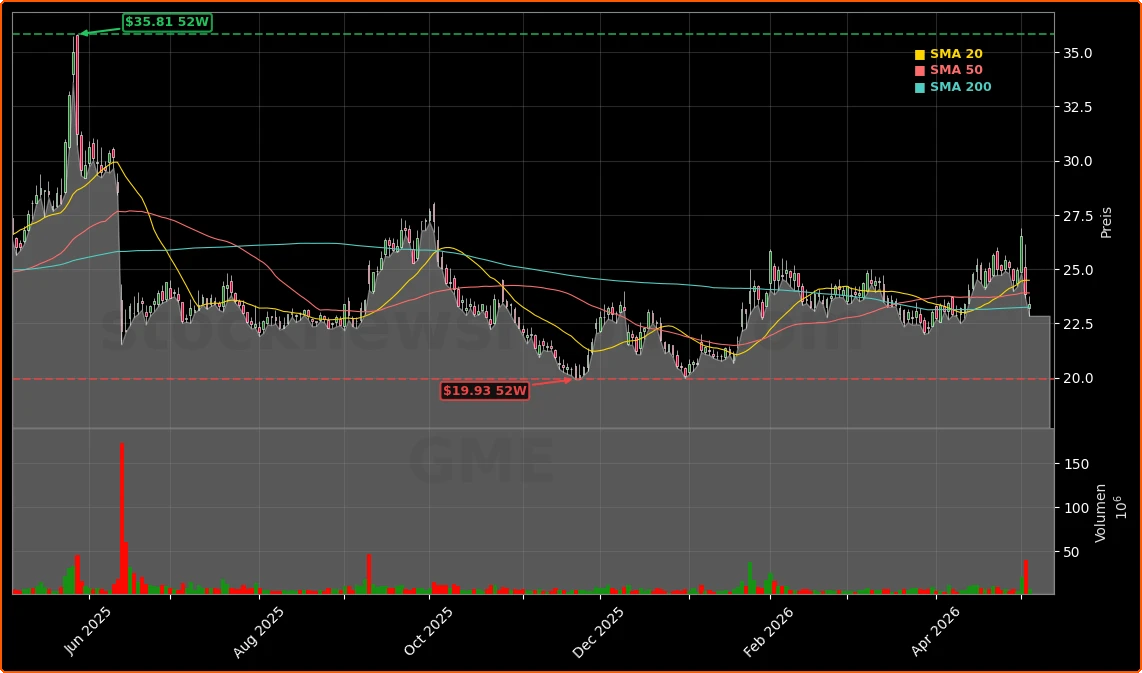
Despite the bold pitch, GME shares are under pressure. At $23.41, down about 1.78% intraday and far below the 52-week high of $64.83, the stock is signaling anxiety that the GameStop Acquisition could stretch the company’s balance sheet beyond comfort.
How would GameStop fund a $55.5 billion deal?
Financing is the central question. GameStop currently has around $9–9.5 billion in cash and investments after several years of capital raises and cost-cutting. Management points to a “highly confident” letter from TD Securities indicating up to $20 billion in potential debt capacity. Even if that full amount materialized, there would still be a funding gap in the mid-teens billions that would likely need to be covered by additional debt, new equity, or both.
In a tense CNBC interview on Monday, Cohen repeated that the offer is “half cash, half stock” but struggled to clearly reconcile the math, especially a reported $16 billion shortfall. When pressed on dilution, he emphasized long-term value creation and directed viewers to GameStop’s website for more detail, which only intensified skepticism that the GameStop Acquisition framework is not yet fully baked.
Michael Burry, one of the earliest high-profile bulls on GME’s turnaround story, publicly disclosed that he exited his entire GameStop position following the announcement. In a Substack post, Burry warned that any deal relying on leverage around 7–8 times debt-to-EBITDA would shift GameStop into quasi-distressed territory, clashing with his prior “instant Berkshire Hathaway” thesis for the retailer.
What is the strategic logic for GameStop and eBay?
Cohen argues that adding eBay would accelerate GameStop’s shift from shrinking brick-and-mortar game retail toward a scaled, asset-light marketplace model. Management envisions using GameStop’s roughly 1,600 U.S. stores as mini-logistics hubs for returns, authentication, and intake of used goods, particularly in gaming, electronics, and collectibles. That would complement recent digital bets like its Power Packs collectibles platform and high-profile marketing stunts.
For eBay shareholders, a premium-priced deal backed by a vocal retail-investor base could be tempting, but there is no indication eBay’s board is willing to engage. The bid is unsolicited and non-binding, and if eBay’s leadership balks, Cohen has signaled he could take the offer directly to shareholders in a hostile move – an unusual scenario where a smaller meme-stock bidder tries to swallow a far larger, established marketplace operator.
On Wall Street, the strategic rationale is being weighed against execution and integration risk. Combining a volatile meme stock with a slower-growing but profitable marketplace could, in theory, produce Amazon-like scale across categories where Tesla and other aspirational brands already drive substantial resale traffic. But the sheer size of the GameStop Acquisition makes it hard to ignore the risk that management becomes fully consumed by a multi-year integration just as core retail sales are still declining.
How are analysts and traders reacting?
So far, the move has not triggered major rating changes from the big banks, but commentary is cautious. Several portfolio strategists at large brokerages say privately that, if the GameStop Acquisition progresses, they would expect firms such as Morgan Stanley and Goldman Sachs to revisit their views, focusing on leverage metrics, dilution scenarios, and pro forma free cash flow rather than meme-driven momentum.
Traders see this as another chapter in the meme-stock saga that began with the 2021 short squeeze. The stock’s 52-week range of $9.95 to $64.83 underscores how quickly sentiment can swing on news, social media chatter, or a single TV appearance. Some short-term players are betting the deal will stall, leading to a relief rally if GameStop walks away and redirects its $9 billion cash pile toward buybacks or smaller, digestible acquisitions.
Long-only managers focused on the S&P 500 and NASDAQ 100 are more circumspect. GameStop is not in those benchmarks, but its volatility can spill over into sentiment for speculative tech and consumer names that also trade more on narrative than fundamentals. For U.S. retail portfolios, the key decision now is whether the potential upside of a transformed marketplace company offsets the clear financing and execution risks.
Related Coverage
Wall Street does indeed mistake debt for creativity, and does so constantly. I of all people should have known.— Michael Burry
For a deeper dive into how this story began, including the initial market reaction and valuation math behind the $56 billion headline number, readers can review GameStop Acquisition +6.3% Surge in $56B Shock Bid. That analysis explores whether the proposed tie-up can credibly turn GameStop into an Amazon challenger or simply overload it with debt.