

Are Meta Layoffs and record AI spending a smart efficiency reset or the start of a deeper problem for the stock?

How do Meta Layoffs hit the stock now?
Meta Platforms, Inc. (META) shares fell 2.31% to $659.15 on Thursday, underperforming the S&P 500 and Nasdaq after management confirmed plans to eliminate around 8,000 roles, or 10% of its workforce, effective May 20. After‑hours, the stock slipped further to roughly $656.74, extending a pullback from its 52‑week high near $796 and leaving the stock roughly flat year‑to‑date despite a strong April rally. The selloff reflects uncertainty around the near‑term impact of the Meta Layoffs on operations and morale, even as Wall Street broadly welcomes cost discipline ahead of Q1 2026 results on April 29.
Chief People Officer Janelle Gale told employees the move is part of an ongoing push to “run the company more efficiently” and “offset the other investments we’re making,” a clear reference to record AI capital expenditures. Severance for U.S. staff will include 16 weeks of base pay plus two additional weeks for every year of service, while roughly 6,000 open positions will be scrapped entirely. The Meta Layoffs follow earlier reductions in Reality Labs and other units and mark another step in CEO Mark Zuckerberg’s multi‑year “efficiency” reset after the pandemic hiring boom.
Why is Meta spending so heavily on AI?
The job cuts are being justified by an unprecedented AI spending plan. Meta now expects 2026 capital expenditures between $115 billion and $135 billion, up sharply from about $72 billion in 2025, largely to fund data centers, GPUs and networking gear for training and deploying large‑scale AI models. The company recently launched its new Muse Spark model and is building what Zuckerberg calls “personal superintelligence” for its more than 3.5 billion daily users across Facebook, Instagram, WhatsApp and Messenger.
AI infrastructure is also central to Meta’s core ad engine. New systems such as GEM, Andromeda and ARM are re‑architecting the company’s ad delivery stack, improving content relevance and advertiser performance. Citizens analyst Andrew Boone reiterated a Market Outperform rating on Meta this week, with a bullish $900 price target, arguing that Meta is in a “structural cycle of AI” and that the market underestimates the durability of revenue growth. Boone sees upside to 2026 revenue and EPS estimates as more powerful models roll out across Meta’s products, even if direct monetization of Meta AI assistants remains uncertain.
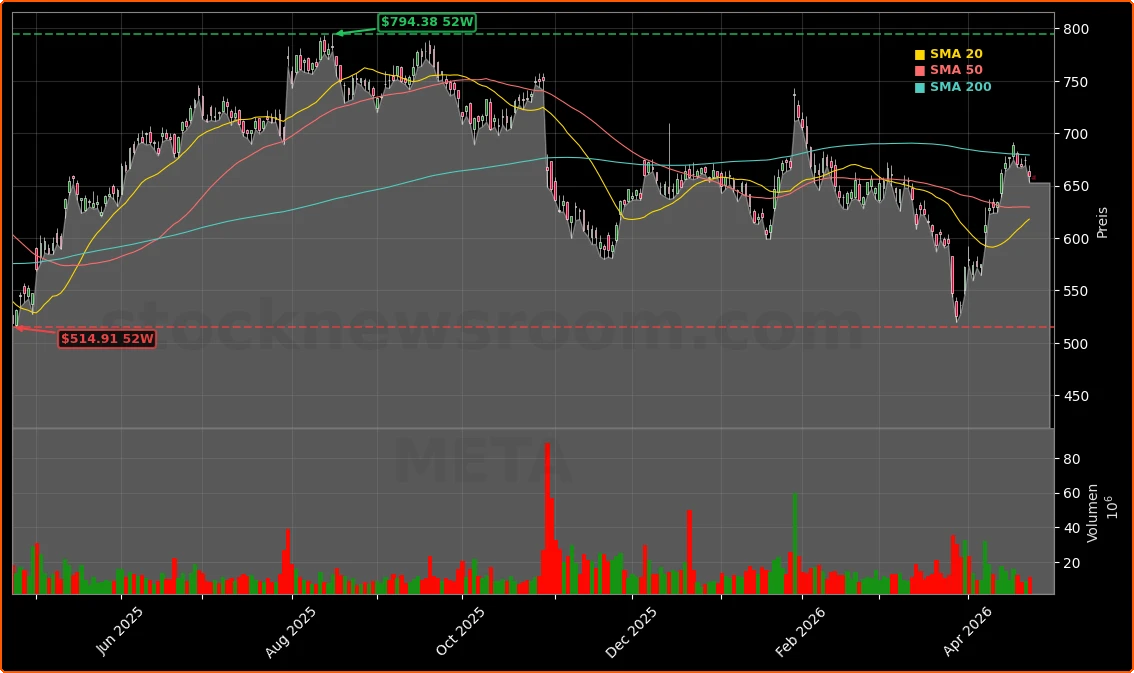
Meta Layoffs versus rivals in the AI arms race
Meta is not alone in tightening headcount while pouring billions into AI. Microsoft is launching its first‑ever voluntary buyout program in the U.S., and Amazon has already announced tens of thousands of corporate job cuts since late 2025, all while boosting cloud and AI capex. Chip suppliers like NVIDIA are reporting multiyear demand visibility from hyperscale buyers, including Meta, as data center build‑outs accelerate. Against that backdrop, the Meta Layoffs signal that management prefers to fund AI by flattening the organization rather than relying solely on incremental debt or equity.
At the same time, Meta is racing to close perceived gaps with OpenAI, Google‑parent Alphabet and Anthropic in frontier models, while still defending its social and ad franchise against TikTok and other platforms. Investors will be focused on whether AI‑driven engagement and ad yields can continue to drive top‑line growth above 20% annually, as seen in Q4 2025 when revenue jumped 24% year over year to nearly $60 billion. If that pace holds or accelerates, job reductions and other cost controls could allow Meta to absorb its AI capex while preserving margins, supporting the bullish stance taken by firms like Citizens and by hedge funds that rank Meta among their top holdings.
What do Meta Layoffs mean for profitability?
The financial logic is straightforward: Meta’s expenses are growing faster than revenue as AI and infrastructure spending spikes. Total costs rose about 40% year over year in Q4 2025, outpacing revenue growth. Management’s answer is to aggressively trim operating costs by reducing headcount, cancelling hiring and leaning on AI to automate internal workflows. Internally, the company recently rolled out its Model Capability Initiative, a tool that logs employee keystrokes and mouse activity to train AI agents to perform computer‑based tasks. CTO Andrew Bosworth has laid out a vision where “agents primarily do the work,” with humans directing and reviewing output.
For investors, the Meta Layoffs are a near‑term margin lever in an otherwise capex‑heavy story. At a recent price around $659, the stock trades at a forward multiple that many institutions still view as reasonable for a business growing revenue north of 20% with strong competitive moats. Some asset managers argue that an enterprise‑value‑to‑2026 EBIT multiple in the low‑teens undervalues Meta’s earnings power once AI spending normalizes, particularly if ad growth continues and new AI‑driven products open additional revenue streams.
How are regulators and ESG investors reacting?
Beyond the headlines around Meta Layoffs and AI spending, the company continues to face scrutiny on social and governance issues. A recent jury verdict in Los Angeles found that Instagram and YouTube had contributed to mental health harms for a former minor, concluding Meta and Alphabet “knew or should have known” their platforms posed risks to young users and failed to provide adequate warnings. Meta is appealing the ruling, but the case underscores ongoing regulatory overhang, especially for ESG‑focused investors.
The company has also been criticized for aggressive tax planning, landing alongside Amazon and Alphabet in studies of large U.S. corporations that significantly reduce federal tax bills. At the same time, Meta is partnering with next‑generation energy companies to secure long‑term, low‑carbon power for its data centers, including nuclear‑linked projects to support AI workloads. Those moves, plus rapid AI adoption, may appeal to some institutional investors even as others remain wary of headline risk around layoffs, surveillance‑style internal tools and content moderation changes.
Related Coverage
For a deeper dive into how Meta’s aggressive AI push is influencing analyst sentiment, including why UBS recently hiked its price target to $908, readers can review detailed coverage of Meta’s AI strategy and the UBS target increase. That analysis explores how accelerating ad metrics, expanding AI capabilities and massive capex plans are reshaping Wall Street expectations for Meta’s long‑term growth trajectory.
We’re doing this as part of our continued effort to run the company more efficiently and to allow us to offset the other investments we’re making.— Janelle Gale, Chief People Officer at Meta
The Meta Layoffs underline that management is willing to make painful cuts to fund an unprecedented AI infrastructure build, trading workforce stability for potential long‑term dominance in next‑gen computing. For U.S. investors, the key question is whether AI‑driven revenue and margin gains can ultimately outrun today’s cost and regulatory headwinds, a trend that upcoming earnings and guidance should clarify.