
Is Micron AI Demand powerful enough to turn a once-cyclical memory maker into a long-term AI infrastructure winner?

Is Micron AI Demand still driving the stock?
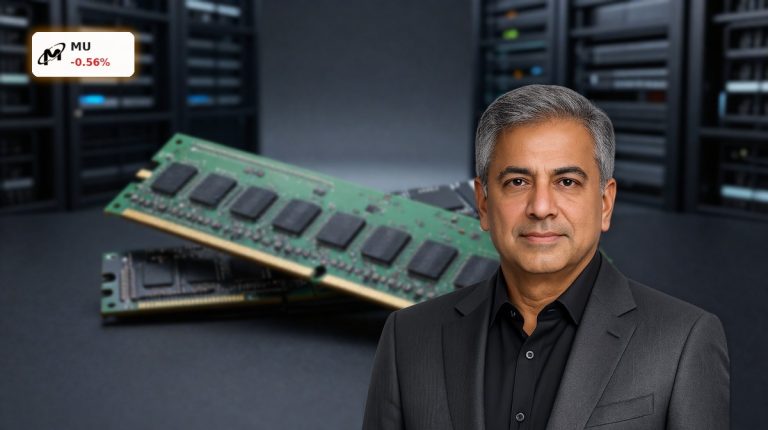
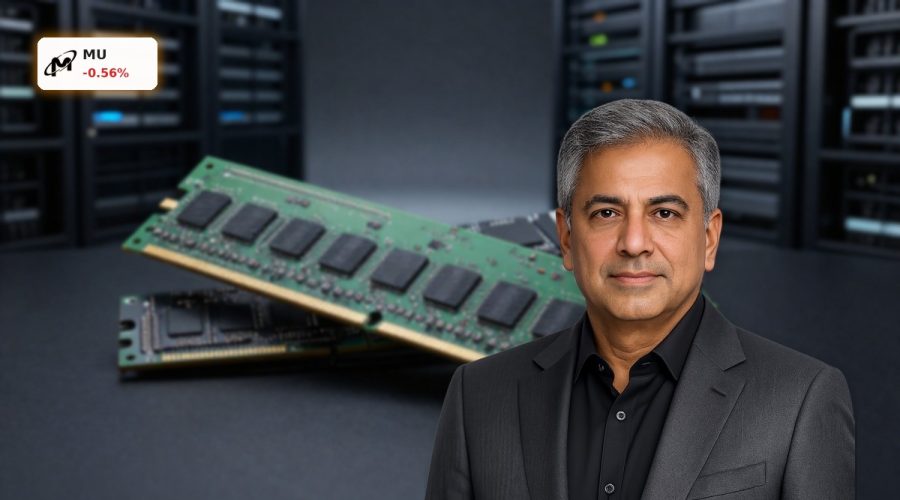
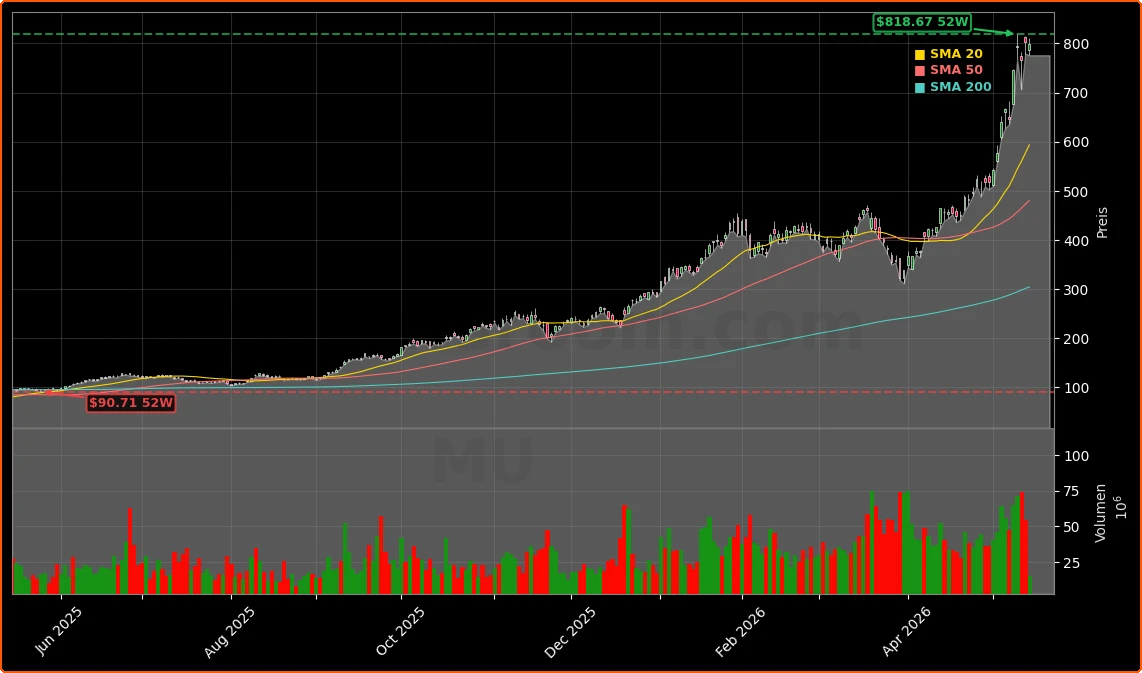
MU slipped about 0.6% intraday on Thursday to roughly $799, modestly below Wednesday’s close near $802 after a furious run that has pushed the stock up around 182% over the past year. That surge has vaulted Micron into the top tier of NASDAQ winners for 2026, fueled by insatiable demand for AI data-center memory and storage rather than pure speculation.
The current AI infrastructure boom is lifting not only Micron but also peers like NVIDIA and Broadcom, as hyperscalers and firms such as Tesla race to build out advanced training clusters. Micron’s revenue in the latest reported quarter jumped about 196% to roughly $23.9 billion, while non-GAAP EPS climbed more than 680% to $12.20 per share. Management argues that AI has “fundamentally recast memory as a defining strategic asset,” signaling that Micron AI Demand is structural, not just a short-term pricing spike.
At the same time, some short-term traders see the move as overextended. Technical strategists note the uptrend is already “far advanced,” warning that chasing the stock purely for quick intraday trades may offer an unfavorable risk-reward setup after such a parabolic run.
How profitable is Micron’s AI memory boom?
Micron’s gross margin has soared to about 74.4% in the most recent quarter, levels usually associated with software rather than hardware. That puts the company in the same league as Sandisk and Broadcom, which both reported gross margins in the high‑70% range as AI-fueled demand meets constrained supply. For a historically cyclical memory producer, these margins underscore how powerful Micron AI Demand has become in the current supercycle.
Pricing power is evident across DRAM, NAND and especially HBM, where Micron is now one of the dominant suppliers. The company has indicated it is effectively sold out of HBM through 2026 and expects to remain supply-constrained into 2027–2028 as data centers, cloud providers and AI chipmakers lock in long‑term contracts. Notably, Micron recently signed its first-ever five-year supply agreement, a rare development in what has traditionally been a short-contract, boom‑and‑bust memory market.
Even after an 800%+ share-price gain over the past year, Micron trades at roughly 35x trailing earnings and as low as about 8x projected earnings on some forward estimates, suggesting earnings power has scaled even faster than the stock. That multiple is broadly in line with the tech sector’s P/E and cheaper than some AI beneficiaries, which gives long-term investors a valuation cushion if margins normalize from today’s elevated levels.
What are analysts like Bank of America saying?
Wall Street’s sell side remains broadly bullish. Bank of America recently reiterated its Buy rating on MU and raised its price target to $950, implying about 18% upside from Thursday’s intraday price near $803 at the open. The bank simultaneously lifted its forecast for the 2030 AI data-center total addressable market to $1.7 trillion, arguing that Micron sits at the center of that buildout thanks to its HBM and cloud DRAM portfolio.
Other research desks highlight Micron’s compressed valuation versus its earnings ramp. Some analysts point out that while profits have grown roughly tenfold, the stock price has not fully kept pace, leading to a lower price-to-earnings ratio than many AI hardware peers. That has even led a few value-oriented managers to describe MU as underappreciated, despite the extraordinary share-price performance.
However, institutional positioning is not one-way. A recent SEC filing showed insider Tara Ellis selling 12,000 shares worth approximately $1.57 million, while still retaining more than 70,000 shares. Portfolio managers at large firms such as BlackRock have also been trimming some Asian chip exposure to reallocate toward other regions, a reminder that professional investors are actively risk‑managing after such a sharp semiconductor rally.
Does cyclicality still matter for Micron investors?
Veteran chip investors warn that memory remains a commodity business at its core. Historically, every memory upcycle that rode surging DRAM and NAND prices eventually reversed once new capacity came online and demand growth slowed. Commentators comparing Micron to more diversified AI infrastructure names like Marvell or networking specialists stress that memory is a classic pricing trade, not a guaranteed secular growth story.
That said, the magnitude of Micron AI Demand today is different from past cycles. Alphabet, Meta, Apple, Amazon and Microsoft are collectively ramping AI capex to unprecedented levels, with some companies signaling that spending in 2027 will “significantly increase” versus 2026. Add in emerging applications like humanoid robotics, which Micron’s management views as a potential mega‑category, and the long‑term need for high‑capacity, high‑bandwidth memory could remain structurally higher than in prior decades, even if pricing inevitably softens.
For diversified U.S. investors, the key takeaway is that MU is no longer just a cyclical PC and smartphone memory play. Instead, the stock has become a levered bet on the durability and scale of Micron AI Demand within the broader S&P 500 and NASDAQ technology complex.
Related Coverage
For a deeper dive into the geopolitical backdrop, including the CEO’s recent trip to Beijing with other U.S. chip leaders, readers can explore how diplomatic risks intersect with the AI boom in Micron China Trip: -3.6% Plunge as AI Boom Meets Geopolitics. That analysis looks at whether high‑profile meetings in China are a catalyst for the next leg of memory demand or a warning sign for future export controls.
In summary, Micron AI Demand has turned a traditionally cyclical memory maker into one of Wall Street’s most important AI infrastructure plays, combining explosive earnings growth with software‑like margins. For U.S. investors, MU now offers direct exposure to the multi‑trillion‑dollar AI data-center buildout, but also to the volatility that comes with a parabolic stock and a historically boom‑bust industry. The next few quarters of pricing, capacity additions and hyperscaler capex will show whether Micron can convert its current AI supercycle into a durable, long‑term growth trajectory.