Are Micron Earnings signaling a new AI-driven supercycle for memory, or just another peak before the next downturn?

How strong were Micron Earnings this quarter?
Micron Technology, Inc. just delivered one of the most dramatic turnarounds in the S&P 500. Fiscal Q2 2026 revenue hit a record $23.86 billion, nearly tripling from the prior year. Even more striking, gross margin surged to 74.4%, a level usually associated with software platforms, not hardware manufacturers. Just three years ago, Micron’s gross margin was roughly -33% amid a brutal memory glut.
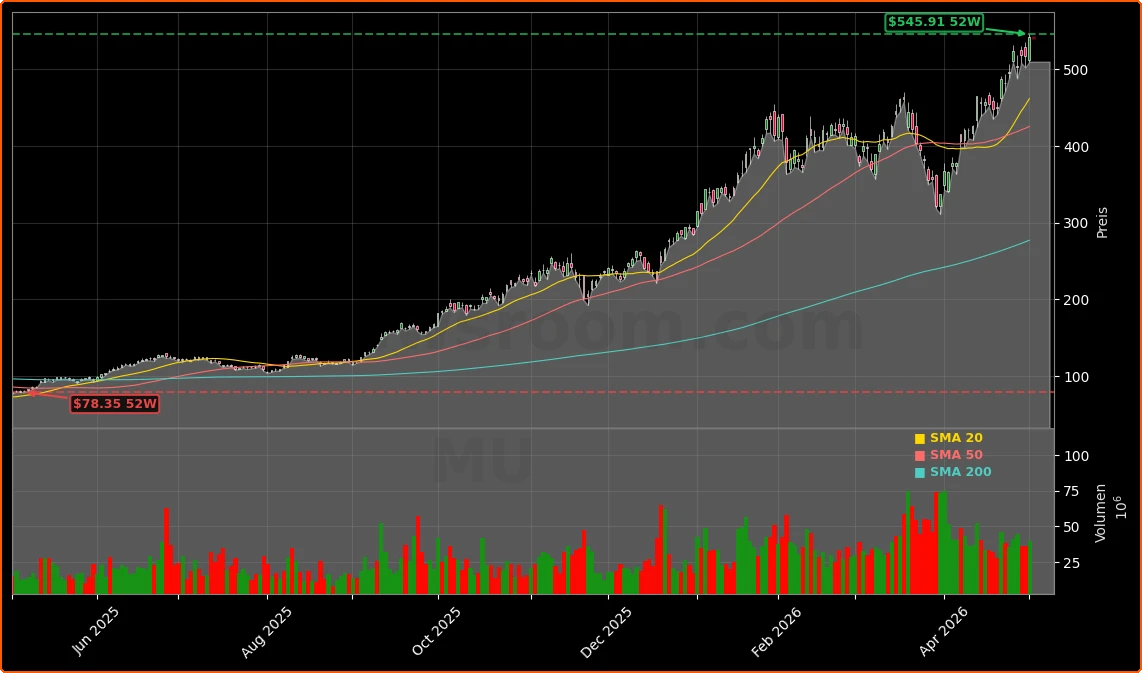
This quarter’s Micron Earnings highlight how AI has turned memory into a bottleneck instead of a commodity. High‑bandwidth memory, which sits next to GPUs in AI accelerators, is in such short supply that prices and mix have pushed Micron’s profitability into NVIDIA‑like territory. With shares now up roughly 70% year to date and recently clearing the $500 mark for the first time, Micron is no longer trading like a low‑quality cyclical name.
Micron says demand for HBM is so strong that it can only satisfy around half to two‑thirds of the medium‑term orders it sees. Simple supply‑and‑demand math explains the Micron Earnings surge: when supply is structurally tight against explosive AI data‑center demand, pricing power shifts decisively to the few suppliers that can ship.
What is driving Micron beyond traditional memory cycles?
For decades, memory stocks were shorthand for boom‑bust volatility. Capacity would ramp, prices would collapse, and profits would vanish. Today’s Micron Earnings suggest something different is unfolding. Only three companies manufacture HBM at scale worldwide: Samsung, SK Hynix, and Micron. As of late 2025, SK Hynix controlled about 57% of this market, while Samsung and Micron were in the low‑20% share range.
At the same time, hyperscale cloud operators are unleashing unprecedented capital expenditure plans. Amazon, Microsoft, Alphabet, and Meta Platforms together are expected to spend roughly $710 billion this year on AI infrastructure. That money flows not just into GPUs from NVIDIA but also into the memory stacks, networking gear, and power systems that make those chips usable at scale.
An IDC semiconductor analyst now argues that AI demand has effectively rewired the industry’s pricing dynamics, pointing to more multi‑year supply agreements, resilient pricing, and geographic diversification of manufacturing. That backdrop helps explain why Micron trades at a forward P/E still in the single digits despite its explosive Micron Earnings trajectory and premium margin profile.
How does Micron stack up against US tech favorites?
From a US investor perspective, Micron’s story now sits between pure AI compute plays and broader tech bellwethers. NVIDIA remains the flagship GPU supplier. Apple focuses on tightly integrated devices and custom silicon. Tesla leans on AI for autonomous driving. Micron, by contrast, has become a leveraged way to own the memory spine of this AI build‑out.
Compared with peer memory provider SanDisk, Micron is larger and more diversified. It competes across DRAM, NAND, and HBM, while SanDisk is still overwhelmingly tied to NAND storage. Recent SanDisk results have been strong, but Micron’s mix shift toward HBM and core data‑center DRAM is what pushed Micron Earnings into a different league this quarter.
Analyst sentiment is broadly constructive. TIKR highlights that several Wall Street firms now model continued margin expansion and see room for multiple re‑rating, with price targets that imply double‑digit upside from current levels. Meanwhile, Zacks and other research shops frequently cite Micron alongside NVIDIA and Western Digital as key beneficiaries of ongoing AI capex strength.
What are analysts watching after Micron Earnings?
Despite blockbuster Micron Earnings, the stock’s after‑hours dip to $539.91 shows investors are also laser‑focused on the risks. The core concern: how long this AI memory supercycle can defy the traditional pattern of over‑investment and price crashes.
Micron itself projects a massive expansion in HBM’s total addressable market from about $35 billion to roughly $100 billion by 2028. Wall Street consensus now sees Micron’s annual revenue potentially reaching around $169 billion by fiscal 2027, which would put it in the same revenue ballpark as logic giant TSMC. Some analysts at firms such as Goldman Sachs and Morgan Stanley argue that even if gross margins drift down from the mid‑70s, Micron’s higher structural profitability justifies current valuations.
Other voices, including strategists at The Globe and Mail’s research desk, still emphasize caution. Their view: when supply eventually catches up, memory prices will normalize, and late‑cycle buyers of the stock could face sharp drawdowns. For active US investors, that means treating Micron as a high‑conviction but still cyclical position that demands close monitoring of capacity additions from Micron, Samsung, and SK Hynix.
Related Coverage: What’s next for Micron?
For readers seeking a deeper dive into how far this rally might run, the article “Micron Forecast $1,000: Can the AI Memory Rally Last?” examines whether a four‑digit share price is a realistic outcome or a sign of late‑stage euphoria. It walks through scenario analysis on AI capex, HBM pricing, and earnings power, and is a useful complement to the latest Micron Earnings snapshot for investors building or trimming positions.
In summary, the latest Micron Earnings confirm that AI has transformed the company from a cyclical commodity supplier into a central profit engine of the data‑center stack. For US portfolios, Micron now offers both leveraged exposure to AI infrastructure and the reminder that memory cycles eventually correct. The next few quarters will show whether supply discipline and sustained HBM demand can keep margins near today’s elite levels, making Micron an increasingly important stock to watch on Wall Street.