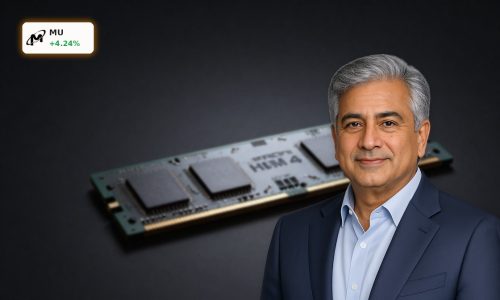
Can Micron’s AI memory boom justify Wall Street’s stunning new targets, or is this rally already pricing in perfection?

What Does $1,250 Mean for Micron Technology Forecast?
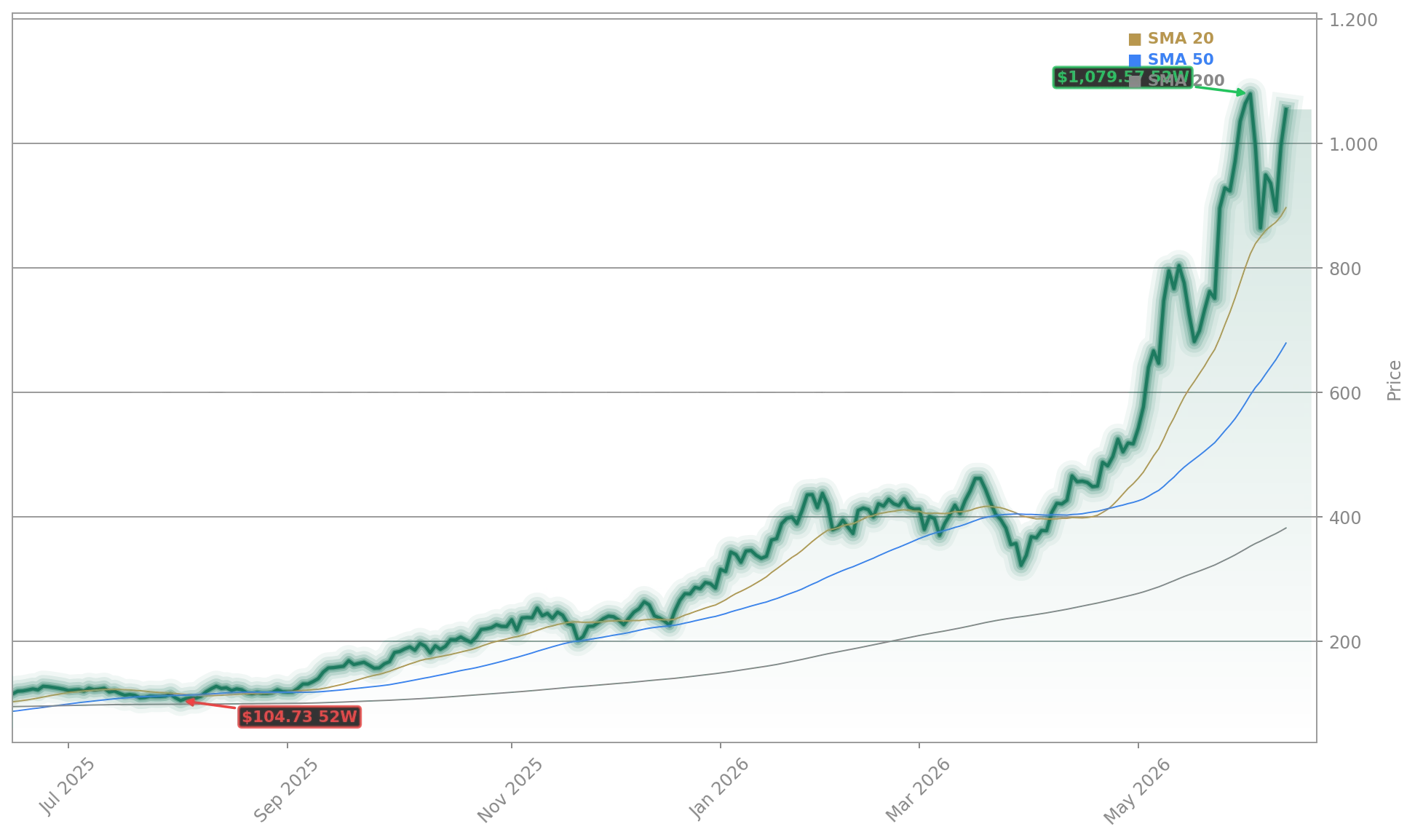
Wolfe Research’s $1,250 price target — up from $550 — represents the most dramatic upward revision among major firms this quarter and underscores a fundamental recalibration of the Micron Technology Forecast. The firm cited its updated memory model, projecting DRAM price increases through CY 2026 and CY 2027, with revenue expected to hit $226.5 billion and EPS $135 by 2027. TD Cowen followed suit, maintaining a ‘Buy’ rating and setting an even more aggressive $1,500 target. These moves sharply contrast with the prior median Wall Street target of $840 — implying 15% downside — highlighting how rapidly analyst consensus is shifting. The revision wasn’t based on incremental optimism: it reflects long-term supply agreements with hyperscalers and AI chipmakers, including deep integration with Apple and Meta’s infrastructure stacks.
How Does Micron Fit Into the AI Stack vs. NVIDIA?
While NVIDIA dominates the GPU layer, Micron Technology, Inc. supplies the critical memory infrastructure that makes those chips viable. High-bandwidth memory (HBM) — where Micron ranks second globally, tied with SK Hynix — is now the bottleneck in AI server deployments. According to J.P. Morgan strategist Meera Pandit, ‘CPUs store information in NAND, or long-term memory, and use DRAM, or working memory, to perform tasks — but HBM is the fuel that keeps AI GPUs running at full throttle.’ With NAND prices up 200% and DRAM prices up 300% year-over-year, Micron’s Q2 fiscal 2026 results — $23.8 billion in revenue and $12.20 non-GAAP EPS — were driven not by unit growth alone, but by structural pricing power. That dynamic separates Micron from more cyclical peers and tightens its correlation with AI capex trends.
Is the Micron Technology Forecast Sustainable Amid Capacity Expansion?
Yes — but only for the near term. Samsung and SK Hynix are expanding fab capacity, with new production lines expected to ramp as early as late 2027. However, Wolfe Research and Morgan Stanley both stress that lead times for HBM3 and HBM4 production remain at 18+ months, and qualification cycles with AI server OEMs stretch beyond two years. That creates a multi-year supply-demand gap. Still, analysts warn that memory remains the most volatile semiconductor segment: earnings are projected to surge 92% annually through 2028, then drop 70% in 2029 as supply normalizes. That volatility makes the current 45x forward P/E look expensive — unless investors anchor valuation to AI infrastructure growth, not legacy memory cycles.
How Is Micron Technology Forecast Impacting the S&P 500 and Nasdaq?
Micron Technology, Inc. is now a core component of the ‘AI Big 10’ — an expanded version of the Magnificent 7 that includes Broadcom, AMD, and Micron. Per LSEG data, this group accounts for over 40% of the S&P 500’s index weight. MU’s 8.19% premarket surge on Monday — alongside gains in the Nasdaq 100 (+2.11%) and SPDR S&P 500 ETF (+1.28%) — shows how deeply the Micron Technology Forecast is now woven into broader market sentiment. With the Nasdaq up 26% year-to-date and MU up 112%, the stock has become a de facto AI liquidity proxy for institutional portfolios. Its performance is increasingly cited alongside Tesla and NVIDIA as a barometer for AI infrastructure spending velocity — not just chip demand.
Related coverage: Micron Forecast: $23.8B Record Revenue Fuels Earnings Buzz examines how MU’s Q2 fiscal 2026 beat reshaped analyst models and valuation frameworks. Meanwhile, Microsoft AI Strategy: $37B AI Boom Meets Stock Warning explores how hyperscaler capex decisions — including memory procurement — could accelerate or constrain Micron’s growth runway over the next 12 months.
CPUs store information in NAND, or long-term memory, and use DRAM, or working memory, to perform tasks — but HBM is the fuel that keeps AI GPUs running at full throttle.— Meera Pandit, J.P. Morgan strategist
Micron Technology Forecast has decisively shifted from a cyclical memory play to a strategic AI infrastructure pillar. For investors, this means MU is no longer just a semiconductor stock — it’s a leveraged bet on AI server deployment velocity. The next catalyst will be Q3 fiscal 2026 guidance, due in late August, which should clarify how long pricing power holds and whether long-term agreements are expanding beyond current partners. With Wolfe Research, TD Cowen, and Morgan Stanley all raising targets, the Micron Technology Forecast is now one of the most bullish in the S&P 500 — and for good reason.