

Did one small Bitcoin sale just expose a much bigger risk inside MicroStrategy’s high-stakes financing machine?

Why Did MicroStrategy Bitcoin Sale Shake the Market?
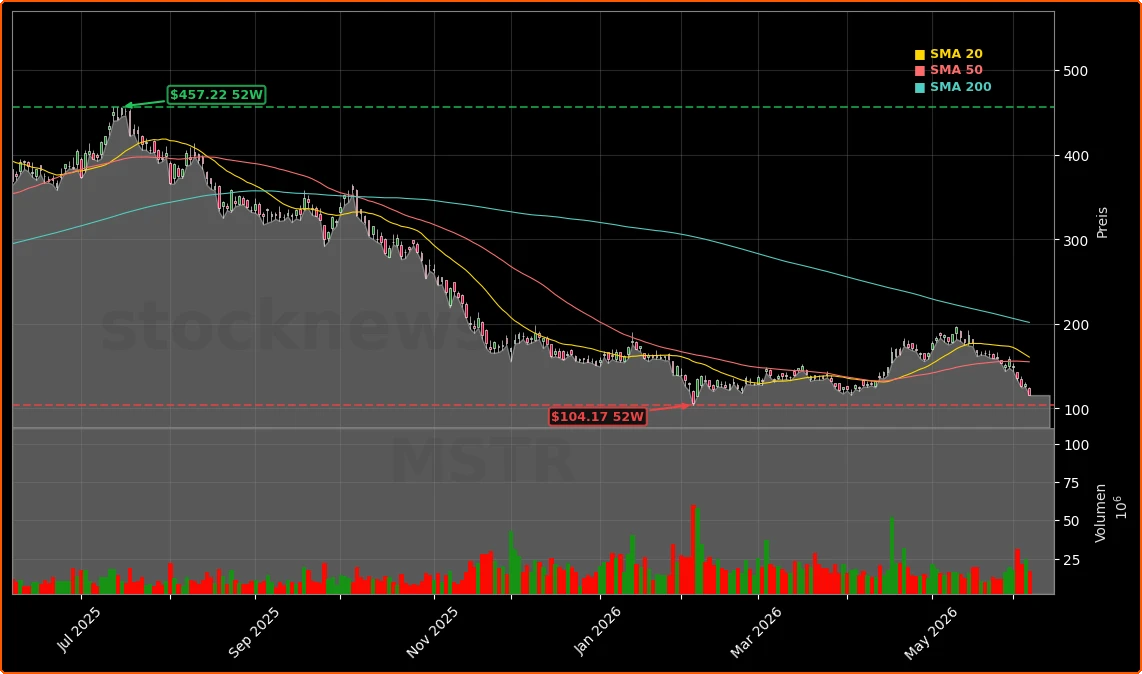
The sale of 32 Bitcoin — valued at approximately $2.5 million — marked MicroStrategy Incorporated’s first BTC disposition since 2022. Though negligible versus its 843,706-BTC holdings, the move shattered the ‘never sell’ narrative that had underpinned investor confidence for years. Market psychology shifted instantly: Bitcoin plunged 13.5% week-to-date, while MicroStrategy Incorporated shares hit a two-month low. Analysts at Grayscale, led by Zach Pandl, warn the episode exposed a dangerous feedback loop — falling BTC prices pressure STRC pricing, which triggers dividend hikes, which in turn force more BTC sales to fund obligations. That dynamic now threatens to erode the company’s balance sheet efficiency relative to low-cost alternatives like the iShares Bitcoin Trust ETF (0.15% fee).
How High Are MicroStrategy’s Financing Costs Now?
MicroStrategy Incorporated’s $10.5 billion Stretch (STRC) preferred stock is now on the cusp of a 25-basis-point dividend increase — from 11.5% to 11.75% — as its monthly volume-weighted average price hovers near 96.6, well below the 99.0 threshold. That hike would cost an additional $26 million annually in interest, according to Investor’s Business Daily analysis. With STRC trading at $95.42 — and its typical post-dividend record-date drop of ~0.96 points — the hurdle to avoid the increase is tightening by the hour. Crucially, MicroStrategy Incorporated can only issue new STRC when it trades at or above $100 — a condition currently unmet. That freeze halts its primary BTC-buying engine, limiting its ability to stabilize Bitcoin’s price or its own balance sheet.
What’s the Impact on U.S. Portfolio Exposure?
For U.S. investors, MicroStrategy Incorporated remains a uniquely leveraged, high-beta proxy for Bitcoin — more volatile than ETFs and far more sensitive to financing stress than pure-play miners or infrastructure plays like NVIDIA or Tesla. Its 15% year-to-date underperformance (versus the S&P 500’s +9.2%) reflects growing skepticism about its capital discipline. Meanwhile, competitors like Bitmine Immersion Technologies (BMNR), which pursues an Ethereum staking yield model, are drawing comparative attention — though Standard Chartered’s Geoffrey Kendrick cautions that even 5% staking APY fails to cover 9.5% preferred coupons without continuous accumulation. Unlike MicroStrategy Incorporated, Bitmine’s model avoids forced asset sales — a key distinction for risk-averse U.S. portfolios.
Is Dilution or Dividend Risk the Bigger Threat?
Higher financing costs mean MicroStrategy Incorporated becomes less efficient as a vehicle for buying bitcoin — especially relative to low-cost ETFs.— Investor’s Business Daily
MicroStrategy Incorporated has historically funded its $1.712 billion annual interest and dividend burden through equity issuance — diluting shareholders rather than charging fees. Last week’s $128 million MSTR stock sale, combined with the $2.5 million MicroStrategy Bitcoin Sale, covered a $90 million STRC dividend — but left the company exposed ahead of a $235 million June payment deadline. Citigroup analysts note the growing tension between maintaining dividend credibility and preserving equity value, warning that repeated dilution could accelerate outflows from U.S. index funds. Already, Polymarket assigns a 64% implied probability of MSCI index delisting by year-end — a red flag for passive investors holding MicroStrategy Incorporated via ETFs or mutual funds.