

Is Strategy’s tiny Bitcoin sale just housekeeping, or the first crack in the market’s favorite never-sell narrative?

Why does the MicroStrategy Bitcoin Sale matter?
MicroStrategy Incorporated, now operating as Strategy, disclosed in an 8-K that it sold 32 BTC between May 26 and May 31 at an average price of $77,135, generating about $2.5 million. The proceeds were earmarked to fund distributions on preferred stock. On the surface, that looks immaterial for a company still holding 843,706 Bitcoin. Yet Wall Street is reacting to the symbolism, not the size.
The sale represents roughly 0.0038% of Strategy’s Bitcoin treasury, but it is still the first publicized disposal since the December 2022 tax-loss transaction. That matters because Executive Chairman Michael Saylor built much of the bull case around relentless accumulation. For many investors, the MicroStrategy Bitcoin Sale is less about balance-sheet math and more about whether the company’s financing structure could eventually force additional Bitcoin sales if market conditions worsen.
What is Strategy signaling now?
Management framed the transaction as a capital-allocation decision tied to shareholder value and preferred-stock obligations rather than a directional call on Bitcoin. Strategy has launched multiple preferred securities, including STRC, STRK, STRF, and STRD, to widen its investor base and raise capital around its Bitcoin treasury. That model works best when those securities trade near par and distributions remain easy to fund.
The latest filing suggests the Bitcoin pile is not untouchable if cash needs arise. That shift is important for U.S. investors who have treated MSTR as a leveraged proxy for Bitcoin rather than a company likely to monetize its holdings. The issue is not whether Strategy can sell 32 BTC without market stress; it is whether investors now have to price in the possibility of future treasury sales during weaker crypto markets.
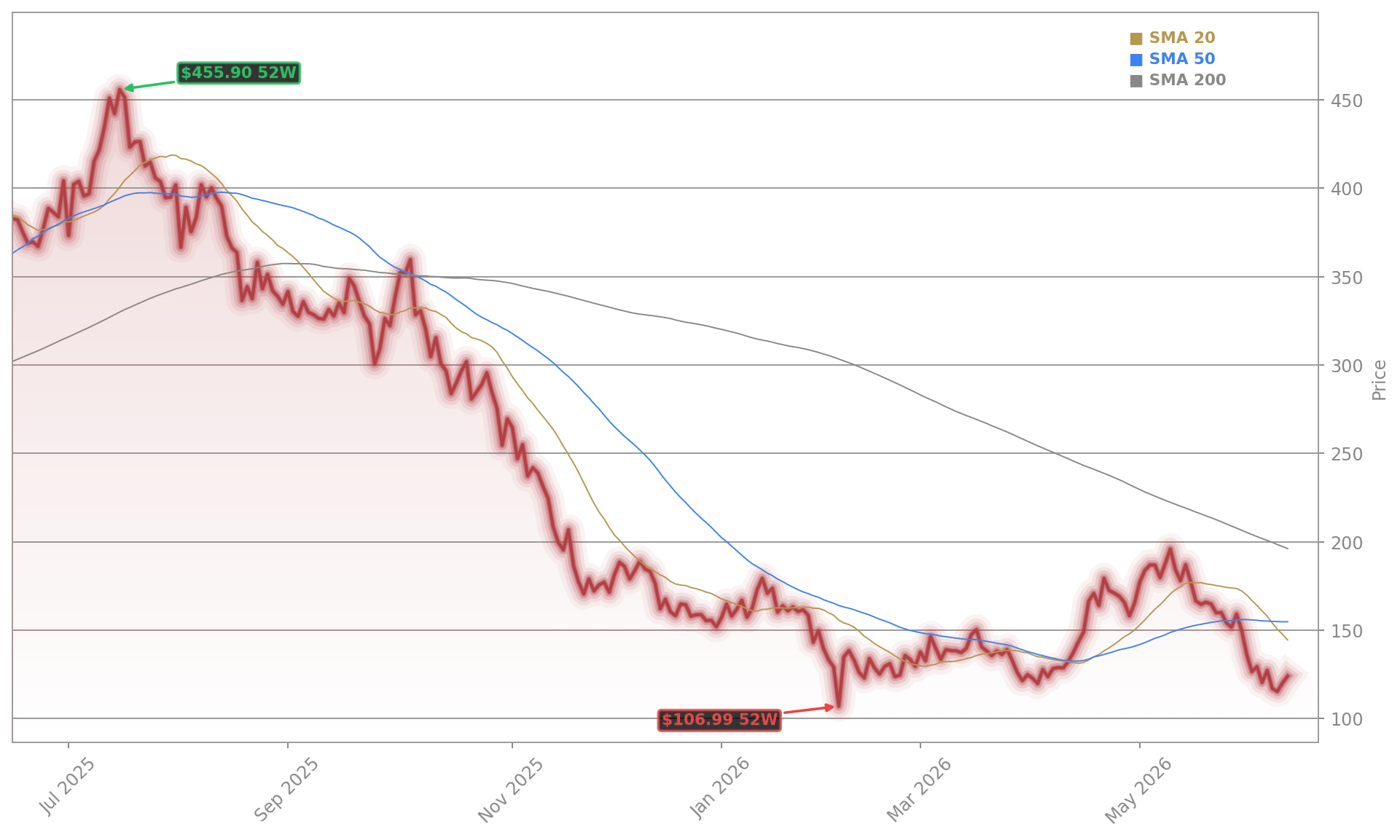
That risk also comes as Bitcoin itself has pulled back sharply, increasing pressure on crypto-linked equities and on stocks investors use as alternatives to direct token exposure. Compared with names such as Tesla, NVIDIA, and Apple, MSTR remains a far more concentrated macro trade built around one volatile asset.
How are traders and analysts reading Strategy?
Another layer of attention comes from the prediction-market dispute around whether the sale “counted” by May 31 or only when it was disclosed on June 1. While that fight is mostly a side story for equity investors, it underlines how closely every action by Strategy is being parsed. The filing itself makes clear the transaction happened during the last week of May, even if disclosure came later.
Short-term sentiment has turned cautious. TradingView market commentary in recent weeks had highlighted bullish setups tied to Bitcoin momentum and possible institutional demand, while GuruFocus flagged broader valuation and financial warning signs around Strategy’s structure. TradingKey previously pointed to a median analyst target of $347.50, but no fresh Tuesday rating changes from firms such as Citigroup, RBC Capital Markets, or Goldman Sachs were attached to the sale disclosure. In the absence of new calls from those banks, the stock is trading on narrative risk and Bitcoin direction.
Related Coverage: Investors looking for a deeper read on the immediate stock reaction can see how Strategy Bitcoin Sale: MSTR Drops 6.2% After BTC Move breaks down the market’s first response and the debate over whether this was symbolic or structural. For a wider look at how crypto platforms are trying to connect digital assets with equities, Binance Stock Trading Opens 8,000 U.S. Stocks for Global Users shows how the investing landscape around tokenized and cross-border stock access is evolving.
Our goal is to make STRC the best credit instrument in the world.— Michael Saylor
The MicroStrategy Bitcoin Sale does not meaningfully shrink Strategy’s massive Bitcoin reserve, but it does change the conversation around what the reserve is for. For investors, the next key test is whether this remains a one-off funding move or becomes a template during future stress, and that makes both Bitcoin price action and preferred-stock stability critical to watch.