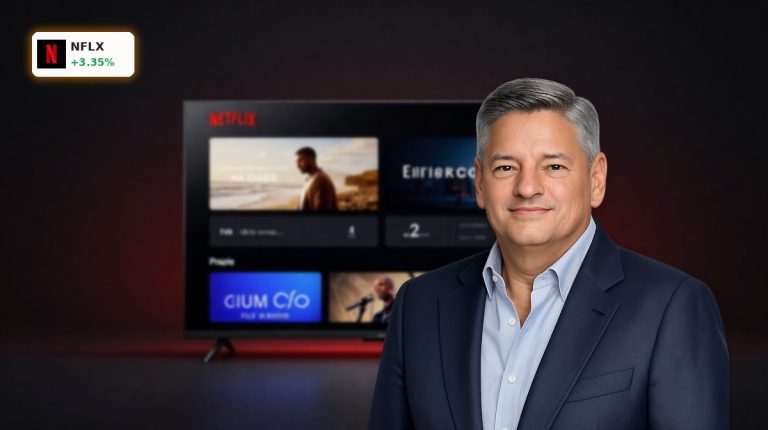
Can the evolving Netflix Strategy turn a post-earnings stock setback into long-term upside through live sports, gaming and capital returns?

Is Netflix Strategy shifting after the stock drop?
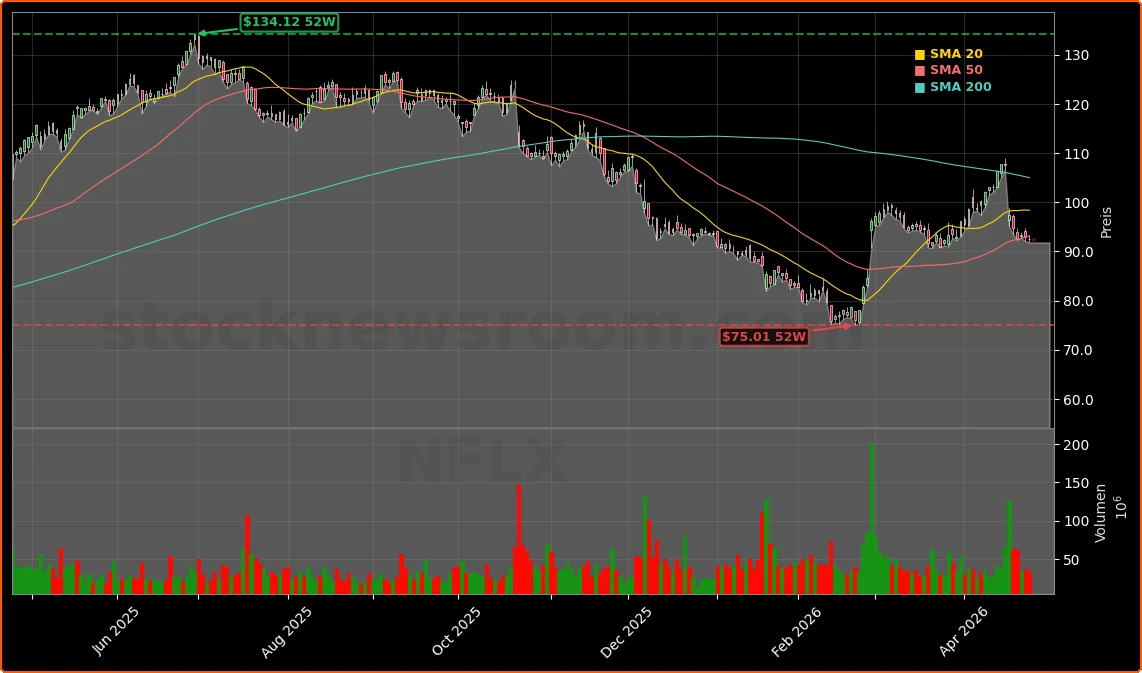
Netflix, Inc. has become a show-me stock again after Q1 2026 earnings and a softer Q2 outlook triggered a roughly 13% slide from recent levels. The share price, now near $92, sits well below its 52‑week high and places the stock in a consolidation phase even as it remains one of the larger names in the communication-services corner of the S&P 500. The pullback coincides with the planned June departure of co‑founder Reed Hastings from the board, a symbolic turning point as management pivots from hypergrowth to disciplined capital returns and more diversified revenue lines.
Despite the guidance disappointment, management reaffirmed its full‑year revenue outlook and reiterated confidence in its ad‑supported tier and paid-sharing initiatives. For U.S. and global investors, the central issue is how the updated Netflix Strategy balances slower subscriber growth with higher average revenue per user and new monetization levers such as live events, gaming and experiential venues.
How central are live sports to Netflix Strategy?
One of the clearest new pillars of Netflix Strategy is live sports and unscripted events, an area where traditional broadcasters and streamers like Apple, Amazon and Disney have spent aggressively. Netflix has begun airing weekly WWE Raw, giving it a recurring live sports anchor that can drive both acquisition and retention among younger, global audiences. It is also testing event-style programming, including a mixed martial arts match featuring Ronda Rousey vs. Gina Carano and exclusive coverage of the Canadian Grand Prix motor race.
The broader sports streaming market is projected to roughly double from the mid‑$30 billion range in 2024 to more than $68 billion by 2030, creating a sizeable opportunity if Netflix can secure rights at disciplined prices. Unlike some rivals, the company is so far avoiding massive, multi‑year league packages in favor of targeted properties that can be marketed heavily on the existing platform. For investors, this measured approach reduces the risk of overpaying that has pressured margins at peers, while still positioning Netflix to learn how to monetize live content through ads, sponsorships and potential upsell tiers.
What role do Netflix House and gaming play?
Beyond the screen, Netflix House is emerging as another test bed within the broader Netflix Strategy. The first two sites, in Dallas and Philadelphia, blend themed food, interactive games and branded merchandise in a concept often compared to a streaming‑era Dave & Buster’s. These venues extend the life of hit franchises, turn fandom into higher‑margin merchandise sales and create real‑world marketing engines for upcoming shows and films.
If the format scales, management could eventually push further into destination‑style attractions, echoing elements of the Walt Disney theme‑park model, though such a move would require heavy capital outlays and years of planning. Parallel to that, Netflix continues to expand its gaming unit, currently positioned mainly as a value‑add for subscribers rather than a standalone profit center. Over time, deeper integration of games based on flagship IP could open in‑app purchase and licensing opportunities, similar to the playbook that helped turn NVIDIA’s ecosystem into a durable moat around its core chips business.
How does capital return shape the Netflix Strategy?
On the capital-allocation side, the company has clearly signaled that buybacks are now a core element of Netflix Strategy. The board recently authorized an additional $25 billion in share repurchases, lifting total capacity to about $32 billion. This move followed the decision to step away from bidding on Warner Bros. Discovery assets, underscoring a preference for organic growth rather than large-scale M&A. For shareholders, the expanded authorization provides a sizable demand backstop at current valuations and could boost per‑share metrics if free cash flow remains robust.
Barclays has responded to investor demand for exposure by structuring several Netflix‑linked notes, including principal-protected contingent‑return products that promise a minimum return if the stock trades above set barriers on future review dates. While such instruments are complex and carry issuer credit risk, their appearance underscores continued institutional interest in the name despite recent volatility. On the valuation front, Morningstar views Netflix as moderately overvalued with a fair value estimate around $80, suggesting limited margin of safety near current prices and reinforcing the importance of execution on new growth initiatives.
How does Netflix compare with other tech heavyweights?
Relative to mega‑cap peers like Apple or Tesla, Netflix is further along in its transition from pure growth story to cash‑return vehicle. Unlike Tesla, which is still heavily reinvesting in manufacturing and AI, or NVIDIA, which is riding a powerful AI hardware cycle, Netflix’s core market is more mature and competitive. That makes the success of its ad tier, live sports push, Netflix House and gaming crucial to maintaining low‑teens revenue growth without overleveraging the balance sheet.
Content remains the primary draw. Recent hits such as the true‑crime documentary series “Trust Me: The False Prophet,” which has dominated the platform’s internal viewership charts and earned exceptionally strong audience scores, highlight Netflix’s continued ability to surface breakout titles even without exclusive access to every major production partner. The end of exclusive ties with Higher Ground Productions, the company run by Barack and Michelle Obama, illustrates a broader industry shift toward flexible, multi‑studio relationships—but Netflix retains a first‑look deal and the scale advantage of its global audience.
Related Coverage
Investors looking for more detail on the latest quarterly dynamics can review our in‑depth earnings coverage. In Netflix Earnings Record: Q1 Profit Surge but Outlook Warning, we break down how record profits and a cautious outlook turned the stock into a show‑me story and set the stage for the strategic pivots described here.
In summary, the evolving Netflix Strategy knits together live sports, Netflix House, gaming and a scaled ad tier atop a still‑dominant streaming platform while channeling growing cash flows into a massive buyback program. For U.S. and international investors, that combination offers solid, if more incremental, upside rather than the explosive returns of the company’s early years. The next few quarters—especially the performance of live events and experiential ventures—will show whether this Netflix Strategy can sustain growth and keep the stock attractive within diversified tech and communication‑services portfolios.