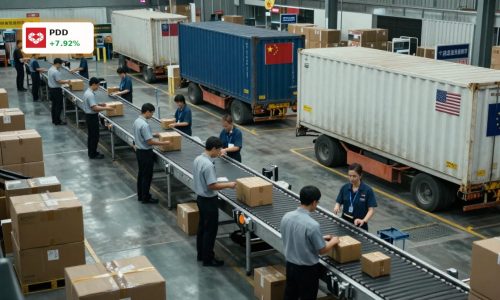
Can PDD Holdings Earnings convince investors to fund a long supply-chain bet even as profits and premarket sentiment turn lower?

Why are PDD Holdings Earnings moving the stock?
PDD Holdings Earnings landed with a mixed message for investors. The stock closed Tuesday at $97.40, then traded at $88.90 in premarket action, down about 8.0%, even though the latest quote of $96.64 still showed a gain versus the prior close in headline market data. The move suggests traders are weighing stronger top-line growth against a more cautious profit outlook as the company ramps spending.
For the March quarter, revenue rose 11% year over year to RMB106.2 billion, or about $15.4 billion. Operating profit increased 22% to RMB19.6 billion, while non-GAAP operating profit climbed 15% to RMB21.1 billion. But net income attributable to ordinary shareholders fell 15% to RMB12.5 billion, and non-GAAP net income dropped 17% to RMB14.1 billion. Diluted earnings per ADS also declined to RMB8.48 from RMB9.94.
What did PDD say about growth?
Management made clear that the next phase will prioritize infrastructure over short-term margin maximization. Co-CEO Lei Chen said the quarter marked the beginning of deep transformations across the business, internal processes, and organization. Co-CEO Jiazhen Zhao called supply-chain investment the company’s core strategic priority for the next decade, including building a first-party brand business and creating more opportunities for partners.
That framing matters because PDD Holdings Earnings were not just about quarterly beats or misses. They also reset expectations around how aggressively the company will invest. Revenue from transaction services rose 20% to RMB56.3 billion, outpacing the much smaller increase in online marketing services, which reached RMB49.9 billion. Costs of revenue rose 15%, driven by fulfillment, bandwidth, server, and payment processing expenses. Research and development spending also moved higher, reaching RMB4.4 billion.
How does Temu change the PDD setup?
For US investors, the key issue is whether domestic execution can offset rising international friction tied to Temu. Recent market commentary has highlighted a tougher operating backdrop after the end of the US de minimis exemption, a shift that could increase cross-border costs and pressure growth. Other reports have pointed to broader regulatory scrutiny around cross-border commerce and a weaker sentiment backdrop for Chinese ADRs.
That helps explain why the stock reaction looks harsher than the headline revenue growth might suggest. PDD still has a formidable balance sheet, with cash, cash equivalents, and short-term investments of RMB436.1 billion as of March 31. That gives it flexibility to keep investing even as competition intensifies across global e-commerce, where investors also compare execution and logistics discipline with names like Amazon, Alibaba, and JD.com. In a market increasingly rewarding efficiency, the company is asking shareholders to stay patient.
What should Wall Street watch next?
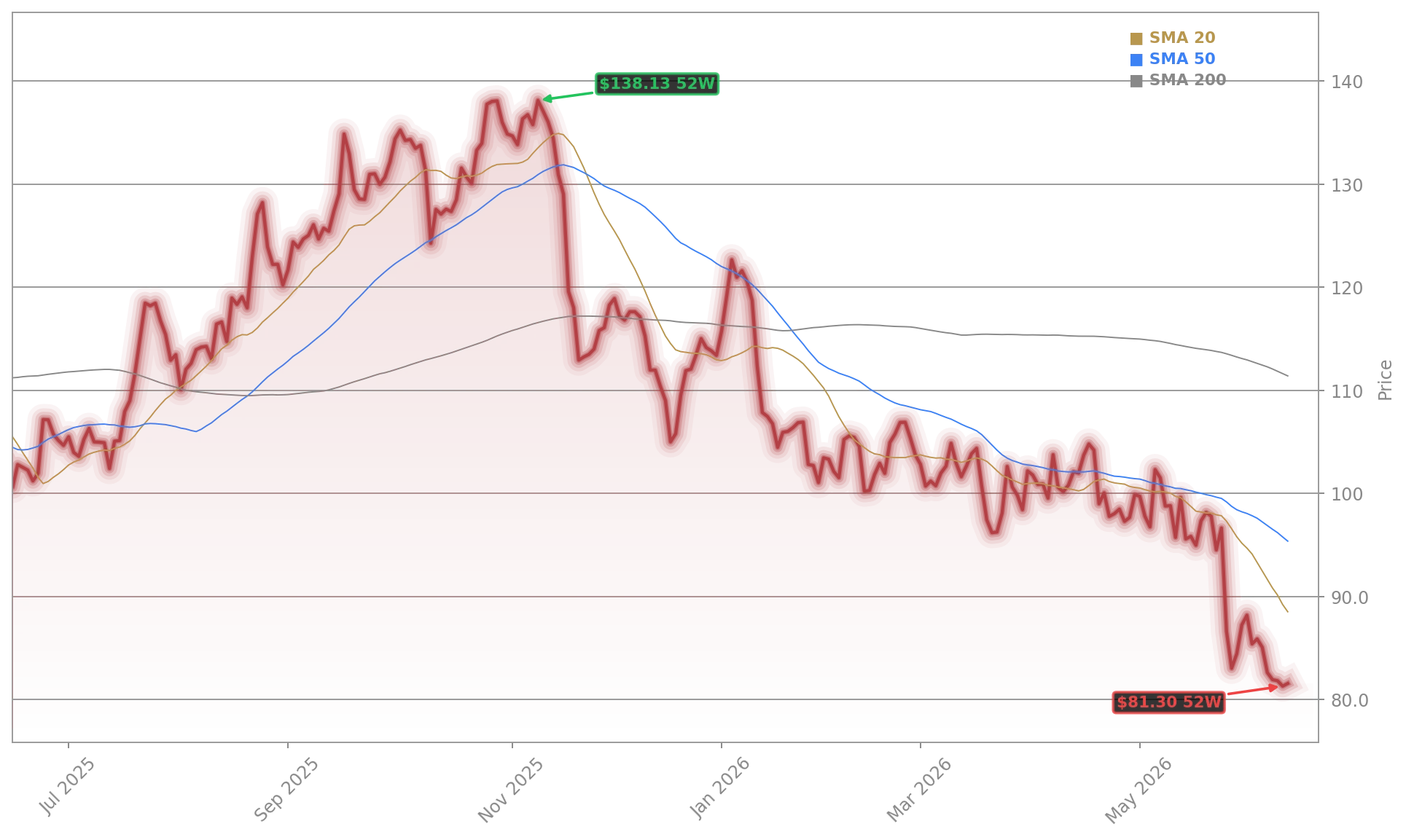
Analyst positioning has been mixed ahead of the release. TradingKey noted that analysts broadly maintained a Buy view with an average price target of $142.80, while Yahoo Finance highlighted a Hold-equivalent stance through the Zacks Rank system. Simply Wall Street argued the shares still screen as undervalued versus fair value estimates, and Investing.com emphasized that the stock had been trading near its 52-week low area rather than anywhere close to a high.
Related Coverage: Investors tracking margin pressure around PDD Holdings Earnings may also want to revisit StockNewsRoom’s earlier analysis, PDD Earnings +7.9% Surge as Temu Faces Margin Warning. That piece examined whether a post-earnings rally could hold up as costs climbed and Temu faced a tougher tariff and regulatory environment, themes that remain highly relevant after Wednesday’s update.
PDD Holdings Earnings show a company that is still growing, still highly profitable at the operating level, and increasingly willing to trade near-term earnings for a larger supply-chain position. For investors, the next big test is whether those investments stabilize margins and reinforce Temu and the core marketplace fast enough to rebuild confidence. If management executes, the current pullback could shift from warning sign to opportunity.
As we head into the next decade of our journey, supply chain investments will be our core strategic priority.— Jiazhen Zhao
Fazit folgt.