
Why is PDD China Expansion attracting buyers even as Wall Street cuts targets and warns about weaker margins?

Why Did PDD Rally Amid Downgrades?
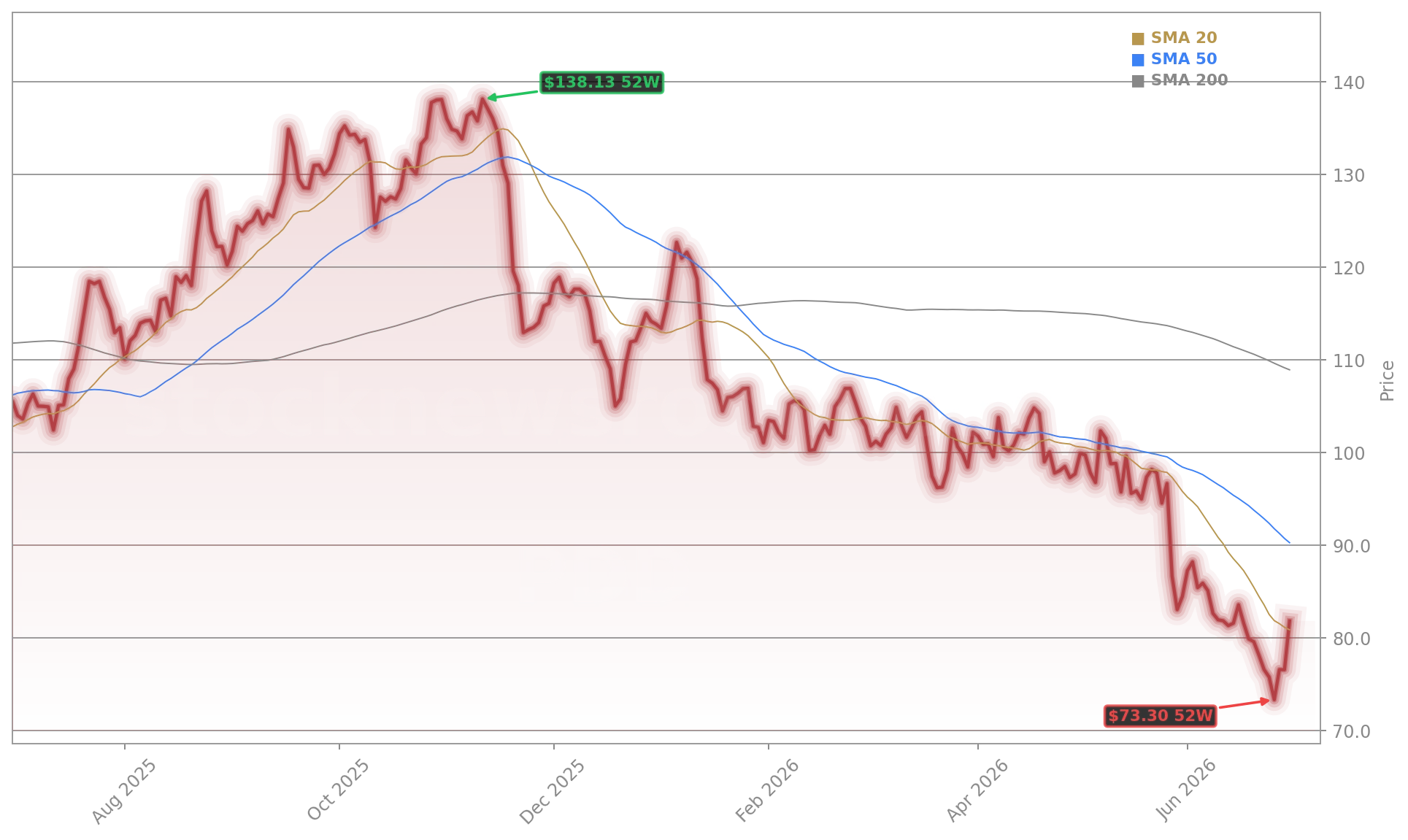
PDD Holdings Inc. jumped 8.29% to $82.52 on Wednesday — outperforming the NASDAQ and S&P 500 — despite a wave of analyst revisions. Daiwa downgraded the stock to Hold from Buy on June 24, slashing its price target to $80 from $145. The firm cited China’s 2026 6.18 shopping festival as a ‘negative surprise,’ with gross merchandise value rising just 0.9% year-over-year versus 15% in 2025. Bank of America followed on June 15, cutting its target to $113 from $140 and lowering 2026–27 revenue forecasts by 6%. Benchmark analyst Fawne Jiang trimmed her target to $127 from $160, maintaining a Buy rating but warning that PDD remains in the ‘penalty box’ until earnings normalization becomes clearer. The rally suggests institutional buyers — including USS Investment Management, which increased its stake by 86% in Q1 — are pricing in long-term infrastructure upside over near-term margin pressure.
What Is Driving PDD China Expansion?
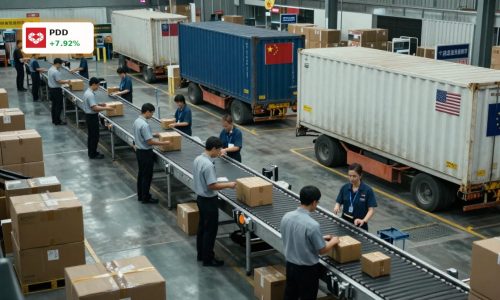
PDD China Expansion is no longer digital-only: it’s physical, capital-intensive, and strategically anchored in Xiong’an. Within one month, PDD Holdings Inc. hired over 600 new employees in China’s Xiong’an New Area — now the company’s largest private internet employer in the region. The firm acquired an entire office building to house management, data analytics, and quality assurance teams, with full occupancy expected by end-July 2026. Central to this push is the ‘Xinpinmu’ initiative — a three-year, ¥1 trillion ($138 billion) investment to help Chinese factories build proprietary brands and reduce reliance on OEM contracts. The first tranche — ¥150 billion — is already deployed. This mirrors supply-chain bets by Apple and Tesla, but with far greater state alignment and domestic scale.
How Is Revenue Shifting Under the New Strategy?
PDD Holdings Inc. reported Q1 2026 revenue of ¥106.2 billion ($14.6 billion), up 11% year-over-year — but net income fell 17% to ¥14.1 billion ($1.9 billion). Crucially, transaction services revenue (¥56.3 billion) surpassed advertising revenue (¥49.9 billion) for the first time — a structural inflection point signaling deeper merchant integration. Analysts at Barclays and BNP Paribas flagged intensifying competition in China’s e-commerce sector, particularly from NVIDIA-powered AI commerce tools and Alibaba’s (BABA) renewed focus on domestic AI infrastructure. That pressure intensified after Alibaba AI Allegations: BABA Drops 3% on New Warning — a development that may indirectly benefit PDD’s low-cost, factory-direct model.
Can PDD Sustain Growth Without Margin Recovery?
The answer hinges on execution — and capital discipline. PDD Holdings Inc. holds ¥436 billion ($60 billion) in cash, giving it unmatched flexibility to fund its PDD China Expansion while weathering macro headwinds. Yet BofA noted ‘elevated ecosystem investments’ — including merchant traffic support, commission rebates, and platform-funded coupons — are now booked as contra revenue, pressuring near-term profitability. Daiwa’s $80 target implies 3% downside from current levels, while Benchmark’s $127 target offers 54% upside — reflecting a stark valuation split between short-term skeptics and long-term believers. The stock remains 40% below its 52-week high of $121.00, offering relative value versus peers like Meta, whose ad-driven model faces similar regulatory and macro constraints in emerging markets.
What’s Next for PDD Holdings Inc.?
Monetization appears to be taking a backseat as the company prioritizes ecosystem health.— Fawne Jiang, Benchmark analyst
Investors now await Q2 2026 results — due in early August — for clarity on whether PDD China Expansion is translating into sustainable unit economics. The upcoming earnings report will test whether the company can grow transaction services while stabilizing margins — a challenge no U.S. e-commerce peer has solved at scale. Meanwhile, the PDD Holdings Earnings -8% as Margin Warning Hits Shares analysis highlights mounting investor fatigue with ‘growth at all costs’ narratives. With Temu’s international expansion accelerating and domestic infrastructure bets maturing, PDD’s next chapter is less about clicks and more about control — over factories, logistics, and branding.