Is the Rocket Lab SpaceX IPO story signaling the start of a new space boom or the peak of speculative euphoria?

Is the Rocket Lab SpaceX IPO trade overheating?
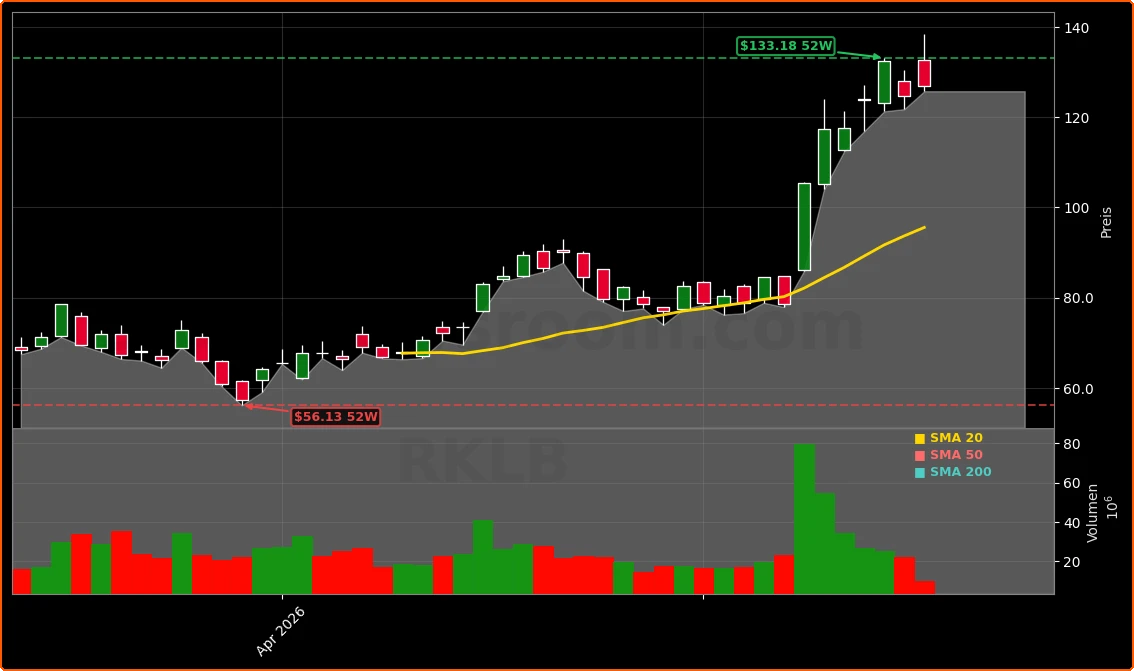
Rocket Lab USA, Inc. has surged roughly 80% year to date, helped by a powerful mix of earnings momentum and speculation around a future SpaceX listing. At $127, RKLB trades just below a fresh 52‑week high around $131, putting the stock in technically overbought territory after multiple double‑digit moves in recent sessions.
The Rocket Lab SpaceX IPO narrative got another boost after Elon Musk reiterated that a SpaceX initial public offering is coming “pretty soon,” sparking pre‑market gains across listed space names, including Rocket Lab, EchoStar and AST SpaceMobile. For speculative growth investors, the logic is simple: if SpaceX floats at a rumored valuation in the trillions, public market peers could see their multiples repriced higher, at least temporarily.
At the same time, Rocket Lab is not just a sympathy play. Q1 2026 revenue jumped 63.5% year over year to about $200.3 million, while backlog hit a record $2.2 billion, up more than 20% sequentially. The company sold more launches in Q1 than in all of 2025, underscoring robust demand from commercial, government and national security customers.
How strong is Rocket Lab’s underlying business?
Despite its name, Rocket Lab has quietly become more of a space systems company than a pure launch provider. In Q1, spacecraft and satellite components accounted for roughly 68% of revenue, with hardware flown on more than 1,700 missions to date. That diversification helps smooth out the lumpy cadence of launch revenue and positions the company as a key supplier into defense and communications programs.
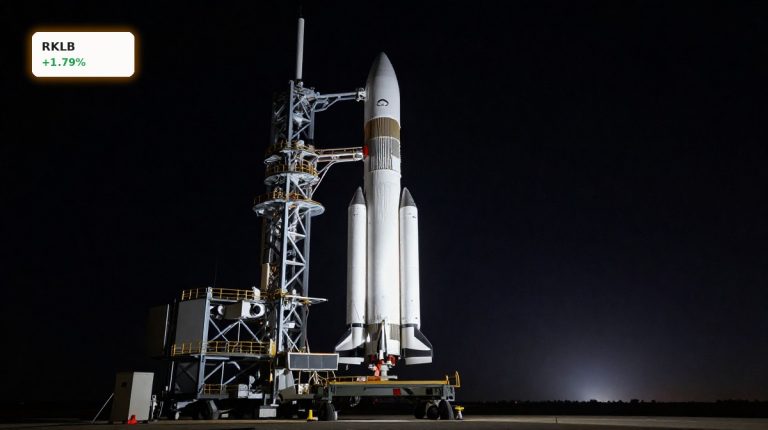
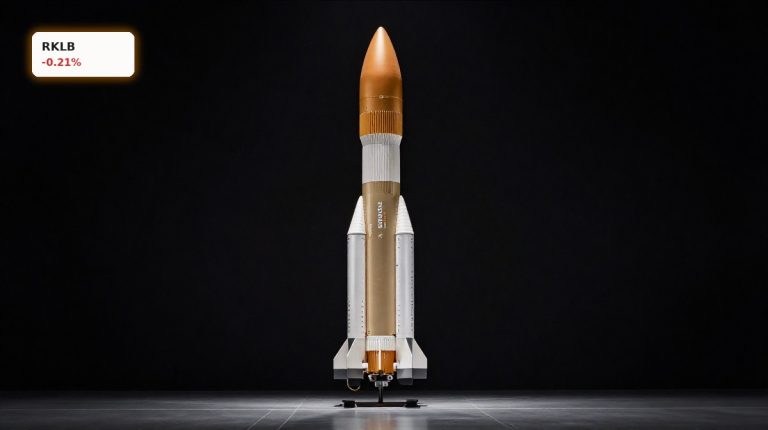
On the launch side, the Electron rocket remains the world’s most frequently flown small launcher, while the HASTE variant is gaining traction for hypersonic test missions with the U.S. government and allies. Progress on the larger Neutron rocket — including a successful stage‑separation test highlighted in recent trading updates — is central to the long‑term equity story, opening the door to the medium‑lift market where SpaceX has set the benchmark.
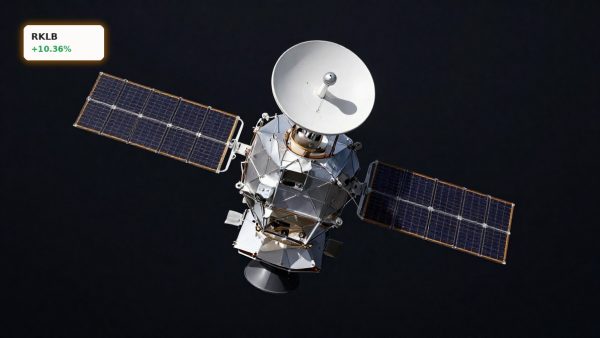
Strategic M&A is also expanding Rocket Lab’s technology stack. The company has closed acquisitions of Motiv Space Systems and Mynaric AG, adding robotics and laser optical communications terminals that should deepen its role in satellite constellations and missile‑warning architectures. Those capabilities are already finding a home in programs like the U.S. Space Force’s Space‑Based Interceptor effort under the so‑called Golden Dome defense initiative, where Rocket Lab is working in partnership with RTX.
What do valuations and Wall Street say?
The sharp move in RKLB has not gone unnoticed by analysts. Needham’s Ryan Koontz recently reaffirmed a Buy rating and lifted his price target from $95 to $120, citing the record $2.2 billion backlog and improving visibility on Neutron launch contracts. On the other side of the spectrum, Goldman Sachs analyst Noah Poponak maintains a Hold rating with a $76 target, flagging ongoing GAAP losses and execution risk around Neutron as reasons for caution.
Several research shops note that Rocket Lab now trades at a premium multiple relative to many unprofitable growth names on the NASDAQ, with some models implying a long‑term revenue CAGR north of 30% and a forward P/E near 60 for 2031 earnings. That rich setup leaves little room for delays or cost overruns in Neutron or future defense programs.
Insider activity is also mixed. A director‑linked entity, Abalone Cove LLLP, recently sold 100,000 shares for roughly $11.8 million, while donating an additional 10,000 shares to charity. Combined with trimmed holdings from high‑profile funds like ARK Invest, that pattern could cap near‑term upside if momentum cools.
How does Rocket Lab compare with SpaceX and peers?
SpaceX still dominates the launch market with more than 600 Falcon 9 missions and a rapidly growing Starlink subscriber base, and many investors expect the SpaceX IPO to command a valuation that could rival mega‑caps like NVIDIA or even eventually surpass tech giants such as Apple. In that context, Rocket Lab is being positioned as the “small‑cap SpaceX”: higher risk, earlier‑stage, but already accessible on public markets.
Unlike private SpaceX, Rocket Lab must constantly balance growth ambitions against dilution and capital market conditions — a theme that has already surfaced in past equity offerings. For U.S. portfolios, RKLB therefore behaves more like other high‑beta innovation names such as Tesla: sensitive to rate expectations, risk appetite and headline sentiment as much as to its own contract wins.
Fundamentally, Rocket Lab’s competitive edge lies in high‑cadence small launch, vertically integrated satellite buses and growing exposure to classified defense work. If Neutron delivers as promised, the company could carve out a durable niche in medium‑lift and national security missions that complements, rather than directly displaces, SpaceX’s heavy‑lift focus. That potential is what keeps the Rocket Lab SpaceX IPO theme alive for growth‑oriented investors.
Related coverage for Rocket Lab investors
For a deeper dive into how capital raises can shape the risk/reward profile, readers may want to revisit “Rocket Lab Equity Offering -8.4% Plunge Shocks Traders”, which analyzes the company’s billion‑dollar equity move earlier this year. That piece explores whether fresh funding firepower supports long‑term growth or simply adds dilution risk that might weigh on the next leg of the rally.