

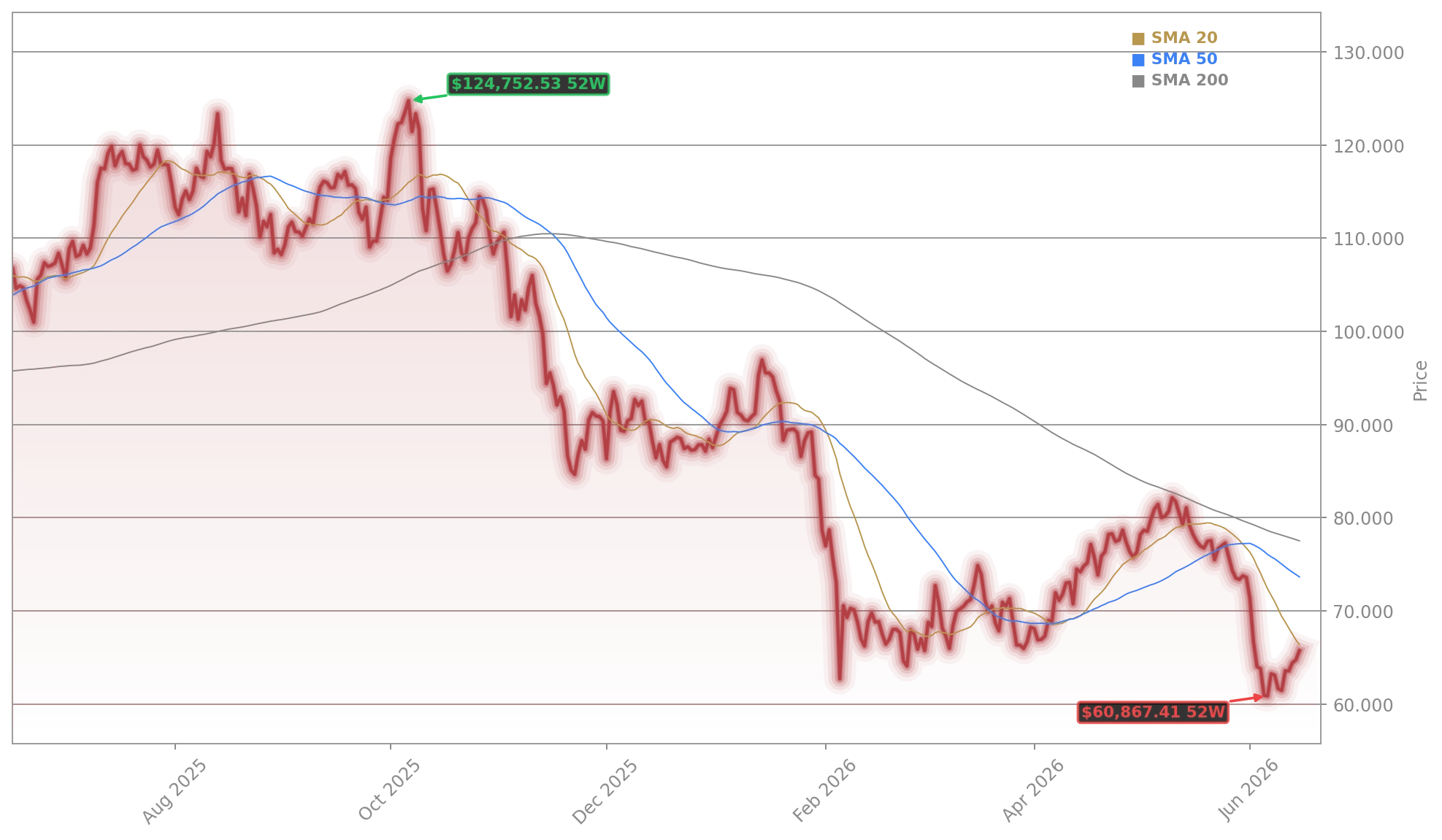
Is the Bitcoin Crash just a panic flush below $70,000, or the start of a deeper slide toward the low-$60,000s?

Why is the Bitcoin Crash deepening?
The selloff is being driven by several catalysts hitting at once. First, Strategy disclosed the sale of 32 Bitcoin for about $2.5 million, a tiny amount relative to its holdings but a major psychological blow because Michael Saylor’s firm had long symbolized buy-and-hold conviction. Second, US spot Bitcoin ETFs have suffered an extended run of outflows, with roughly $3 billion leaving over ten sessions through late May. Third, geopolitical tension tied to the US-Iran standoff has pushed oil higher and revived fears that central banks may keep policy tighter for longer.
That combination has hurt risk appetite across crypto. Liquidations in leveraged positions surged, sentiment dropped into extreme fear, and traders who expected BTC to follow mega-cap tech higher have been disappointed. While NVIDIA helped power equity benchmarks, Bitcoin moved the other way, reinforcing the idea that the current Bitcoin Crash is being driven more by crypto-specific stress than by broad market weakness.
What does Strategy signal now?
On paper, the sale was small enough to be almost irrelevant. Strategy still holds more than 843,700 BTC, so 32 coins do not change the supply picture. But markets care about signals as much as size. Once an investor known for never selling becomes even a modest seller, traders begin to question whether future sales could follow, especially as preferred-stock obligations and funding needs remain in focus.
That shift in narrative is why the reaction has been so severe. It also lands at a time when other corporate holders and miners are becoming more balance-sheet conscious. Some operators are prioritizing liquidity, debt reduction, and even AI infrastructure over aggressive coin retention. For US investors comparing crypto exposure with high-growth equities such as Apple, Tesla, and NVIDIA, that makes BTC look less like a momentum leader and more like a volatile asset searching for sponsorship.
Is Mt. Gox reviving the overhang?
Mt. Gox moved 10,608 BTC worth about $739 million from cold wallets, reviving fears that creditor distributions could eventually translate into additional market supply. The estate still holds 34,504 BTC, leaving a sizable overhang for traders to monitor. Not every transfer leads directly to selling, but after more than a decade of waiting, some creditors may choose to lock in cash once distributions arrive.
At the same time, onchain data shows rising exchange inflows from shorter-term holders and a pickup in whale activity. That mix suggests the market is under pressure from capitulation at one end and opportunistic accumulation at the other. The problem for bulls is that ETF demand is no longer absorbing supply the way it did earlier in the cycle. CoinDesk recently highlighted weakening ETF absorption, while The Block and Daily Forex both pointed to heavy fund outflows as a central part of the bearish setup.
Can Bitcoin find support again?
Technically, traders are now watching the $68,000 to $69,000 zone closely, with some caution that a failure there could bring deeper retracement risk toward the low-$60,000s. That would still be far above the long-term floor many market participants cite near $60,000, but it would extend the current Bitcoin Crash and likely keep pressure on sentiment across digital assets.
The fact that price just fell through another Timescape level is another sign of weakness.— Material Indicators
For now, the key watch items are ETF flow stabilization, any clarification around Mt. Gox distributions, and whether macro pressure from oil and rates eases. If those factors improve, BTC could attempt a rebound. If not, investors may continue rotating toward stocks and AI winners instead of crypto. The Bitcoin Crash is not yet a structural breakdown, but it has become a clear stress test for institutional conviction. For investors, the next move will depend less on hype and more on whether real demand returns.