

Is the Bitcoin Plunge just another leverage washout, or a deeper warning that institutional conviction is starting to crack?

Why Is Bitcoin Plunge Accelerating?
The Bitcoin Plunge gathered speed as U.S. spot Bitcoin ETFs posted another wave of redemptions. Across the latest eight-session stretch, more than $2.6 billion has exited the products, with one session alone showing roughly $733 million in net outflows. BlackRock’s IBIT, Grayscale’s GBTC, and Fidelity’s FBTC were among the biggest drags, signaling that institutional demand has cooled just as macro risk has intensified.
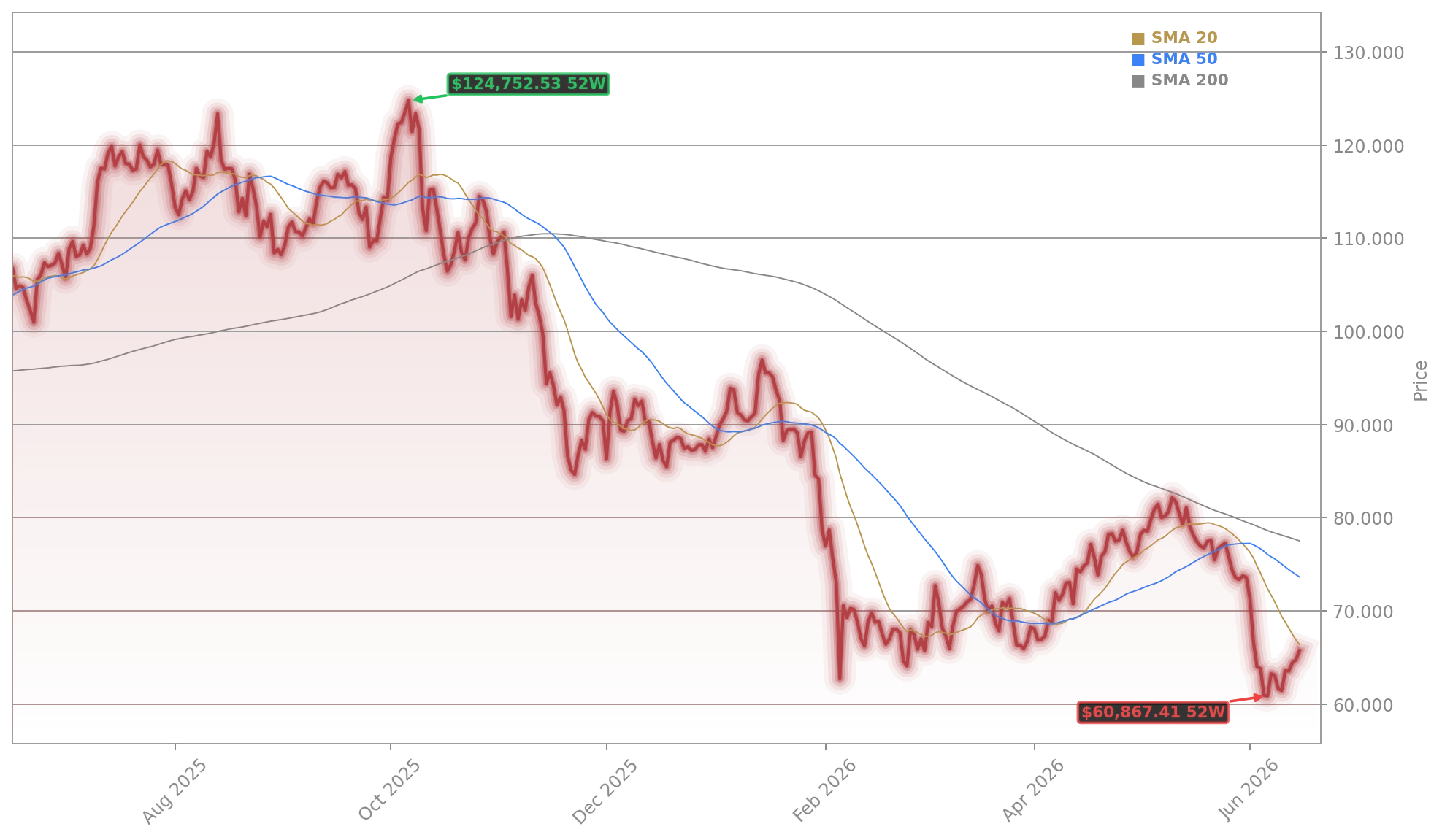
That pressure hit a market already leaning heavily on leverage. Nearly $930 million in crypto derivatives positions were liquidated over 24 hours, most of them bullish bets. Bitcoin-linked contracts absorbed the largest share of the forced selling, showing how quickly momentum can reverse when price breaks below key support levels. With Bitcoin now well below its all-time high near $126,080, the selloff is painful but not a fresh record low or a historic collapse.
What Are BlackRock and Goldman Sachs Signaling?
Institutional positioning has become more mixed. A large block sale tied to BlackRock’s IBIT helped stir fresh concern about ETF flow stability, even though some options activity still points to longer-term interest. Meanwhile, portfolio disclosures have shown selective rotation away from Bitcoin exposure at major trading firms, and Goldman Sachs has also reduced crypto allocations, including Bitcoin-related holdings, while trimming Ethereum ETF exposure.
That matters because Wall Street had been one of the strongest pillars supporting the post-ETF bull case. When large allocators pause, crypto can lose an important source of marginal demand. By contrast, some banks remain engaged: Morgan Stanley’s Bitcoin product still recorded a modest inflow, and Bank of America recently increased its Bitcoin ETF exposure. The split suggests institutions are not abandoning the asset class, but they are becoming more tactical.
How Are Tesla and NVIDIA Affecting Risk Appetite?
The broader market backdrop is also working against crypto. Investors continue to favor mega-cap AI and technology names such as NVIDIA, Tesla, and Apple, while the S&P 500 and NASDAQ remain more resilient than digital assets. That relative performance gap has reinforced the view that risk capital is flowing toward earnings-driven equities instead of non-yielding alternatives like Bitcoin.
Geopolitics has added another headwind. Renewed military action involving the U.S. and Iran has pushed oil prices higher and reduced appetite for speculative trades. Bitcoin has often been pitched as digital gold, but in this episode it traded more like a high-beta risk asset. Mark Cuban’s recent criticism that Bitcoin has “lost the plot” as an inflation hedge captured a debate many portfolio managers are now revisiting.
Can Bitcoin Plunge Turn Into Opportunity?
Despite the sharp drop, the long-term bull argument has not disappeared. The network remains operationally resilient, traditional finance integration is deeper than in prior cycles, and total U.S. spot Bitcoin ETF assets are still substantial. Some traders are watching CME futures gap levels, with downside technical targets extending toward $67,000 if selling continues. Prediction markets also show rising odds of a move below $70,000 before month-end, though not yet a consensus call for a deeper crash.
“The renewed military tensions in the Middle East are creating fresh uncertainty,”— Timo Emden
For investors, the key question is whether this Bitcoin Plunge is driven mainly by temporary positioning stress or by a more durable retreat in demand. If ETF flows stabilize and geopolitical anxiety eases, Bitcoin could rebound sharply, as it has after prior drawdowns. If outflows persist, however, crypto may continue lagging stocks and commodities. For now, the Bitcoin Plunge is a reminder that Bitcoin remains highly sensitive to liquidity, sentiment, and macro shocks, even as mainstream adoption grows.