Are the latest Coinbase Earnings miss and strategic overhaul a temporary stumble or a warning sign for the crypto exchange’s future?

How weak were the latest Coinbase Earnings?
In its most recently reported quarter, Coinbase Global, Inc. posted total revenue of roughly $1.41 billion, missing analyst expectations of about $1.5 billion. Net revenue dropped around 31% year over year to roughly $1.34 billion, while a heavily watched trading metric – transaction revenue – fell roughly 40% to about $756 million, far below Wall Street estimates of just over $800 million. Instead of the previously expected profit of $0.27 per share, the company delivered a surprise loss of $1.49 per share, driven by weaker trading activity and substantial fair‑value adjustments on its own digital-asset holdings.
The reported net loss came in at about $394 million, marking the second consecutive quarter in the red, after a roughly $667 million loss in the prior quarter. Coinbase also recognized around $482 million in impairments on crypto assets held on its balance sheet, highlighting how its results remain tightly coupled to the price path of Bitcoin and other major tokens. While some metrics such as subscription and services revenue held up better, the overall Coinbase Earnings profile showed a business still heavily exposed to spot trading volumes and token price swings.
Why is Coinbase reshaping its business model?
Facing this pressure, Coinbase is accelerating a structural overhaul of its revenue mix. Management has repeatedly stressed a long‑term plan to evolve from a primarily spot-focused crypto exchange into a broader on‑chain financial platform. That shift is visible in several lines: subscription and services revenue came in at about $584 million, down only around 14% year over year, far more resilient than trading fees. Within that bucket, stablecoin-related income grew roughly 11% to around $305 million, helped by the expansion of USDC balances on the platform.
Derivatives are emerging as another key growth pillar. Over the past 12 months, Coinbase’s derivatives trading volume has increased by roughly 169% versus the prior year, and retail derivatives revenue has surpassed a $200 million annualized run rate. The company is also investing into prediction markets and tokenized assets, reporting an annualized revenue run rate of more than $100 million from U.S. prediction markets within the first two full months after launch. CEO Brian Armstrong argues that “the entire financial world is moving on‑chain” and wants Coinbase positioned as an “everything exchange” to capture that shift.
What cost cuts and outages are weighing on sentiment?
To support the transition, Coinbase has launched significant cost-cutting measures, including a 14% workforce reduction representing about 700 jobs. Management expects restructuring charges of roughly $50–60 million in the current quarter, with the goal of structurally lowering its expense base and increasing operating leverage when trading activity recovers. While investors generally welcome cost discipline, the sizable layoffs underscore how far earnings have fallen from prior crypto bull‑market peaks.
Operational risk also came into focus after a major technical outage hit the platform shortly after the latest Coinbase Earnings release. A hardware problem at an Amazon Web Services (AWS) data center in the US‑EAST‑1 region triggered elevated temperatures, effectively freezing Coinbase’s trading engine and forcing the exchange into a “cancel only” mode for several hours. Although the company emphasized that customer funds remained safe, the outage drew sharp criticism from technologists and traders who questioned why a single AWS availability zone issue could paralyze one of the most important U.S. crypto venues. The incident landed on an already punishing day for the stock, amplifying the post‑earnings sell‑off.
How does Coinbase stack up against U.S. rivals?
On Wall Street, the latest Coinbase Earnings arrive in a broader context of pressure on U.S. trading platforms. Robinhood has also reported weaker crypto revenue and lower trading volumes, with its first quarter missing expectations as crypto transactions nearly halved from the prior year. Yet Coinbase remains the largest dedicated U.S. crypto exchange by volume, with a global market share of around 8.6%. Brokerage platforms and banks are moving into its turf: Morgan Stanley, for example, plans to offer Bitcoin trading to millions of E‑Trade clients using infrastructure from ZeroHash, promising lower fees than Coinbase and traditional brokerages such as Charles Schwab.
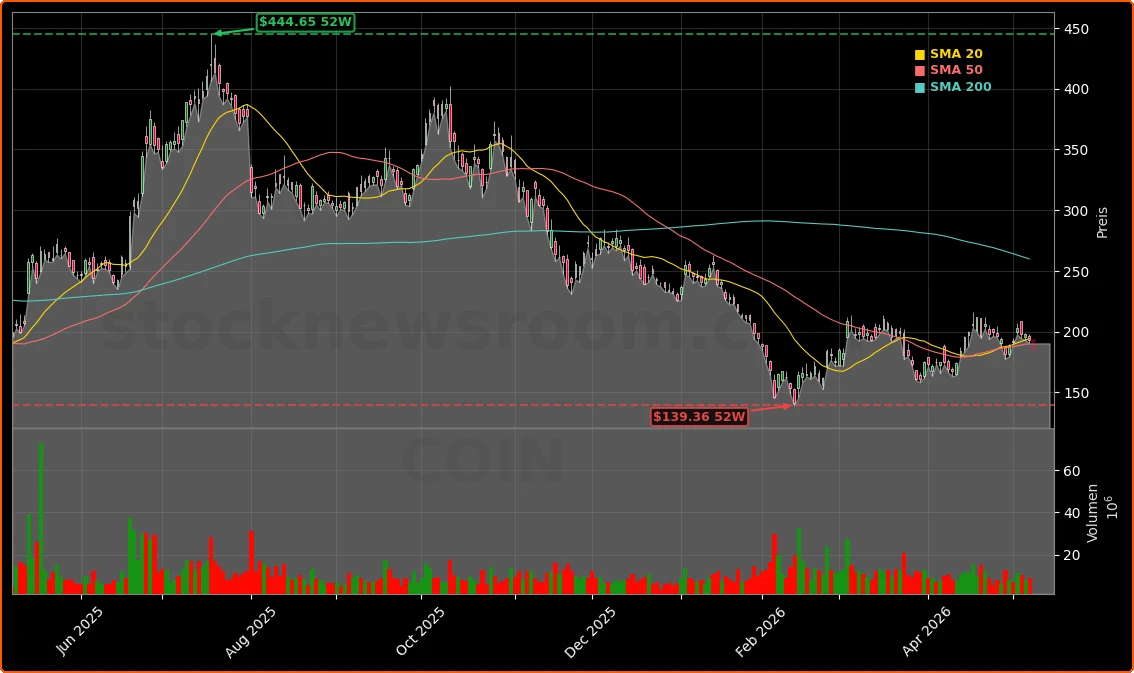
Equity investors have punished Coinbase stock throughout the year, leaving shares down roughly in the mid‑teens percentage range year to date, even before Thursday’s after‑hours drop. By comparison, crypto‑exposed plays such as NVIDIA and Tesla have at times offered indirect digital‑asset upside without tying their earnings so directly to spot trading volumes. That relative underperformance is exactly why some strategists at Bernstein see an attractive entry point: they have maintained a bullish stance on Coinbase and Robinhood, arguing both are levered to the long‑term growth of tokenized finance, stablecoins and on‑chain prediction markets, rather than just speculative trading manias.
What should Wall Street watch next for Coinbase?
Looking ahead, management has guided to subscription and services revenue between $565 million and $645 million for the next quarter, suggesting that the non‑trading side of the business could stabilize results if spot volumes remain soft. The company is also betting on regulatory clarity in Washington as a catalyst. Analysts such as Owen Lau highlight the potential passage of a so‑called “Clarity Act” for digital assets as a key upside driver that could lower Coinbase’s compliance overhang and unlock new institutional demand.
At the same time, competition is intensifying across stablecoins, tokenization and derivatives – segments where big‑tech firms like Apple and major financial institutions could eventually play a larger role. For now, Coinbase’s ability to scale these newer business lines faster than its legacy trading revenue declines will determine whether the next set of Coinbase Earnings can return the company to sustainable profitability and restore investor confidence.
Related Coverage
Despite the downturn in spot trading, the fundamental growth of the on‑chain economy remains strong, and Coinbase is being built to capture that long‑term shift.— Brian Armstrong, CEO of Coinbase Global, Inc.
Investors who want to understand how stablecoins fit into the broader Coinbase story should read this in‑depth look at the Coinbase Stablecoin Compromise and COIN’s 5.3% rally. The article explains why regulatory compromises around USDC and similar assets could ease Washington pressures, support recurring revenue and potentially make future Coinbase Earnings less volatile over time.