

Can Home Depot Military Delivery turn a niche logistics move into a durable growth engine while Wall Street punishes the stock?

What Does Home Depot Military Delivery Mean for U.S. Retail Strategy?
The expansion of Home Depot Military Delivery marks a rare, purpose-built logistics upgrade in the home improvement sector — one that bypasses traditional e-commerce friction points like customs duties, state tax collection, and regional fulfillment constraints. Unlike competitors such as Lowe’s, which relies on third-party military shipping partners with limited SKU coverage, The Home Depot, Inc. now integrates directly with the Army & Air Force Exchange Service (AAFES) and Navy Exchange Service Command (NEXCOM), allowing seamless checkout and USPS-managed delivery compliant with Department of Defense protocols. This isn’t just convenience: it’s a structural advantage. With over 470,000 associates and 780+ distribution centers, The Home Depot, Inc. leverages existing infrastructure to serve a high-trust, high-retention demographic — one that often transitions into civilian homeownership within 3–5 years of service. Analysts at RBC Capital Markets note the program could lift same-store sales among military-adjacent ZIP codes by up to 0.4% annually — a modest but meaningful tailwind in a low-growth retail environment.
How Does This Compare to Competitors’ Military Programs?
While Lowe’s offers a military discount and limited APO/FPO shipping, its catalog includes under 2,500 eligible items — less than 12% of The Home Depot, Inc.’s newly launched 20,000+ product set. Meanwhile, Apple and Tesla have no dedicated military delivery infrastructure, and NVIDIA’s channel focus remains squarely on enterprise and data center partners. The Home Depot, Inc.’s move is uniquely aligned with its core competencies: large-scale inventory management, domestic logistics dominance, and veteran employment pipelines (nearly 12% of its workforce are veterans). Goldman Sachs highlights that this expansion “reinforces HD’s defensibility against Amazon’s encroachment in home improvement — especially where trust, reliability, and regulatory alignment matter more than price alone.”
Why Is This Timing Critical for Wall Street?
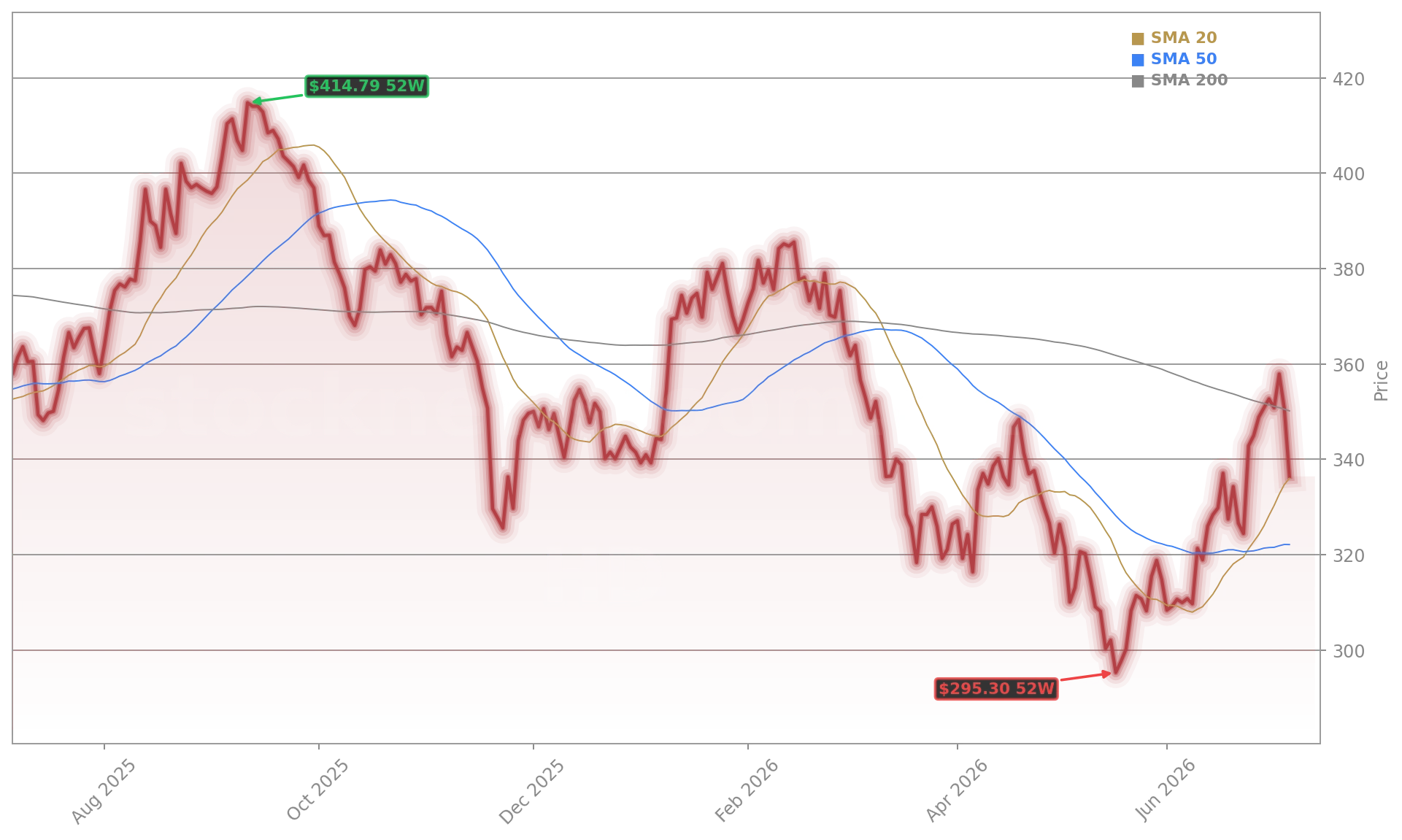
The announcement arrives as The Home Depot, Inc. trades at $335.91 — down 2.69% on the day and 11% below its 52-week high of $377.42. Consumer-facing stocks like The Home Depot, Inc., Boeing, and Goldman Sachs are under pressure from rising 10-year Treasury yields and elevated oil prices, which are squeezing discretionary budgets. Yet the Home Depot Military Delivery initiative is a countercyclical lever: military households exhibit stable income, strong credit profiles, and high lifetime value. Morgan Stanley upgraded The Home Depot, Inc. to “Overweight” last week, citing “the underappreciated stickiness of government-anchored demand channels.” The firm raised its 12-month price target to $368 — a 9.6% upside from current levels — explicitly citing the APO/FPO/DPO rollout as a catalyst for improved margin resilience in Q3 2026.
What Are the Operational Risks?
Despite its promise, the Home Depot Military Delivery program faces logistical hurdles: USPS capacity constraints in peak seasons, DOD-mandated packaging certifications, and potential delays due to overseas base access protocols. Still, The Home Depot, Inc. mitigates risk by limiting initial rollout to pre-qualified SKUs — tools, fasteners, safety gear, and basic hardware — avoiding high-return, bulky categories like appliances or lumber. Citigroup analysts called the phased approach “prudent and scalable,” adding that “HD’s ability to layer military logistics onto its existing $13.7B supply chain investment gives it a structural edge no pure-play e-commerce competitor can match.” The company also benefits from tax-free status on these shipments — a key differentiator in an era of rising state-level sales tax enforcement.
Related Coverage
Expanding delivery through APO, FPO and DPO addresses helps ensure military communities serving around the world have convenient access to the home improvement products they need, no matter where they are stationed.— Jordan Broggi, EVP Customer Experience and President — Online, The Home Depot
Investors assessing The Home Depot, Inc.’s broader strategic pivot should consider how this Home Depot Military Delivery expansion fits alongside its $18 billion professional contractor initiative — a move that has drawn mixed reactions from analysts concerned about margin pressure in a stagnant housing market. Home Depot Downgrade: $18B Deal Push Raises New Risks explores that tension in depth. Meanwhile, global supply chain dynamics remain volatile: Alibaba AI Regulation +9.1% as Export Curbs Fuel Rally underscores how export controls are reshaping logistics — a backdrop that makes The Home Depot, Inc.’s domestic fulfillment advantage even more valuable.