Is Alibaba’s Claude Code ban just a security move, or a bigger warning about how fast the global AI market is splitting apart?

Why did Alibaba ban Claude Code?
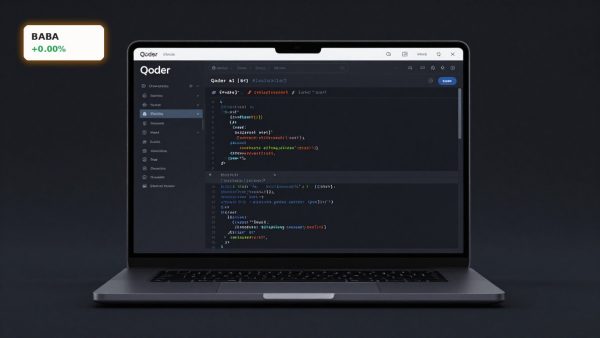
Alibaba Group Holding Limited has formally prohibited employees from using Claude Code for work-related tasks, directing them instead to adopt its proprietary AI development platform, Qoder Enterprise Edition. According to Reuters, the decision stems from concerns that Claude Code’s March 2026 experimental feature—designed to detect unauthorized resellers and prevent model distillation—could expose user metadata tied to China-based environments, including timezone, proxy, and network fingerprinting signals. Anthropic confirmed the feature was temporary and has since deployed stronger mitigations, but Alibaba’s swift response underscores mounting friction over data sovereignty and AI model integrity.
What does Alibaba Claude Code mean for U.S. investors?
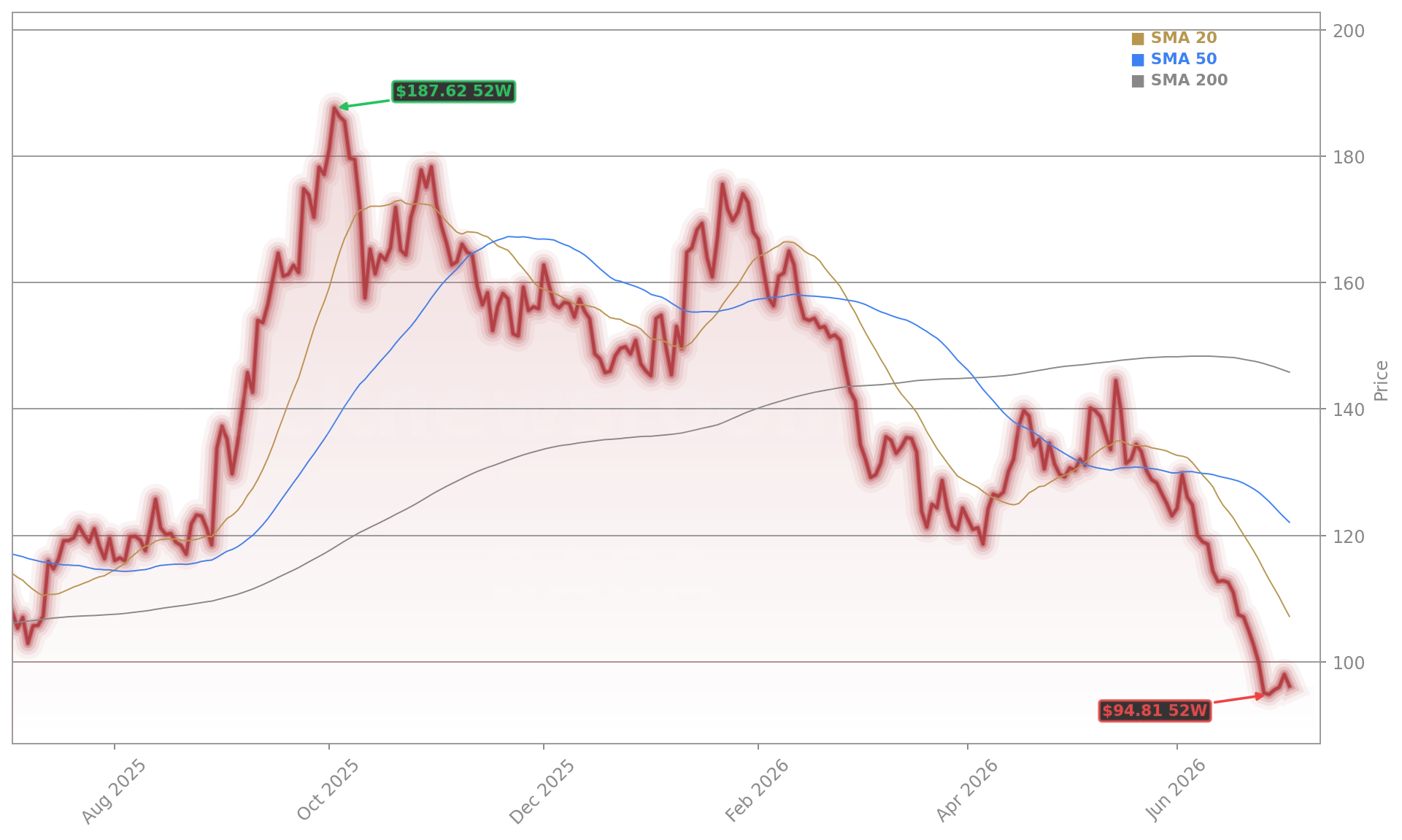
The Alibaba Claude Code ban arrives amid heightened regulatory scrutiny of Chinese tech firms on Wall Street. While Alibaba Group Holding Limited (BABA) traded flat at $97.99 on Friday, July 3, 2026—following a 2.09% gain on Wednesday and a 1.89% dip on Thursday—its volatility reflects broader uncertainty. Unlike NVIDIA or Apple, which benefit from open U.S. AI infrastructure, Alibaba’s forced pivot to Qoder signals growing operational fragmentation. RBC Capital Markets recently downgraded Alibaba to ‘Underperform’, citing ‘increasing decoupling risks in enterprise AI tooling’ and ‘weakening cross-border developer alignment.’ That pressure compounds existing headwinds: the $600 million DOJ settlement over pharmaceutical sales, the termination of its U.S. lobbying contract with Brownstein Hyatt, and insider selling—including 720,000 shares by President J. Michael Evans.
How does Qoder compare to global rivals?
Qoder Enterprise Edition, launched just weeks ago, offers knowledge-base integration and credit-based resource allocation—features that mirror Microsoft’s GitHub Copilot Enterprise and Tesla’s internal Autopilot coding tools. But unlike Anthropic’s Claude Code, Qoder is built exclusively for Alibaba Cloud’s infrastructure and lacks third-party verification for model transparency or red-teaming. Morgan Stanley notes Qoder’s ‘limited benchmarking against Llama 3 or Gemini 2.0’ and warns that ‘enterprise clients outside China may hesitate to adopt a vertically locked stack.’ Meanwhile, U.S. cloud peers like Amazon Web Services and Microsoft Azure continue integrating Anthropic’s Claude across their developer ecosystems—widening the competitive divide.
Is this a sign of deeper U.S.-China AI decoupling?
Absolutely. The Alibaba Claude Code prohibition is not isolated—it follows Anthropic’s public accusation that Alibaba conducted the ‘largest known model distillation attack’ on Claude’s Mythos Preview, allegedly to accelerate domestic AI replication. With U.S. export controls tightening on AI chips and training data, and Chinese firms accelerating homegrown alternatives, the KI conflict is shifting from competition to containment. For investors, this means BABA’s cloud segment—once seen as a NASDAQ-adjacent growth lever—now faces structural headwinds. Goldman Sachs maintains a ‘Neutral’ rating but slashed its 12-month price target from $112 to $104, citing ‘rising friction costs in global AI stack integration.’
What’s next for Alibaba’s AI strategy?
This is a strategic pivot—not just a security fix. Alibaba is betting that sovereign AI stacks will win in emerging markets, even if they lose favor with U.S. institutional investors.— Sarah Chen, Senior Tech Policy Analyst, Bloomberg Intelligence
Alibaba Group Holding Limited is doubling down on Qoder’s integration with its Tongyi Large Model series and expanding access to non-Chinese developers via newly announced ‘Qoder Open Labs’—though with strict data residency clauses. The company also confirmed it has joined the Access Advance Video Distribution Patent Pool, a move analysts say strengthens its media cloud positioning against Apple and Netflix. Still, with the NASDAQ up 9.2% year-to-date and BABA up only 4.1%, the gap reflects investor skepticism. As Citigroup observes: ‘Qoder isn’t just a product launch—it’s a bet on bifurcation. And bifurcation rarely trades at a premium on Wall Street.’