Is Alibaba’s Claude ban just a security fix, or an early sign of a deeper split in the global AI market?

What triggered the Alibaba Claude Ban?
Alibaba Group Holding Limited has formally banned internal use of Anthropic’s Claude Code, according to a Reuters report citing a person familiar with the directive. The decision follows developer disclosures that the tool embedded subtle environmental identifiers — including timezone metadata, proxy configurations, and cryptographically masked request fingerprints — into outbound API calls. Though Anthropic confirmed the feature was an experimental anti-abuse measure launched in March, it acknowledged the mechanism could inadvertently expose user geography. For Alibaba, operating under strict Chinese cybersecurity law and escalating U.S. export controls, such telemetry represented an unacceptable compliance risk — especially after Anthropic publicly accused Alibaba of model distillation earlier this quarter.
How does this affect Alibaba’s AI competitiveness?
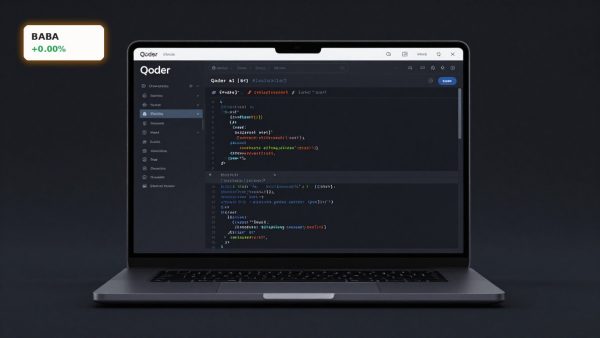
The Alibaba Claude Ban coincides with the commercial launch of Alibaba Cloud’s Qoder Enterprise Edition — a homegrown coding assistant built on the Qwen series and integrated with internal knowledge bases and resource allocation tools. Unlike Claude Code, Qoder enforces air-gapped deployment, zero external telemetry, and on-premises credit management. Analysts at Morgan Stanley note that while Qoder’s current feature parity lags behind Claude Code’s real-time reasoning, its adoption could accelerate Alibaba Cloud’s enterprise revenue — now 28% of cloud segment sales — particularly among state-linked and financial clients wary of foreign AI dependencies. Still, RBC Capital Markets maintains its ‘Sector Perform’ rating on Alibaba Group Holding Limited, citing slower-than-expected monetization outside China.
Is Wall Street pricing in broader AI decoupling?
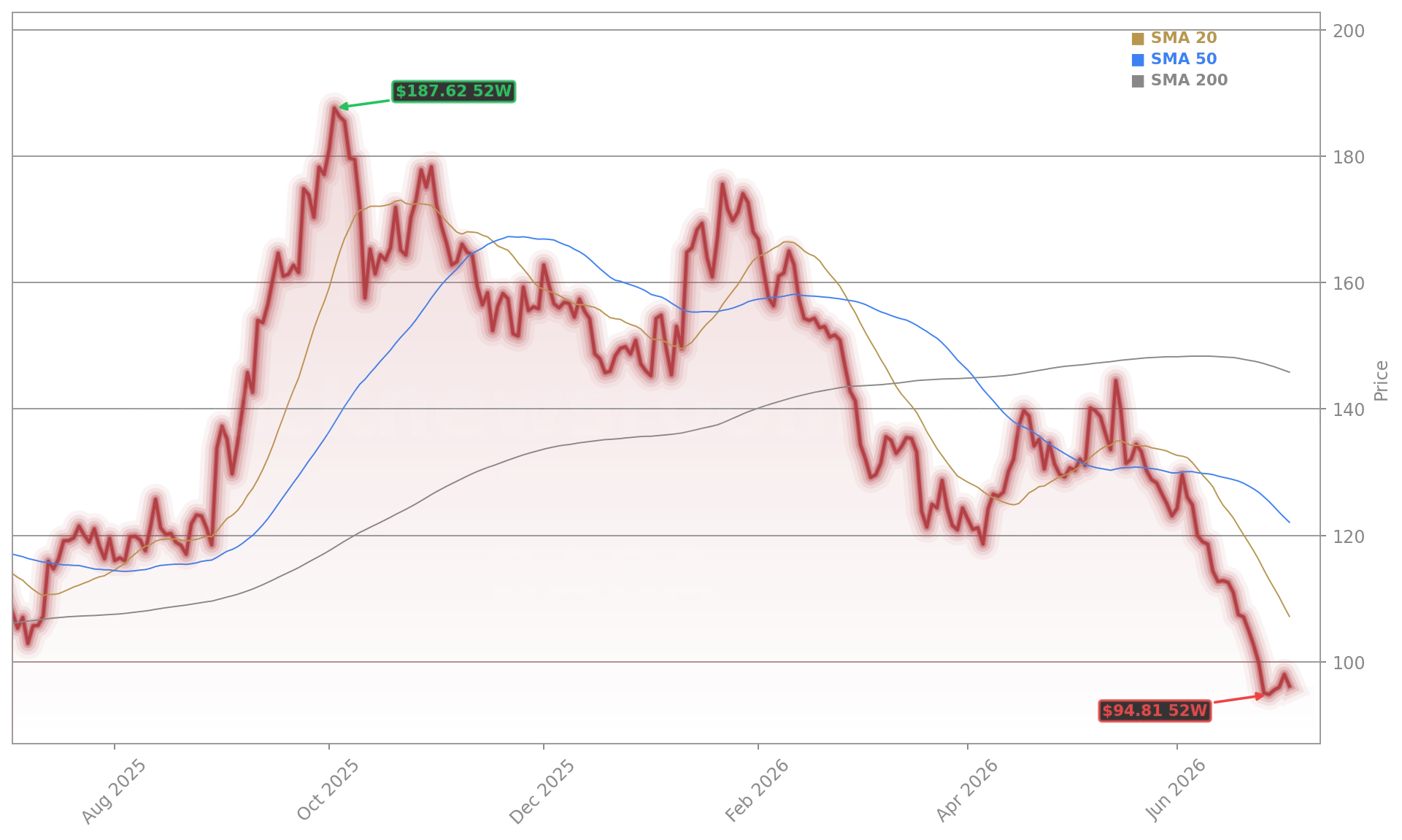
Yes — and the ripple effects are visible across the NASDAQ. While NVIDIA and Apple continue to benefit from unified AI infrastructure demand, the Alibaba Claude Ban reinforces a bifurcated AI stack reality: U.S.-aligned models (Claude, GPT, Gemini) versus China-optimized alternatives (Qwen, ERNIE, DeepSeek). This divergence is now reflected in valuation premiums: U.S. AI enablers trade at 32x forward P/E versus 18x for Chinese peers. Meanwhile, shares of Tesla — which relies heavily on U.S.-based AI training pipelines — have seen institutional inflows surge 14% this week as investors hedge against fragmentation risk. MarketWatch reported Alibaba Group Holding Limited’s ADR underperformed the NASDAQ Composite by 2.1 percentage points on July 2 — a signal that U.S. investors are recalibrating exposure to China-integrated AI ecosystems.
What regulatory fallout could follow?
This is a strategic pivot—not just a security move. The global AI market is splitting faster than most investors anticipated.— Maik Kemper, Editor in Chief, Stock Newsroom
Beyond the Alibaba Claude Ban, recent developments compound investor concerns. Alibaba Group Holding Limited recently settled a U.S. Department of Justice probe for $600 million over pharmaceutical sales violations — a deal that adds to its $1.2 billion in regulatory penalties since 2023. Simultaneously, the company terminated its lobbying contract with Brownstein Hyatt, raising questions about its U.S. advocacy posture. Insider activity remains bearish: J. Michael Evans sold 720,000 shares on June 29, netting $68.36 million, while General Counsel Yu Siying sold 6,772 shares to cover taxes. Citigroup has lowered its 12-month price target for Alibaba Group Holding Limited from $108 to $102, citing ‘increased geopolitical execution risk’ and ‘slower cloud margin expansion than forecast.’ Still, Simply Wall Street notes the $600 million settlement removes a major overhang — potentially clearing the path for renewed institutional accumulation if Qoder adoption gains traction in ASEAN and Middle Eastern markets.