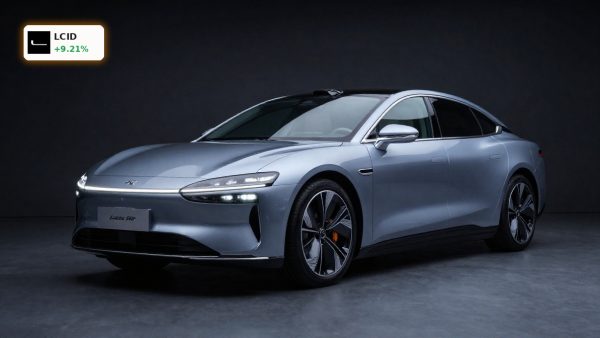
Is the Lucid Group Forecast signaling a deep value opportunity or just another costly detour in the EV shakeout?

Is Lucid Group, Inc. a rebound play or value trap?
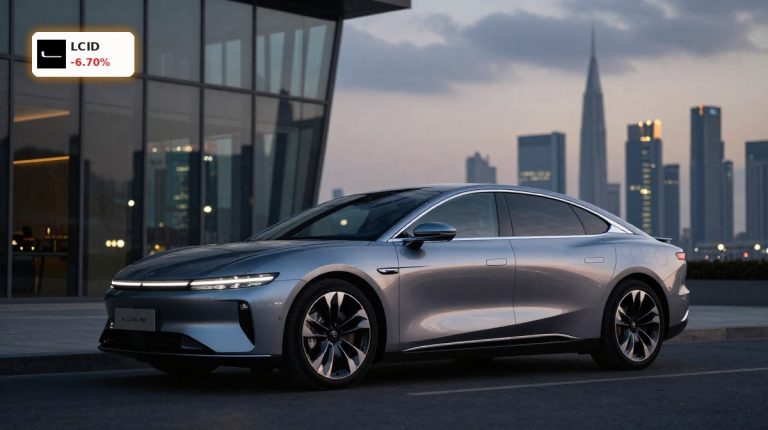
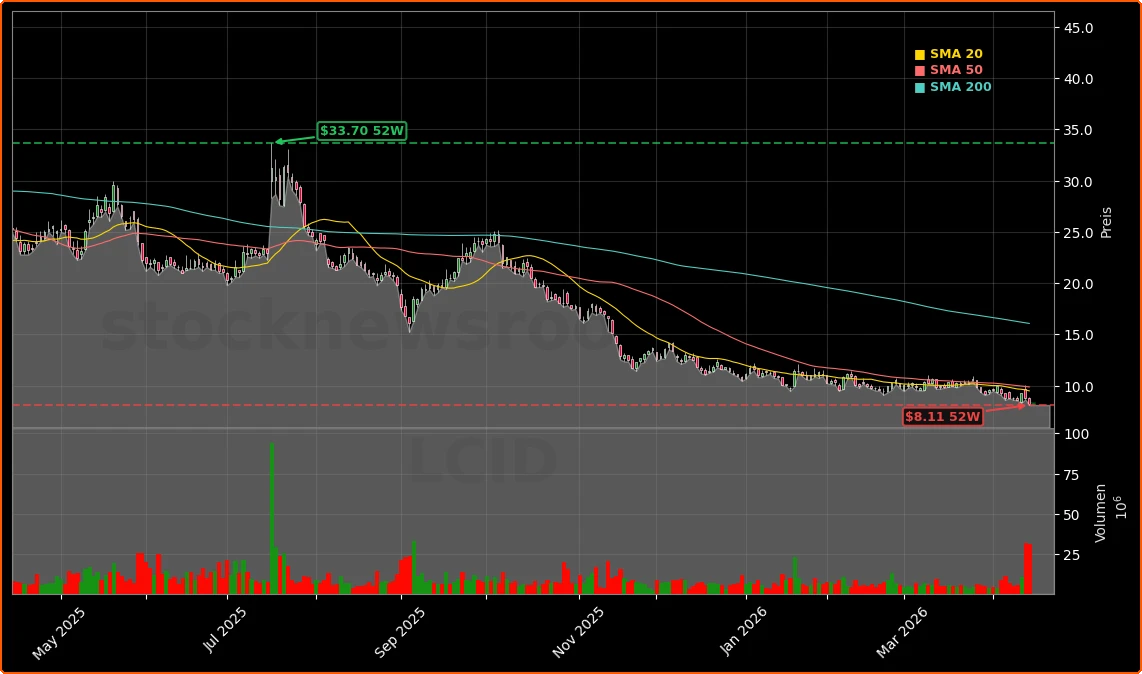
Lucid Group, Inc. (LCID) is once again in the spotlight after Saudi Arabia’s Public Investment Fund (PIF) doubled its investment in the luxury EV maker, even as geopolitical tensions and the Iran conflict pressure global capital flows. On Wall Street, however, LCID remains firmly out of favor: the share price sits near $8.21, down more than 26% year-to-date, and roughly 64% over the past 12 months, despite a modest pre-market uptick to $8.32.
The company’s earlier meme-era spike has long since evaporated. After a more than 400% surge four years ago, the stock slid so far that management executed a 1-for-10 reverse split in September 2025 to avoid potential Nasdaq delisting. That step did nothing to change fundamentals and remains a red flag for institutional investors comparing Lucid’s trajectory to sector leaders like Tesla or Chinese rival BYD.
At a roughly $2.7 billion market cap and a price-to-sales ratio near 3.0—about half last year’s level—LCID looks cheaper on headline multiples, but the key Lucid Group Forecast still hinges on whether the company can ever reach sustainable scale and profitability before cash runs out.
How strong is Lucid Group’s financial runway?
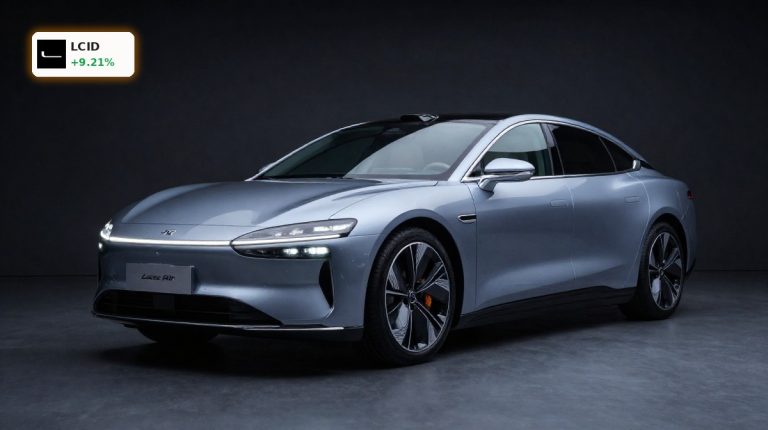
Recent operating metrics provide a mixed picture. In the latest reported quarter, Lucid produced 3,891 EVs and delivered 4,078 vehicles, generating about $336.6 million in revenue—up around 68% year over year. That growth rate outpaces many legacy automakers and keeps Lucid in the conversation alongside high-growth EV names such as NVIDIA-enabled autonomous driving players and premium peers targeting the high-end segment.
Crucially, after expanding its credit facility, Lucid’s total liquidity would have stood around $5.5 billion, offering a decent cash runway to continue ramping production and investing in technology, including robotaxi engineering projects with Uber and collaborations on autonomous driving tech. For long-term bulls, that capital buffer—combined with unwavering Saudi backing—underpins a more optimistic Lucid Group Forecast.
The bear case is equally stark. Lucid reported a net loss of roughly $814 million in Q4 2025 and continues to lose money on every vehicle sold. Net profit margin in Q3 2025 was near –290.7%, placing the company at the bottom of its industry. Persistent losses raise the likelihood of further capital raises, a scenario that could dilute existing shareholders despite PIF’s participation.
What does the Lucid Group Forecast say about growth to 2030?
Management’s long-term ambitions are bold. Lucid projects it can reach around 171,000 unit sales annually by 2030, supported by a lower-cost mid-size SUV expected in 2026 that could broaden its customer base beyond early adopters of its premium sedans. The global EV market is forecast to grow at a compounded annual rate of just over 6% through 2029, giving sufficient room for multiple winners if execution is strong.
Still, most third-party projections for the Lucid Group Forecast are subdued. One widely cited long-term scenario suggests LCID could trade near $6.64 by 2030, implying a negative return from current levels and roughly flat performance on a five-year CAGR basis. Consensus Wall Street targets are somewhat more constructive in the nearer term: across about 15 analysts, LCID holds a consensus Sell rating but an average price target around $9.99, with a recent cluster of estimates implying roughly 56% upside toward $13.67 on a split-adjusted basis.
Individual banks remain cautious. While firms like Morgan Stanley and Goldman Sachs have highlighted industry-wide EV headwinds—slowing demand growth, shrinking subsidies, and intensifying competition from Tesla and BYD—no major house currently champions Lucid as a core pick for broad-based S&P 500 or Nasdaq-focused portfolios. The spread between the most bullish target near $30 and bearish estimates around $1 pre-split underscores the binary nature of the investment case.
How does Lucid compare to EV and tech rivals?
In the U.S. market, LCID competes directly with Tesla, which benefits from scale, vertically integrated manufacturing, and a diversified business spanning energy storage, AI, and robotics. While Tesla garners premium multiples due in part to its AI and chip strategy—often mentioned in the same breath as NVIDIA—Lucid trades more like a speculative turnaround with limited pricing power and a narrower product line.
Unlike ecosystem giants such as Apple, which can absorb hardware cycles with services revenue, Lucid is still almost entirely dependent on vehicle sales. The phaseout of federal EV tax incentives further complicates its path to volume growth in the U.S., leaving the company more reliant on high-margin trims and international demand, including Saudi-backed projects.
For diversified investors tracking the S&P 500 and Nasdaq, LCID increasingly looks like a satellite position rather than a core holding: high risk, potentially high reward, but far from the cash generative profiles that dominate major indexes.
Related Coverage
For a deeper dive into management risk and fresh capital infusions, including Saudi and Uber participation, readers can review Lucid Group CEO Change: -4.4% Plunge and $750M Shock Deal, which examines whether leadership changes can reset expectations. Investors comparing cross-sector EV bets should also read Tesla Forecast +6.9% Rally: UBS Upgrade And Terafab Shock to understand how Wall Street is currently rewarding scale players over nascent challengers like Lucid.
Overall, the Lucid Group Forecast reflects a sharp divide: Saudi Arabia’s PIF is doubling down just as most analysts maintain cautious or negative ratings. For U.S. investors, LCID remains a speculative EV bet where upside depends on execution, cost discipline, and successful model launches over the next four years. The coming product cycle and cash burn trajectory will determine whether Lucid can evolve into a durable competitor or stay stuck as a high-risk niche player.