Is the Microsoft AI Strategy building a durable competitive moat or setting investors up for an overbuilt, low-return AI cycle?

How does Microsoft AI Strategy reach blue‑collar workers?
Microsoft Corporation is extending its AI push well beyond white‑collar offices by expanding a nationwide training initiative with North America’s Building Trades Unions (NABTU). After initially training about 1,500 instructors, the partners are rolling out no‑cost AI literacy courses and industry‑recognized credentials aimed at millions of electricians, ironworkers, pipefitters and other skilled craft professionals across the U.S. and Canada.
The program weaves AI education into NABTU’s Joint Apprenticeship Training Committee network, using hundreds of hands‑on training centers plus online modules delivered via LinkedIn Learning. Participants can earn portable AI literacy badges designed to match real jobsite needs, including safety, productivity and quality control workflows. For Microsoft, this is both workforce development and strategic groundwork: the communities hosting new AI data centers are being equipped with skills to benefit from infrastructure spending rather than just endure it.
This community‑first approach lines up with Microsoft’s pledge to pair AI infrastructure investments with local opportunity. It also differentiates the Microsoft AI Strategy from more narrow, lab‑only initiatives at rivals like NVIDIA or pure‑software players, giving regulators and policymakers a narrative of shared benefits at a time when AI energy demand and “not‑in‑my‑backyard” opposition to data centers are rising.
Is Microsoft overbuilding its AI infrastructure?
Behind the social focus, investors remain laser‑focused on capital intensity. Microsoft is committing a large share of its free cash flow to AI data centers, part of a broader hyperscale wave also driven by Meta Platforms and other mega‑caps. The spending boom has drawn comparisons on Wall Street to the 1990s fiber overbuild, when aggressive network investment ended in bankruptcies and write‑downs across the telecom sector.
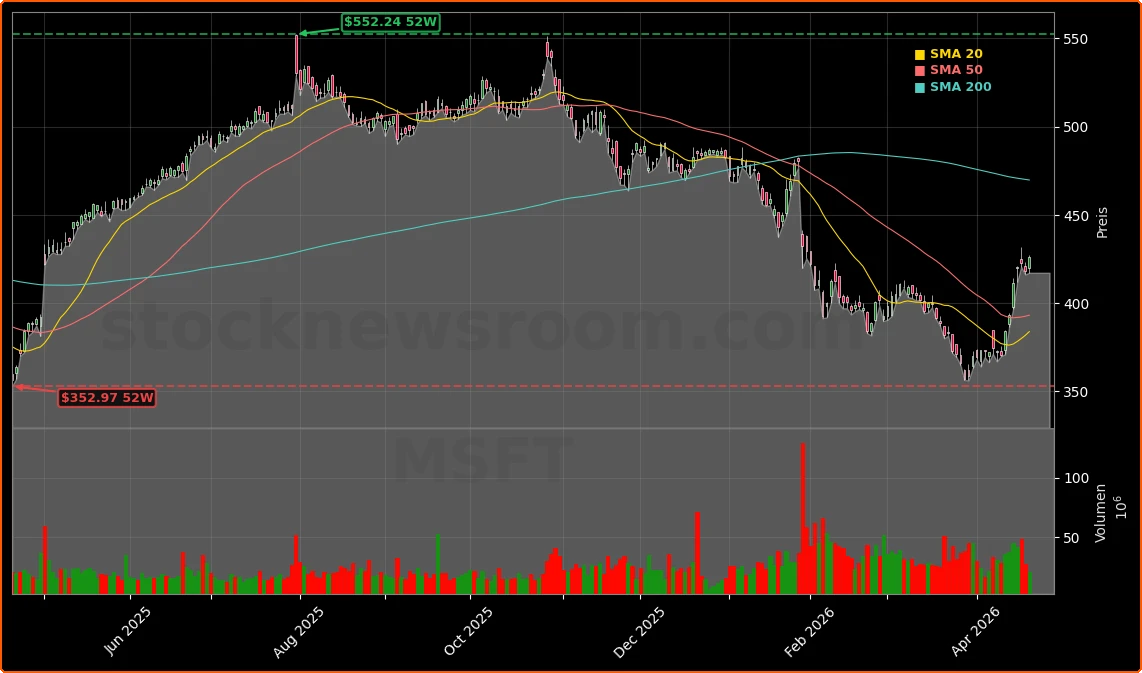
For now, Microsoft shares are trading roughly 24% below their 52‑week high of $555.45, even after Tuesday’s bounce, and about 16% higher over the past twelve months. The P/E multiple near 26x forward earnings sits at a premium to the S&P 500 but at a discount to some high‑growth software names. Some portfolio managers flag the risk that if AI demand falls short or power constraints bite, the current capex surge could compress returns for years. Others argue the selloff has already reset expectations and that the fundamental story — diversified cloud, productivity and gaming revenue with strong margins — remains intact.
Analysts like Art Hogan at B. Riley Wealth see Microsoft as one of the more attractively valued mega‑cap tech names, trading at roughly 24x next‑twelve‑month earnings and benefiting from a proven management team under CEO Satya Nadella and strategic exposure to OpenAI, even as concerns linger that AI might cannibalize the traditional Office franchise.
What do Game Pass changes signal for Microsoft?
On the consumer side, Microsoft is recalibrating its Xbox economics. The company cut the price of Game Pass Ultimate to $22.99 from $29.99 per month and trimmed PC Game Pass to $13.99 from $16.49. At the same time, it confirmed that future Call of Duty releases will no longer arrive in Game Pass on day one but instead be added roughly a year later, during the subsequent holiday season. Existing Call of Duty titles already in the library will remain available.
The move suggests Microsoft is seeking a better balance between premium game sales and recurring subscription revenue after feedback from gamers and partners. For the broader Microsoft AI Strategy, Xbox remains a strategic sandbox for deploying AI in recommendation engines, cloud streaming and developer tools rather than the main profit driver. But any shift in Game Pass monetization still matters for sentiment, as investors watch how aggressively Microsoft is willing to trade near‑term revenue for long‑term engagement.
The stock’s technical picture reflects the tug‑of‑war. Microsoft is trading about 9.9% above its 20‑day simple moving average, hinting at bullish short‑term momentum, but sits roughly 2.8% below its 100‑day average, showing that intermediate‑term weakness has not fully reversed. With an RSI near 69, the shares are edging toward overbought territory, increasing the odds of volatility into earnings.
How do new AI partnerships support the Microsoft AI Strategy?
Beyond infrastructure and gaming, Microsoft continues to build an ecosystem of AI partners to lock in enterprise demand. In Italy, it is teaming up with Expert.ai to bring that company’s EidenAI Suite to the Azure Marketplace, helping large organizations move from pilot projects to production AI deployments for complex business processes. The partnership underscores Microsoft’s cloud‑centric approach: embed specialized AI workflows inside Azure and Microsoft 365, making it harder for customers to switch providers.
Separately, Moody’s is deepening its alliance with Microsoft by integrating its “decision‑grade” risk and credit intelligence into Microsoft’s AI tools. That shift from simple co‑innovation to workflow‑embedded distribution puts Moody’s data directly where finance and risk professionals already spend their time — inside Microsoft applications. It also positions Microsoft as a key channel for regulated, high‑value data, reinforcing the enterprise moat around its AI offerings versus competitors like Apple in productivity and Tesla or NVIDIA in specialized AI use cases.
Wall Street will get the next major read on the Microsoft AI Strategy on April 29, when the company reports quarterly results. Consensus calls for EPS of $4.07, up from $3.46, on revenue of $81.4 billion versus $70.07 billion a year ago. Despite recent target cuts, analysts at TD Cowen (Buy, $540), Baird (Outperform, $500) and Mizuho (Outperform, $515) all remain bullish, while the average price target around $574 still implies meaningful upside from current levels.
Related Coverage
The people building the physical infrastructure of the AI economy, like electricians, ironworkers and pipefitters, deserve a share in its opportunity.— Brad Smith, Vice Chair and President of Microsoft
For a deeper dive into the capex side of the story, including concerns about overbuilding AI data centers and potential pressure on free cash flow, readers can explore this detailed breakdown of the Microsoft AI Strategy capex boom. That analysis examines whether the current $37.5 billion spending wave is a value‑creating moonshot or a cycle that could weigh on returns if AI demand disappoints.