
Can Oracle keep winning the AI infrastructure race without forcing investors to rethink how that growth gets funded?

Why is Oracle AI Funding suddenly in focus?
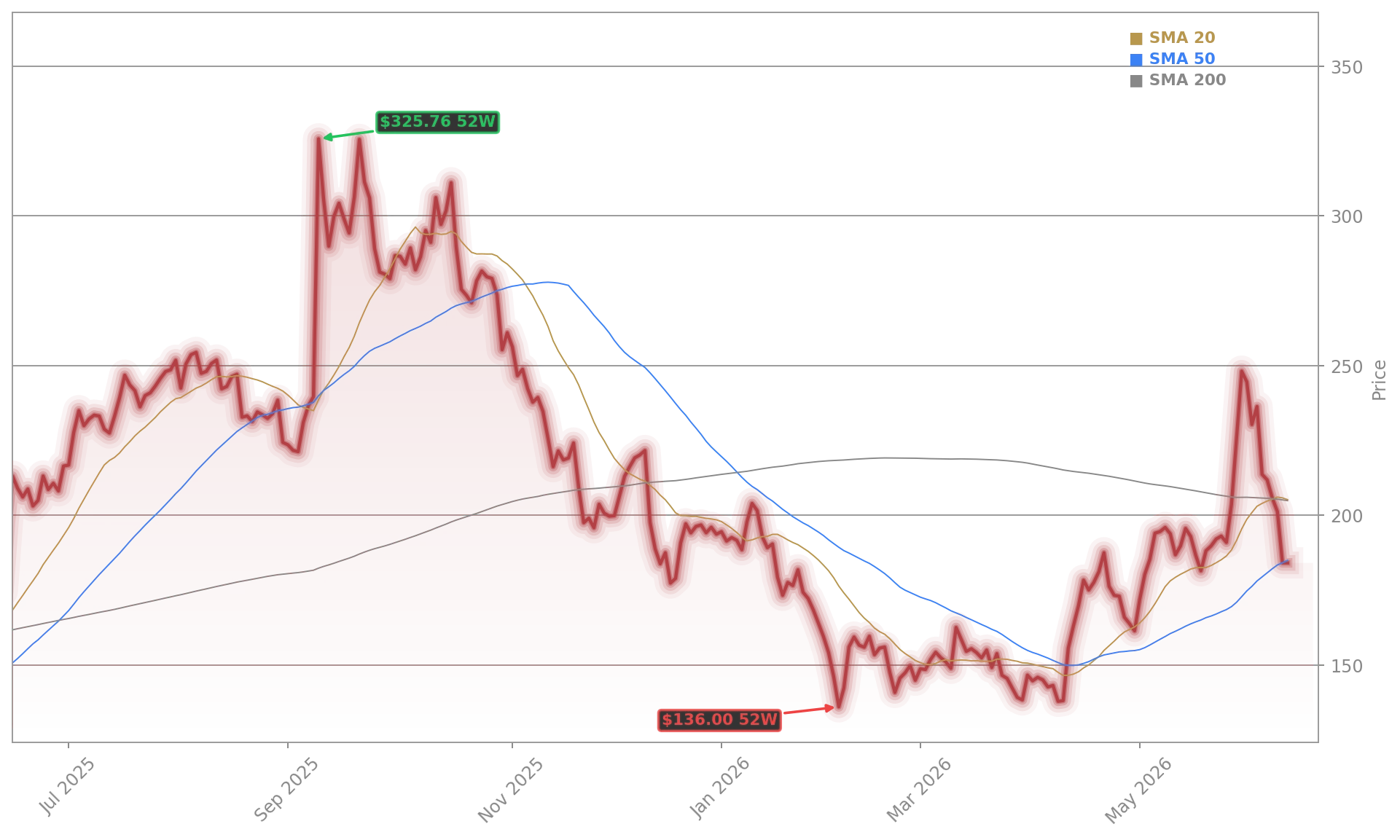
Oracle Corporation has been one of the clearest winners from enterprise AI demand, but Tuesday’s premarket pullback shows enthusiasm now comes with tougher questions. Alphabet’s plan to raise $80 billion through a stock offering to expand AI infrastructure reminded investors that scaling data centers, compute capacity, and power supply is becoming extremely capital intensive. That matters for Oracle because it is trying to capture the same AI buildout wave while already carrying a sizable debt burden.
The market reaction was sharp because Oracle had just posted a powerful move higher. Monday’s rally pushed options premium in the stock to roughly $1.3 billion, with about $1 billion tied to call contracts. Call volume ran at more than three times put volume, a sign that bullish positioning had accelerated quickly. When a stock jumps that fast, any new concern around financing can trigger profit-taking just as fast.
Can Oracle balance growth and leverage?
Oracle’s investment case still rests on real operating momentum. In its recently reported fiscal third quarter of 2026, cloud infrastructure revenue climbed 84% year over year, and management highlighted about $553 billion in contracted revenue backlog. The company has also indicated fiscal 2026 revenue could reach about $67 billion as cloud growth accelerates. Those figures help explain why Oracle is increasingly seen as a core AI infrastructure name alongside NVIDIA and other major enablers.
Still, Oracle AI Funding is now part of the valuation debate. Credit market financing for these projects has become expensive, with borrowing costs for such investment often cited in the 8% to 9% range. That raises the possibility that companies may lean more on equity issuance, partnerships, or asset-backed structures if AI spending continues to surge. Investors worry Oracle, like Alphabet or Meta, could eventually need to tap shareholders more directly if infrastructure demands keep rising faster than internally generated cash.
There is also a risk that backlog expectations run ahead of execution. Some bearish investors have argued that large contracted revenue figures may take time to convert into recognized sales if supply chains, data center construction, or power constraints slow deployments.
What supports Oracle beyond funding worries?
The bull case has not disappeared. Oracle continues to broaden the industrial base behind its AI expansion. Its partnership with Bloom Energy adds fuel-cell power systems for AI and cloud data centers, a notable step as electricity availability becomes a competitive factor. Arm also said Oracle is among the users of its data center CPU technology, underscoring Oracle’s role in next-generation infrastructure deployment.
That broader ecosystem matters because Oracle is not being valued purely as a legacy software company anymore. It is increasingly tied to enterprise AI training, inference, database demand, and cloud migration. Compared with high-multiple software names like Palantir, Oracle still looks more balanced on valuation, even if it is no longer cheap after the latest rally.
Wall Street will also be watching Oracle’s next catalyst closely. The company is scheduled to report fourth-quarter fiscal 2026 results on June 10 after the close. With the stock now highly sensitive to capex discipline, management commentary on spending, financing, margins, and conversion of backlog into revenue could matter as much as the headline numbers themselves. While recent source material did not provide fresh ratings from Citigroup, RBC Capital Markets, or Goldman Sachs, those firms are likely to be watched closely for post-earnings target changes.
Related Coverage: Investors looking for the bigger capex debate around Oracle should also read Oracle OpenAI $50B Warning as Capex Risks Take Center Stage. That piece examines whether surging AI demand can keep justifying aggressive infrastructure spending and helps frame why Oracle AI Funding has become such an important issue for shareholders now.
Oracle AI Funding is no longer just a growth story; it is now a financing story too. For investors, the key question is whether Oracle can keep converting AI demand into profitable cloud expansion without forcing a more dilutive capital plan. The June 10 earnings report could give Wall Street its clearest read yet, and a confident update would go a long way toward steadying sentiment.