
Can Super Micro fund its AI boom without crushing shareholders under one of the most dilutive capital raises in tech?

What Does the Super Micro Capital Raise Mean for Dilution?
The Super Micro Capital Raise implies approximately 27% equity dilution — a figure flagged by Bernstein as materially higher than Alphabet’s recent 2% dilution for its $85 billion AI infrastructure push. Unlike Google or Meta, which fund expansions from cash flow or debt, Super Micro Computer, Inc. faces single-digit profit margins and lacks the balance sheet flexibility to avoid equity issuance. The at-the-market program allows the company to drip-feed shares into the market over July and beyond — a structure that may extend selling pressure across multiple trading sessions. That contrasts sharply with NVIDIA, whose AI server ecosystem partners like Dell and Hewlett-Packard Enterprise have pursued debt and supply-chain financing instead of massive equity raises.
How Does This Affect the S&P 500 and NASDAQ Tech?
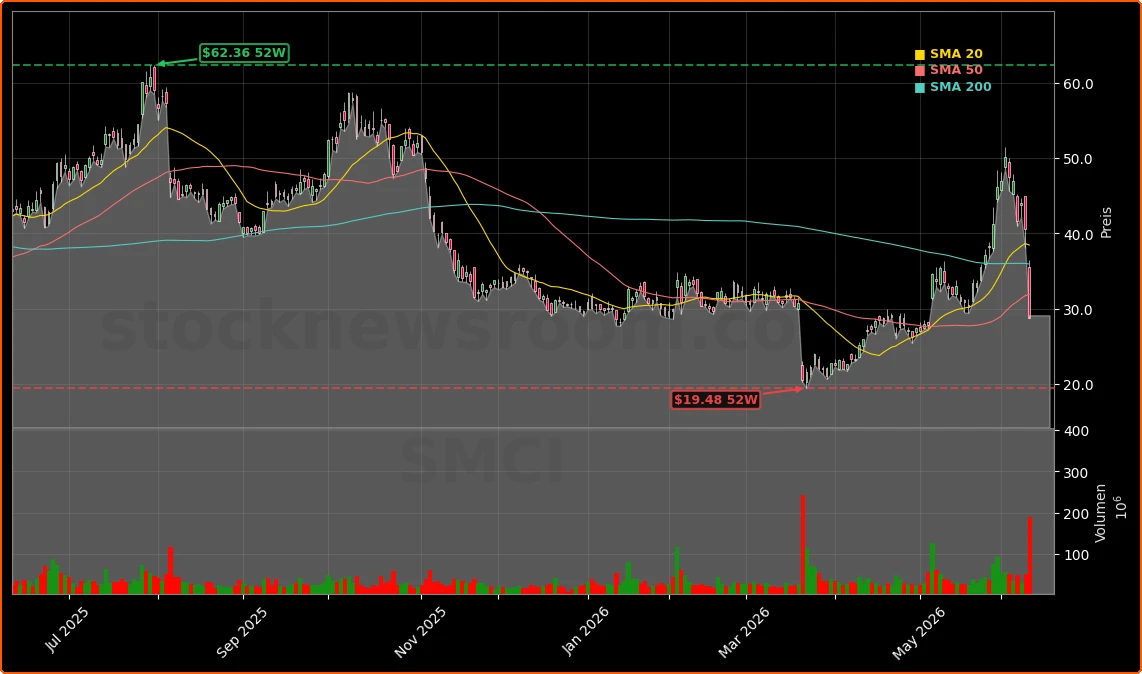
Super Micro Computer, Inc. became the worst-performing stock in the S&P 500 on June 10, dragging down the NASDAQ Composite — which fell 1.98% — amid broader tech volatility. The selloff occurred alongside Middle East tensions pushing oil toward $90/barrel and rising rate concerns, but Super Micro Capital Raise stood out as a sector-specific shock. With SMCI’s market cap hovering near $18 billion pre-announcement, the $7 billion raise represents nearly 40% of its current equity value. That scale — and its contrast with peers like Tesla and Apple, which have avoided dilutive capital raises in 2026 — has raised questions about capital efficiency in the AI infrastructure stack.
Is the $39 Billion Backlog Real — or a Red Flag?
Super Micro Computer, Inc. says it has secured $39 billion in AI server orders from over 20 customers, including hyperscalers and sovereign AI initiatives. Yet analysts at Seeking Alpha warn of execution risk: the company updated its risk disclosures to include a U.S. indictment against its co-founder for allegedly diverting NVIDIA-powered servers to China in violation of export controls. That legal exposure, combined with reported delays in customer readiness for new hardware, casts doubt on near-term fulfillment. Wedbush maintains a bullish stance on AI demand fundamentals, but Bernstein downgraded SMCI to ‘Underperform’, citing ‘a growth-quality crisis’ — particularly the risk of losing critical NVIDIA allocations to Dell and Hewlett-Packard Enterprise.
Where Does This Leave AI Infrastructure Investors?
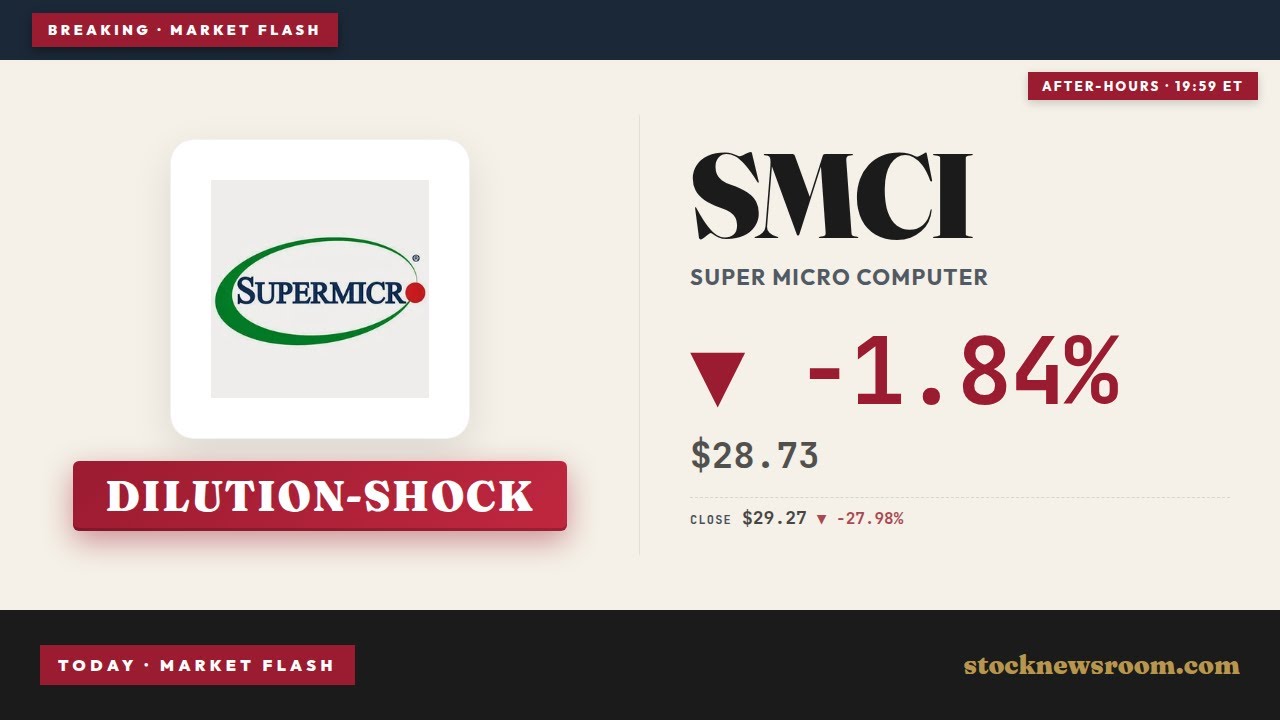
For U.S. portfolios, the Super Micro Capital Raise highlights a structural tension in the AI hardware boom: surging demand requires massive capital, but equity financing erodes per-share value. While American Atomics and AMD benefit from parallel infrastructure tailwinds — including nuclear-powered data centers — Super Micro Computer, Inc. remains uniquely exposed to margin compression and reputational volatility. Morgan Stanley notes that AI server vendors with stronger balance sheets and diversified supply chains are gaining share, and RBC Capital Markets has cut its SMCI price target to $25, citing ‘dilution-adjusted earnings pressure through Q3.’ With the company’s 52-week high at $40.64 and current after-hours trading at $28.73, technical support is now being tested — and the next catalyst is the Q2 2026 earnings report, due in late July.
This is a growth-quality crisis — not just a funding event.— Bernstein analyst
Related Coverage: Is Super Micro’s massive capital raise fueling its AI future, or signaling deeper stress beneath the $39 billion backlog? Super Micro Equity Raise: SMCI Drops 12.3% on Dilution Fears explores margin trends, customer concentration, and how competitors are reshaping the AI server supply chain.