Is the Tesla AI Strategy powering a durable new growth cycle for TSLA, or just another momentum-fueled spike waiting to fade?

How is Tesla’s AI pivot moving the stock?
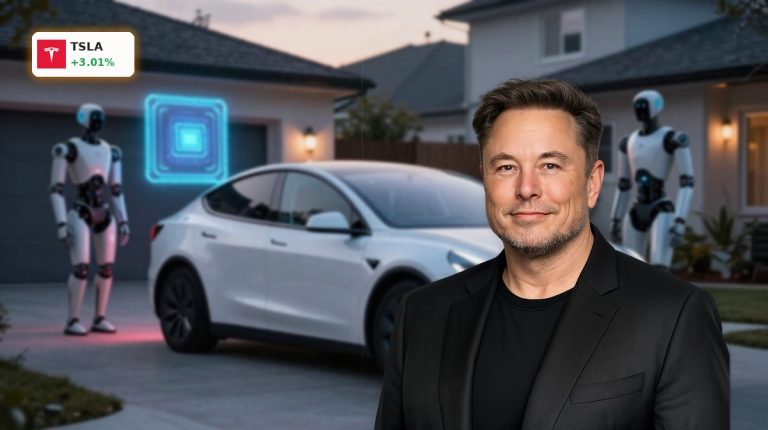
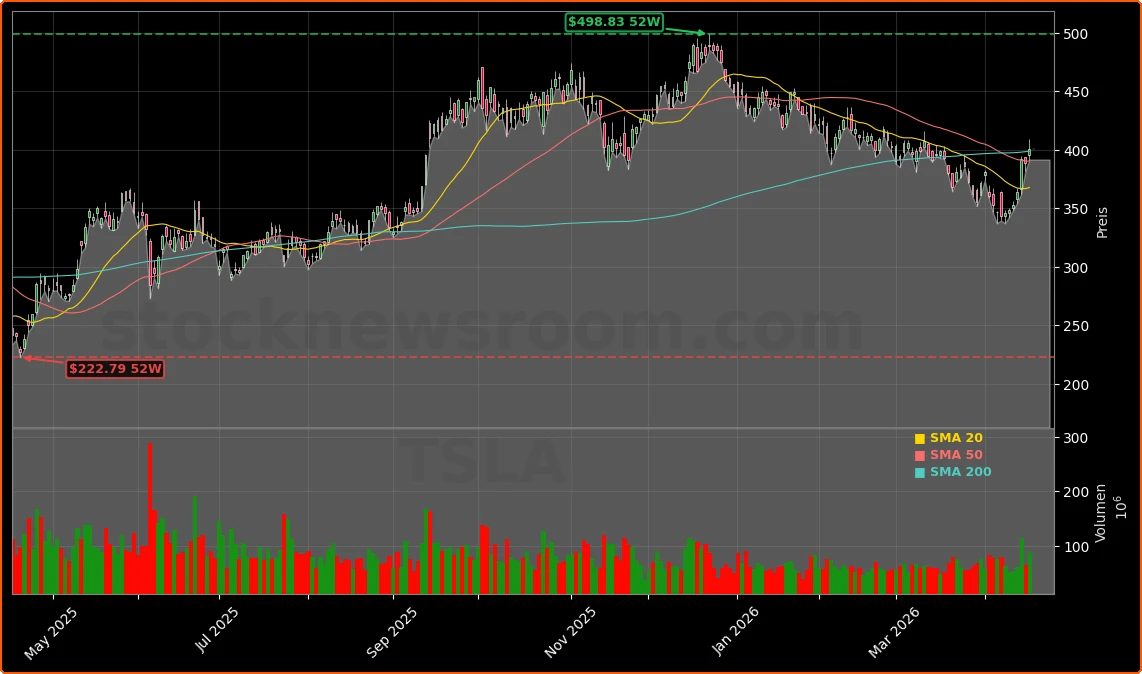
The latest leg of the rally began when Musk confirmed that Tesla had taped out its next‑gen AI5 chip and then posted a photo of the first physical die. The chip, ringed by 12 SK hynix memory packages and reportedly offering up to 40x the performance of the current AI4 in some scenarios, is designed to power future Full Self‑Driving (FSD) computers, Optimus humanoid robots and large training clusters. The news helped drive a roughly 12% weekly jump in the stock and a five‑day gain of about 14%, pulling Tesla out of an eight‑week losing streak even as fundamentals in EV demand remain mixed.
At $400.62, Tesla is still down about 7% year‑to‑date and trades below its 52‑week high near $498.83, but the sharp rebound underscores how quickly sentiment can swing when the Tesla AI Strategy delivers visible milestones. UBS this week moved to a Neutral stance with a $352 level in focus, acknowledging that the shares often trade more on narrative and momentum than near‑term earnings. Options volume and leveraged ETFs tied to Tesla have also been active, suggesting both bulls and bears are repositioning into the April 22 print.
What defines the Tesla AI Strategy now?
The Tesla AI Strategy rests on three pillars: in‑house AI silicon, FSD and robotaxis, and the Optimus robotics platform. On chips, AI5 is the headline, but Musk has already flagged AI6 and a revived Dojo 3 training system, plus an ambitious Terafab project to eventually fabricate chips in‑house in the US. Industry commentary indicates Tesla has been in discussions with equipment vendors such as Applied Materials about tools for advanced AI and logic production, an expensive bet that would deepen vertical integration but also raise execution risk.
On software, Tesla is closing in on 10 billion cumulative FSD miles, a scale Morgan Stanley has highlighted as strategically important for training data advantage. Robotaxis are operating with safety drivers in a handful of US cities, and the company is gradually activating more regions for higher‑priced FSD subscriptions. For investors, this is the core monetization path of the Tesla AI Strategy: turning a one‑time vehicle sale into a recurring software and services revenue stream, with potential take rates boosted by Tesla’s own insurance offering and discounts for safer, FSD‑assisted driving.
Can Cybercab robotaxis unlock a ‘golden era’?
Tesla’s marketing has now explicitly framed the Cybercab as the start of a “golden era,” echoing bullish language from Wedbush analyst Dan Ives, who sees robotaxis, FSD and autonomy as key to much higher long‑term valuation. A new viral video showed a Cybercab arriving autonomously in a driveway, underlining the company’s vision of low‑cost, self‑driving EVs that owners can deploy into a shared robotaxi network when not in personal use. Musk has floated a starting price around $30,000, with the promise that robotaxi income could offset purchase costs for consumers.
Production of Cybercab units has reportedly begun at Giga Texas, with a push toward volume production this month. Robotaxis are already approved in several US cities, and Tesla is targeting more launches in 2026. However, prediction markets still price relatively low odds for aggressive milestones this year, reflecting the regulatory, technical and consumer‑adoption hurdles ahead. For equity investors, widespread Cybercab deployment remains a multi‑year, high‑beta call option embedded in the Tesla AI Strategy rather than a near‑term cash flow driver.
How do fundamentals and valuation stack up?
On traditional metrics, Tesla continues to look expensive versus legacy automakers. The stock trades at a price‑to‑earnings multiple north of 360, more than 15x the broader auto industry average, with price‑to‑book at 17.8 and price‑to‑sales at 14.5, both many times above peers such as General Motors and Ferrari. Return on equity of just over 1% trails the sector average, and revenue growth recently dipped slightly negative, even as Tesla’s EBITDA and gross profit remain significantly stronger than the typical automaker’s, supported by software, energy storage and services.
Tesla does retain a relatively conservative balance sheet for a growth story, with a debt‑to‑equity ratio around 0.18 and interest‑bearing debt at roughly 11% of capital, providing flexibility to fund AI, robotics and chip projects. In Q1 2026, global deliveries reached about 358,000 vehicles, modestly below expectations and complicated by model transitions, while inventory rose after Tesla built significantly more cars than it sold. That backdrop explains why some analysts, including JPMorgan’s Ryan Brinkman with a $145 price target, remain skeptical that a chip shipping in 2027 or a slowly scaling robotaxi fleet will quickly fix near‑term demand softness.
How does Tesla compare in the broader AI trade?
Tesla now trades more in line with high‑growth AI names like NVIDIA and big‑tech leaders such as Apple and Microsoft than with traditional auto peers. The stock has rejoined the so‑called Magnificent Seven in recent sessions, with a +3% daily move on Friday as mega‑cap tech rallied across the NASDAQ and S&P 500. While pure‑play chipmakers still dominate AI infrastructure, Tesla’s ability to design its own automotive and robotics silicon and deploy it at scale gives the company a differentiated, vertically integrated angle on the theme.
That said, execution risk is elevated. Tesla’s AI5, AI6, Terafab and Optimus roadmaps will demand billions in capex and R&D while the core EV market slows and price competition intensifies. Investors must weigh that against optionality from xAI, the potential SpaceX IPO halo effect and cross‑company synergies within Musk’s ecosystem, where private valuations are already pushing into the hundreds of billions of dollars. For diversified US portfolios, position sizing in Tesla increasingly resembles a high‑conviction AI growth bet rather than a conventional auto holding.
Related Coverage
For a deeper look at how FSD and insurance fit into this story, Tesla FSD Strategy +7.6% Rally on Insurance Shock analyzes whether subscription revenue and insurance discounts can underpin a trillion‑dollar valuation and explains why the market reacted so strongly to the latest software updates. The piece also explores how these dynamics intersect with the current Tesla AI Strategy narrative and the stock’s renewed momentum on Wall Street.
In summary, the Tesla AI Strategy is shifting the market focus from cyclical EV demand toward a long‑duration bet on chips, robotaxis and robots, helping fuel a sharp recovery in the share price even as near‑term fundamentals stay mixed. For US investors, Tesla now sits squarely at the crossroads of autos, AI and semiconductors, demanding both a higher risk tolerance and a longer time horizon. The upcoming Q1 earnings call on April 22 will be the next key test of whether Musk can keep selling the “golden era” vision – and back it up with credible roadmaps and milestones.