
Can Best Buy’s surprise CEO change turn around a lagging stock just as AI-driven hardware demand is set to accelerate?

How is Best Buy’s stock digesting the CEO news?
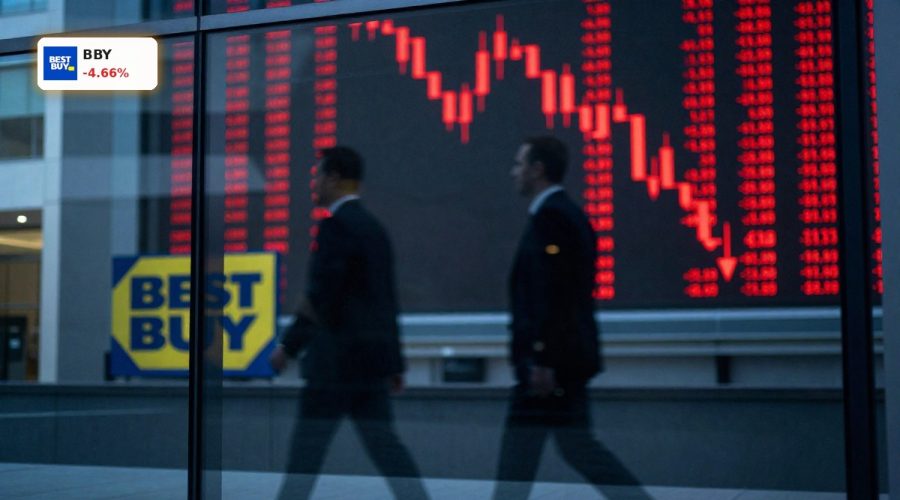
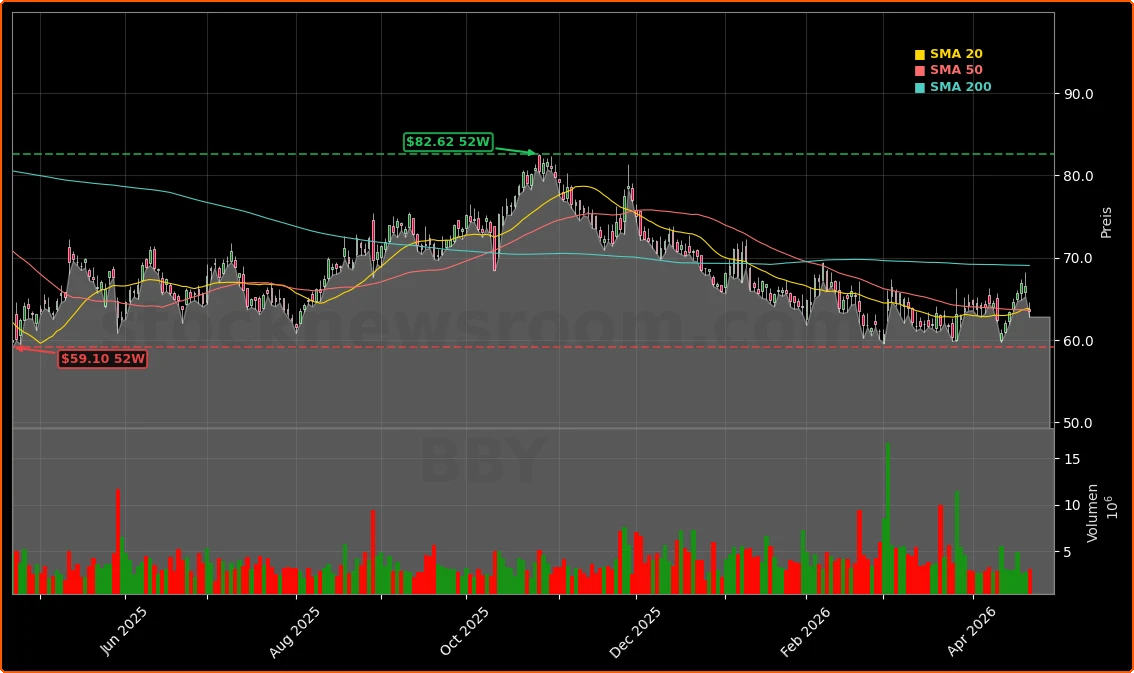
On the day of the announcement, Best Buy Co., Inc. (BBY) fell roughly 4.66% to $63.48, retreating from a previous close of $67.41. The decline reflects investor unease that the Best Buy CEO Change comes at a time when sales have stagnated and the stock has badly trailed the S&P 500. While BBY is modestly higher over the past 12 months, it has lagged the index’s much stronger gains and remains far below its all‑time closing high of $138 from late 2021.
Earlier in April, Goldman Sachs downgraded BBY from “Buy” to “Sell,” citing concerns that rising memory costs could pressure margins in PCs and laptops while consumers trade down to cheaper models. Analyst Kate McShane warned that any short‑term lift from bigger tax refunds could be offset later in the year as higher component costs ripple through pricing. That skeptical backdrop adds extra pressure on the incoming CEO to prove that a new leadership era can change the narrative.
Who is Jason Bonfig and what changes with this Best Buy CEO Change?
The Best Buy CEO Change elevates **Jason Bonfig**, 49, from his current role as chief customer, product and fulfillment officer to the top job and a seat on the board as of October 31. Bonfig joined the company in 1999 as an inventory analyst and has since worked his way up through merchandising, supply chain, e‑commerce, and marketing. In recent years he helped launch Best Buy’s U.S. third‑party online marketplace and expand the company’s advertising arm, Best Buy Ads, both seen internally as key growth and margin drivers.
Board chair **David Kenny** described Bonfig as “the right leader to accelerate the business, with urgency and innovative ideas, and create meaningful growth for the company and its shareholders.” From an investor’s perspective, promoting an insider signals continuity rather than a radical pivot. Bonfig has been central to many of the initiatives already underway, suggesting that the Best Buy CEO Change is less about rewriting strategy and more about executing faster on AI‑era opportunities and digital monetization.
What is Corie Barry’s legacy at Best Buy?
Outgoing CEO **Corie Barry**, 51, became the first woman to lead Best Buy when she took over in June 2019. During her nearly seven‑year tenure, she steered the retailer through some of the most volatile periods in recent corporate history: the Covid‑19 pandemic, global supply‑chain disruptions, high inflation, and the impact of elevated tariffs introduced under President Donald Trump. Under Barry, Best Buy saw surging demand for work‑from‑home equipment, TVs, and appliances, followed by a hangover as consumers shifted spending back to travel and services.
Barry will remain as a strategic advisor for six months after stepping down, helping to oversee the transition and maintain relationships with vendors and key partners, including major consumer‑electronics brands like Apple, NVIDIA and Tesla ecosystem product providers that sell through Best Buy’s stores and website. While BBY’s share price is slightly above the level when she took over, it has underperformed the S&P 500 over her tenure, reflecting how difficult it has been for traditional electronics retailers to keep up with both e‑commerce competition and changing consumer demand.
How does the outlook look under the new CEO?
For the current fiscal year, Best Buy expects revenue between $41.2 billion and $42.1 billion, roughly flat versus last year’s $41.69 billion. Adjusted earnings per share are guided to a range of $6.30 to $6.60, compared with $6.43 in the prior year. Comparable sales — a key retail metric that tracks stores and online channels open at least 14 months — are projected to range from a 1% decline to a 1% increase, highlighting just how narrow the growth corridor is.
Management is betting that a new wave of AI‑enabled smartphones, laptops and other devices will gradually lift upgrade cycles. That could benefit not just Best Buy but also tech heavyweights such as Apple and NVIDIA, whose next‑generation chips and devices drive many of the premium products on Best Buy’s shelves. Still, the company cautions that headwinds like a softer housing market, more price‑sensitive U.S. consumers and slower innovation in some product categories are likely to persist this year.
How does Best Buy stack up against competitors?
Compared with home‑improvement rivals such as Home Depot and Lowe’s, Best Buy has posted weaker trends in big‑ticket appliances and consumer electronics. Those chains have benefited more from home‑renovation demand, while Best Buy has been more exposed to cyclical gadget upgrades. Online competition from e‑commerce platforms and marketplaces also remains fierce, putting pressure on pricing and forcing the company to differentiate through services, in‑store expertise, and its own third‑party marketplace.
For U.S. investors, the Best Buy CEO Change raises the question of whether Bonfig can turn newer initiatives — like Best Buy Ads and the marketplace model — into durable earnings drivers similar to how digital advertising has boosted results at tech leaders such as Apple. If he can leverage the company’s physical footprint, vendor relationships and data to capture more high‑margin revenue around each device sale, BBY could close some of the performance gap versus broader indices like the S&P 500 and NASDAQ.
Related Coverage
Investors who want a deeper dive into Best Buy’s recent numbers can read the detailed earnings breakdown in this analysis of Best Buy’s latest results, margin trends and short‑squeeze dynamics. That article explores what drove the earlier 7.1% post‑earnings surge in BBY, how cautious guidance shaped expectations, and why bears and bulls are so divided on the stock’s next move.
Jason is the right leader to accelerate the business, with urgency and innovative ideas, and create meaningful growth for the company and its shareholders.— David Kenny, Chair of Best Buy’s Board of Directors
The Best Buy CEO Change marks a pivotal moment for Best Buy Co., Inc. as it tries to reignite growth in a tougher retail and electronics cycle. For Wall Street portfolios, the leadership shift to Jason Bonfig keeps the strategic focus on AI‑related upgrades, digital monetization and operational discipline. The coming quarters will show whether this Best Buy CEO Change can transform cautious guidance into a more convincing growth story and justify a sustained re‑rating of BBY shares.