
Can Coinbase keep its regulatory momentum after its top legal architect exits at a pivotal moment for US crypto policy?

What Does Grewal’s Exit Mean for COIN?
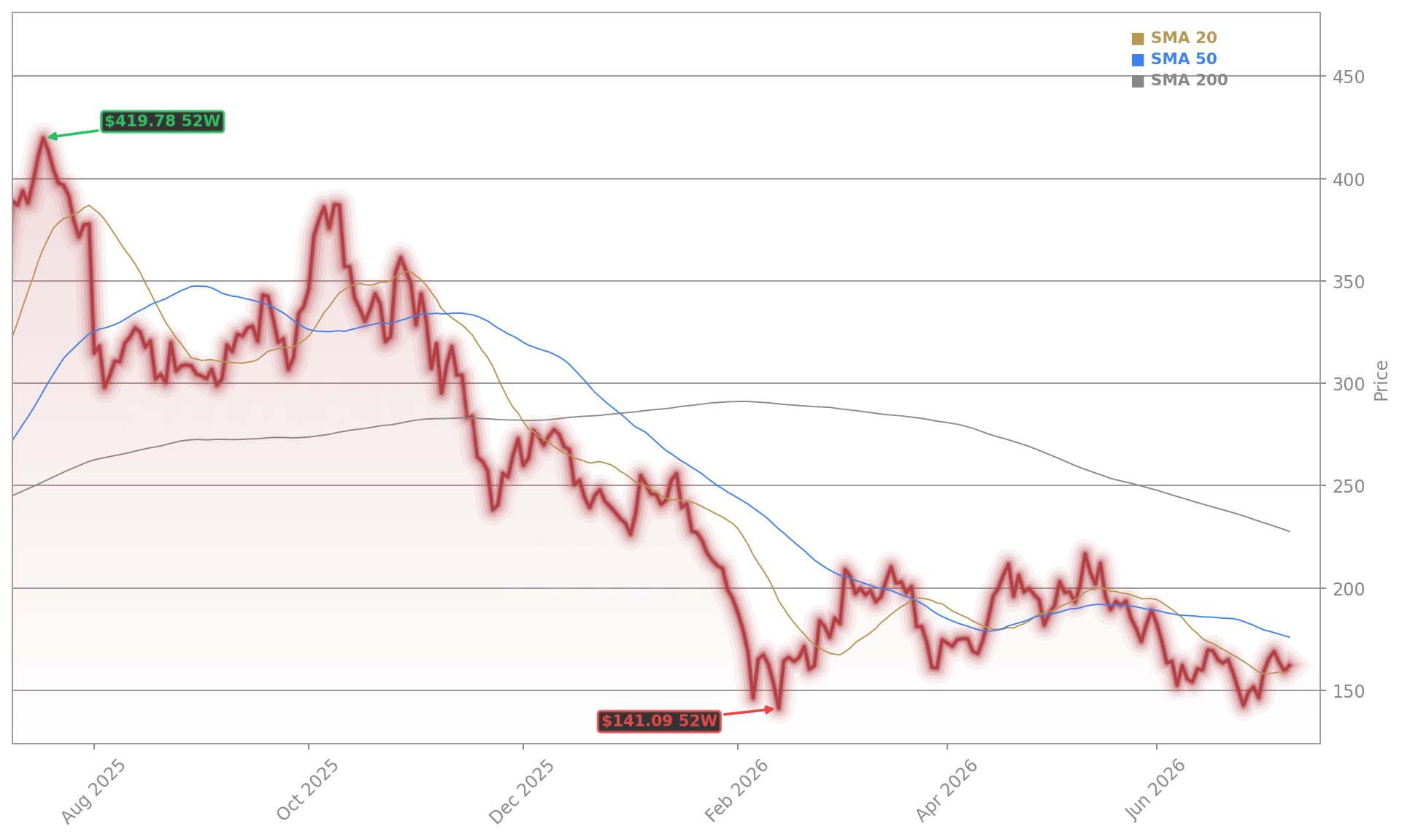
Paul Grewal’s tenure at Coinbase Global, Inc. was defined by high-stakes courtroom victories and legislative advocacy — most notably the company’s 2023 win against the SEC and his instrumental role in drafting the GENIUS and CLARITY Acts. His departure comes just weeks after Circle received U.S. Comptroller of the Currency (OCC) approval to launch Circle National Trust, a federally chartered national trust bank. That milestone — widely seen as the strongest regulatory validation yet for U.S.-based stablecoin infrastructure — sent Coinbase Global, Inc. shares sharply higher, with COIN briefly touching $165.60 in early Friday trading. As one of the largest USDC distributors and a key infrastructure partner for Visa, Mastercard, and Google in the OpenUSD coalition, Coinbase stands to gain directly from Circle’s new federal oversight framework.
How Is the Clarity Act Affected?
The Digital Asset Market Clarity Act — which would formally assign jurisdiction over digital commodities to the Commodity Futures Trading Commission (CFTC) and securities to the SEC — cleared the Senate Banking Committee in May 2026 but has since stalled. Market odds of passage this year have collapsed to 46% on Polymarket, and analysts at Citigroup now cite leadership attrition as a key risk factor. According to Citigroup’s July 9 note, ‘The departure of seasoned legal and policy executives like Grewal and Ripple’s former General Counsel Danny Kirschner weakens the industry’s lobbying bandwidth at a critical juncture.’ Without sustained executive-level advocacy, the bill may lack the political oxygen needed to clear the full Senate before the November elections — a development that could delay regulatory certainty for years.
Why Is Circle’s OCC Win a Catalyst?
Circle’s OCC approval isn’t just a win for Circle (CRCL); it’s a structural upgrade for the entire U.S. crypto stack. The new national trust charter enables Circle to manage the USDC Reserve under federal supervision — a move that brings stablecoin reserves into the same regulatory perimeter as traditional bank deposits. That legitimacy has immediate ripple effects: institutional capital flows, custody partnerships, and cross-border payment integrations all accelerate under federal oversight. For Coinbase Global, Inc., whose revenue from institutional custody and trading services grew 72% year-over-year in Q2 2026, Circle’s charter strengthens the value proposition of its own regulated infrastructure — including its pending application for a New York State BitLicense expansion. Notably, Goldman Sachs upgraded its sector outlook on July 8, citing ‘Circle’s OCC charter as the strongest de-risking event for U.S. crypto infrastructure since the 2022 Infrastructure Investment and Jobs Act.’
Who Steps Into the Coinbase Legal Chief Role?
Molly Abraham, currently Coinbase’s Deputy General Counsel, will assume the role of General Counsel effective August 1. Abraham has led the company’s global privacy, data governance, and international regulatory strategy since 2024 — including its successful GDPR and DORA compliance frameworks in the EU. Her appointment signals a strategic pivot: while Grewal focused on U.S. litigation and Congress, Abraham’s expertise lies in scaling compliance across 42 jurisdictions and integrating crypto into traditional financial protocols. That shift may accelerate Coinbase’s push into institutional settlement rails and AI-driven payment orchestration — areas where NVIDIA, Apple, and Tesla are already embedding digital asset capabilities into hardware and software stacks. As RBC Capital Markets noted in its July 9 update, ‘Abraham’s appointment reflects Coinbase’s evolution from a crypto-native challenger to a regulated financial infrastructure provider — a positioning that better aligns with S&P 500 inclusion criteria.’
What’s Next for COIN Investors?
With COIN trading near its 52-week high of $172.33 and up over 68% year-to-date, momentum remains strong — but volatility is rising. The Coinbase Legal Chief transition, combined with the Clarity Act uncertainty and Circle’s OCC win, creates a three-dimensional catalyst environment: regulatory tailwinds, legislative headwinds, and institutional adoption tailwinds. For U.S. investors, the key is exposure to the broader crypto infrastructure theme — not just COIN, but also regulated stablecoin issuers, custody providers, and AI-payment enablers. As Morgan Stanley emphasized in its latest sector call, ‘Stablecoins are no longer fringe assets — they’re the settlement layer for the next generation of financial AI. Coinbase is positioned at the center of that stack.’
Related Coverage: For deeper analysis on how OpenUSD and AI-driven payments are reshaping Coinbase’s long-term value proposition, read Coinbase Stablecoin Rally: Open USD and AI Lift COIN. On the broader ecosystem front, Cardano Governance +14% as Chang Push Meets Wallet Hack offers insights into how governance resilience is now being priced into digital asset valuations — a trend increasingly relevant for institutional crypto portfolios.
Thank you for being an incredible leader, partner, and friend — and for your coolness under fire as we’ve navigated the last 5 epic years together.— Faryar Shirzad, Chief Policy Officer, Coinbase
Coinbase Legal Chief Paul Grewal’s departure is a turning point — not an endpoint — for the company’s regulatory strategy. For U.S. investors, it underscores the growing maturity of crypto as a financial infrastructure sector, not just a speculative asset class. The next inflection point will be the Senate’s vote on the Clarity Act — or its quiet burial. For long-term portfolios, COIN remains a core digital asset infrastructure holding with accelerating institutional adoption tailwinds.