

Is MicroStrategy Bitcoin Financing still a smart leverage play on BTC, or are soaring funding costs turning the bet into a risk trap?

How is MicroStrategy Bitcoin Financing shifting now?
MicroStrategy Incorporated has accelerated its bitcoin buying again, completing its largest purchase since late 2024 with a roughly $2.54 billion outlay last week. That spree pushed its holdings to more than 815,000 bitcoin at one point and helped lift the token back toward $79,000. While preferred-stock funding has hit a near-term pause, MicroStrategy Bitcoin Financing is increasingly relying on common-share issuance, positioning MSTR as one of the highest-beta ways for U.S. investors to play big swings in crypto from the NASDAQ screen.
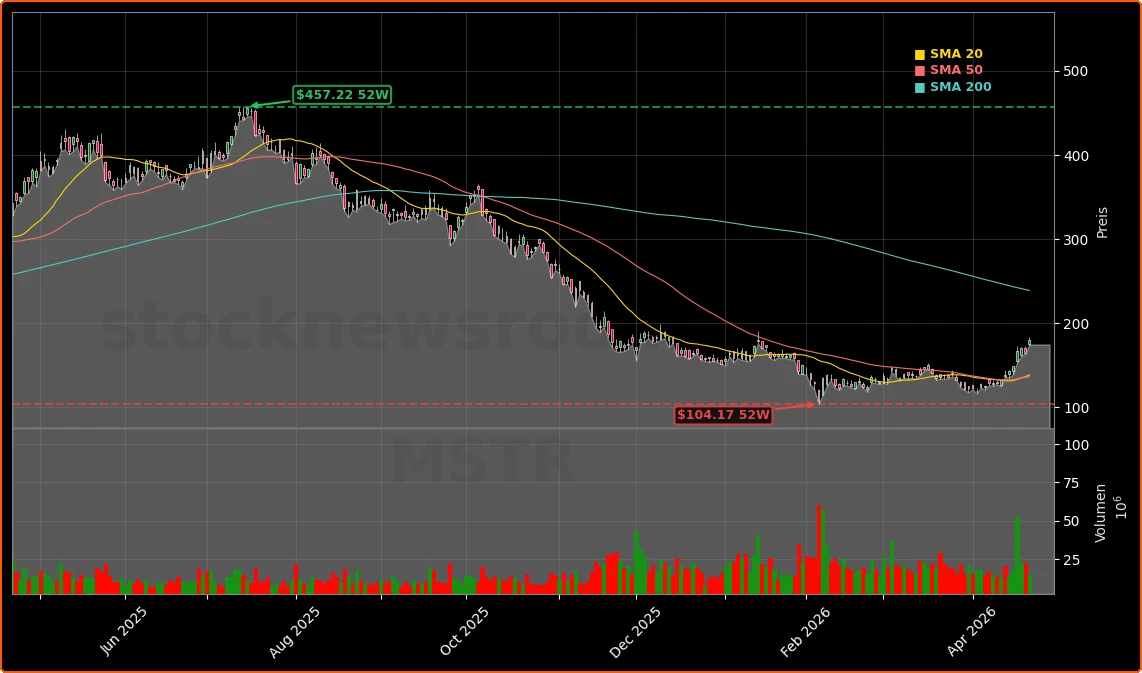
The stock’s latest close at $179.83, up from a prior $168.09, keeps MSTR well below its 52‑week high but marks a sharp April rebound and a three‑month high area. The move has also revived interest in structured products and options, with European traders citing capped bonus certificates and call warrants tied to MSTR as a leveraged way to bet on a further run toward $180 and beyond. For U.S. investors, the question is shifting from “Will they buy more bitcoin?” to “How will they keep financing it?”
Why are MicroStrategy’s interest costs exploding?
The most dramatic change in MicroStrategy Bitcoin Financing is the cost of capital. The company’s Stretch preferred stock (ticker STRC), used heavily to fund prior bitcoin purchases, now carries an 11.5% coupon, up from 9% last July. As STRC slipped below par to around 99.5, MicroStrategy triggered its own covenant to raise the rate when prices trade under that threshold for a full month, driving its annual interest burden to about $1.489 billion from roughly $800 million at the start of December.
To reassure bond and preferred holders, the company built a U.S. dollar reserve that now stands near $2.25 billion, earmarked to cover interest and dividend payments. Management previously signaled a target buffer equal to 24 months of financing costs; today, that reserve only covers around 18.1 months at current run-rate interest. To restore the original cushion, MicroStrategy would likely need to raise roughly $700 million or more, and the most realistic tool right now is additional MSTR stock issuance rather than more STRC.
How much dilution could MicroStrategy Bitcoin Financing imply?
Last week, MicroStrategy raised about $366 million net by issuing approximately 2.165 million new shares of MSTR. With the stock trading at a substantial premium to the firm’s underlying bitcoin holdings, that deal was accretive to the company’s core metric of bitcoin per share. At present, the enterprise value of MicroStrategy sits around 129% of the notional value of its roughly 815,000+ bitcoin, giving the company an estimated $18.5 billion premium over spot holdings.
Management, led by Executive Chairman Michael Saylor, has pledged not to issue common stock if that premium disappears or flips to a discount, because issuing below bitcoin value would reduce bitcoin per share. As long as the premium persists, MicroStrategy Bitcoin Financing via equity remains viable, both to buy additional bitcoin and to service interest obligations. However, using MSTR issuance to pay financing costs rather than to expand the bitcoin stack could pressure the stock and compress the premium over time, especially if bitcoin consolidates or pulls back.
How does MSTR compare to other U.S. crypto proxies?
MSTR remains a pure-play, leveraged bet on bitcoin, contrasting with mega-cap tech names like NVIDIA, Tesla or Apple, which have only tangential exposure to digital assets. Unlike spot bitcoin ETFs trading on the NYSE and NASDAQ, MicroStrategy Bitcoin Financing adds operating leverage and a fixed-cost capital structure, creating an embedded call option on long-term bitcoin prices. That leverage cuts both ways: during bitcoin rallies, MSTR often outperforms; in sharp drawdowns, the stock can fall far more rapidly than the underlying crypto.
Institutional sentiment is mixed. Some Wall Street strategists argue that high-coupon funding at 11.5% only works if bitcoin compounds at a double-digit clip for years, limiting margin of safety. Others see MicroStrategy as a potential future S&P 500 constituent and a unique vehicle for funds with mandates that prohibit direct crypto or ETF exposure. Trading platforms highlight intense retail and options interest in MSTR, while recent Form 144 filings show modest insider share sales, a normal pattern for compensation-related stock vesting.
Related Coverage
For a deeper look at how the company’s capital structure evolved, including the controversial STRC preferreds, see MicroStrategy Bitcoin Strategy +11.8% Surge Shakes Wall Street, which breaks down earlier stages of the MicroStrategy Bitcoin Financing playbook. Investors focused on the broader crypto backdrop should also read Ethereum Upgrade Rally: Can ETF Inflows Power More Upside? to understand how the latest Ethereum upgrade and ETF flows may influence risk appetite across digital assets.
MicroStrategy Bitcoin Financing now sits at a critical crossroads: rising interest costs, a still‑healthy equity premium and an ever‑larger bitcoin stash. For U.S. investors, MSTR remains a volatile but powerful proxy on crypto, blending software operations with a leveraged digital-gold balance sheet. The next few quarters of bitcoin price action and capital-market access will determine whether this bold financing strategy unlocks further upside or forces a rethink of the company’s high-octane approach.