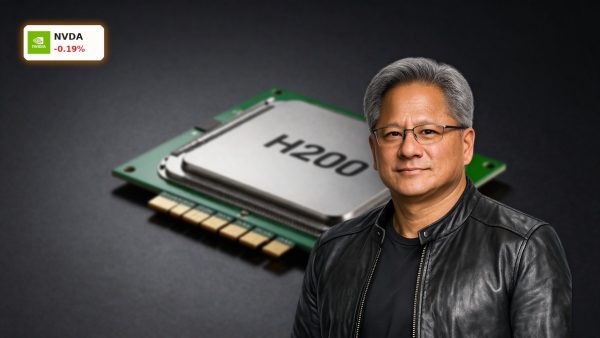
Are NVIDIA AI Chips still untouchable, or is a new wave of custom silicon quietly eroding the company’s once-dominant position?

How much market power does NVIDIA still have?
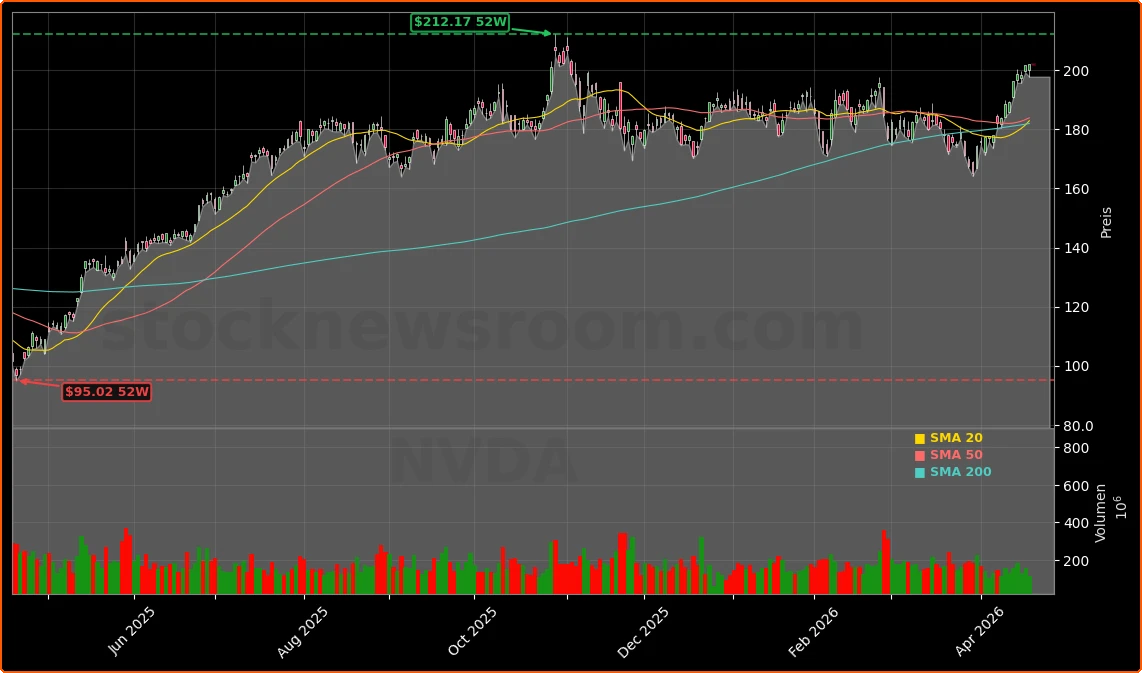
At roughly $202.06 at the close on Monday (up about 0.19% on the day, slightly lower after hours), NVIDIA Corporation remains one of Wall Street’s most important swing factors. The stock carries huge weight in the S&P 500 and NASDAQ, and mega‑cap funds like Vanguard’s Mega Cap Growth ETF have concentrated exposure, with a large share of assets parked in names such as NVIDIA, Apple, Microsoft, Amazon and Alphabet. That means any pullback in NVIDIA AI Chips demand or margins can ripple through passive portfolios globally.
Despite recent sideways trading after a spectacular 2023–2025 run, NVIDIA is still the company making the most absolute profit in the AI accelerator space. Its GPUs and server processors dominate AI training workloads, and for years they also captured much of the inference market. Management has publicly talked about a potential $1 trillion opportunity in AI data‑center chip sales across 2026 and 2027, underscoring how central NVIDIA AI Chips have become to the secular story driving Wall Street’s tech rally.
Are hyperscalers turning away from NVIDIA AI Chips?
The risk side of that dominance is increasingly visible. Major cloud and internet platforms are aggressively diversifying away from a single‑vendor dependence on NVIDIA AI Chips. Alphabet is deepening its own TPU roadmap and, according to recent reports, is working with Marvell on specialized inference chips aimed at cutting the cost per token for generative AI. Google’s TPUs are now a meaningful growth engine for its cloud division, and their focus is squarely on challenging NVIDIA in both performance and economics for large‑scale inference.
Meta has reportedly signed a multi‑year, multibillion‑dollar deal with AMD for AI accelerators, while Apple is expanding its own silicon for on‑device and cloud AI. Chinese players are simultaneously ramping up domestic chip design to mitigate export controls. Each of these moves dilutes NVIDIA’s pricing power at the margin. A Bloomberg report on Google’s latest inference chip plans even pressured NVDA shares intraday, highlighting how sensitive the market remains to any hint of demand shifting away from core NVIDIA AI Chips.
Where do Broadcom, AMD and others fit in?
Rivals are not standing still. Broadcom has emerged as a leading supplier of custom AI processors and ASICs tailored for hyperscale inference workloads. These application‑specific chips can cut total cost of ownership by 40%–60% versus general‑purpose GPU clusters in steady production environments, making them attractive for large customers who already trained their models on NVIDIA hardware but want cheaper, power‑efficient inference. Broadcom and NVIDIA both rely on Taiwan Semiconductor Manufacturing (TSMC) to manufacture their most advanced devices, including NVIDIA’s latest Vera Rubin platform, which uses TSMC’s 3‑nanometer process.
Advanced Micro Devices is also leaning hard into AI data centers, pitching its own accelerators as a cost‑effective alternative to NVIDIA for both training and inference. Analysts at firms like Needham and others have grown more constructive on the broader AI‑infrastructure ecosystem, including software‑tool vendors such as Cadence Design Systems, which recently secured a higher price target from Needham alongside references to collaborations with Google and NVIDIA in AI‑driven chip design. For U.S. investors, this underscores that the AI semiconductor trade is no longer a single‑stock story centered exclusively on NVIDIA, even if NVIDIA AI Chips still hold the volume and ecosystem advantage.
How is NVIDIA expanding beyond GPUs?
To defend its lead, NVIDIA is moving deeper into full‑stack AI solutions. The company recently expanded partnerships with Adobe and WPP to run large‑scale, agentic AI for marketing and creative workflows on NVIDIA platforms. These systems use NVIDIA’s accelerated computing, software stack, and secure runtimes to orchestrate autonomous AI agents that can plan, create and distribute content at scale. The deal shows how NVIDIA is trying to turn its hardware dominance into sticky platform revenue, embedding its chips inside enterprise software and creative ecosystems rather than selling accelerators as pure commodities.
On the hardware side, NVIDIA has also introduced faster inference‑optimized chips based partly on acquired technology, aiming to protect share as hyperscalers deploy custom ASICs. Memory partners such as SK hynix are ramping next‑generation server modules tailored for NVIDIA’s Vera Rubin systems, pushing bandwidth higher and power consumption lower to alleviate AI memory bottlenecks. Meanwhile, Morgan Stanley expects the rise of agentic AI to expand demand beyond classic GPUs into CPUs and memory, with incremental tens of billions of dollars in data‑center CPU spending by 2030, a potential tailwind for NVIDIA’s Grace CPU line and ecosystem partners.
Is the valuation still reasonable?
Fundamentally, NVIDIA continues to post strong results, consistently beating Wall Street expectations and retaining a consensus “Buy” rating, with firms like Morgan Stanley and others projecting robust growth from AI infrastructure. Average price targets near the mid‑$200s suggest analysts still see upside from the current $202 level, although recent profit‑taking is visible in institutional flows: for instance, Flagship Harbor Advisors cut its NVDA stake by more than 15% in Q4 while keeping it as a top‑three holding.
Some portfolio managers now argue that valuations across leading AI chip names are “a bit high” after NVIDIA’s market cap leapt from roughly $4 trillion in mid‑2025 to around $5 trillion by October of that year. At the same time, Bernstein’s Stacey Rasgon has highlighted that companies like NVIDIA and Broadcom are trading at around 15 times earnings or less on forward estimates, which is not extreme given their growth rates and the capital intensity of the AI build‑out. Volatility has increased, with NVDA occasionally dragging major indices lower on down days, as seen when simultaneous weakness in tech heavyweights like Amazon and NVIDIA knocked the Dow Jones Industrial Average by nearly 150 points.
Related coverage
For a deeper dive into how far the current boom in NVIDIA AI Chips could go, including revenue forecasts and scenario analysis, see NVIDIA Forecast +73% Boom: Can AI Growth Last?. That piece explores whether Wall Street’s trillion‑dollar expectations are finally catching up with reality or still underestimating the upside.
Investors comparing NVIDIA’s position to other U.S. chipmakers may also want to read Intel Earnings -4.4%: Can a 260% AI Rally Survive the Crash Test?, which looks at whether Intel’s AI narrative can justify its recent rally and what that implies for the broader semiconductor value chain competing with NVIDIA.
In the end, NVIDIA AI Chips remain the central engine of today’s AI data‑center cycle, but competitive pressure from hyperscalers and rival chipmakers is clearly rising. For U.S. investors, the stock still offers leverage to one of the strongest secular trends on Wall Street, yet position sizing and valuation discipline are becoming more important after a historic run. The next leg of earnings and product launches will determine whether NVIDIA can turn its current dominance into durable, long‑term leadership in the age of agentic AI.