
Can Oracle’s massive AI backlog outweigh a debt load that is starting to make even bullish investors nervous?

What Do Oracle Earnings Reveal About AI Capital Discipline?
Oracle Corporation’s upcoming earnings report isn’t just another quarterly update — it’s a stress test for Wall Street’s AI infrastructure thesis. With $553 billion in non-cancelable contracted revenue, mostly tied to AI capacity deals with OpenAI and other hyperscalers, Oracle has transformed from legacy database provider into a top-three cloud infrastructure contender — alongside Amazon, Microsoft, and Google. Yet that $553 billion RPO reflects future revenue, not cash. The company’s trailing four-quarter free cash flow stands at a staggering negative $24.74 billion, and non-current debt has surged to $124.7 billion — up from $85.3 billion just 12 months ago. Mizuho analyst Siti Panigrahi warns investors must see concrete evidence that Oracle can convert AI contracts into positive operating cash flow before 2029, or sentiment will remain anchored by financing risk.
Can Oracle Outspend Its Way to AI Dominance?
Oracle’s AI infrastructure revenue jumped 243% year over year in Q3 FY2026, while cloud infrastructure revenue grew 84% to $4.89 billion. But scaling at this pace demands massive capital — and Oracle’s planned $50 billion debt and equity raise signals urgency. The five major hyperscalers, including Oracle, are projected to add roughly $2 trillion in AI-related assets to their balance sheets by 2030. That puts Oracle in direct capital competition with NVIDIA, whose data center revenue now exceeds $40 billion annually, and Tesla, whose AI chip roadmap remains tightly guarded. Unlike peers, Oracle lacks a hardware moat or chip IP — making its bring-your-own-GPU and upfront payment models critical. CEO Clay Magouyrk confirmed over $29 billion in such contracts, helping push AI infrastructure gross margins to 32% — above the 30% target. Still, burning at least $80 billion over the next three years raises questions about balance sheet resilience during a potential rate pause or AI demand correction.
How Does Oracle Compare to Hyperscaler Peers on Valuation?
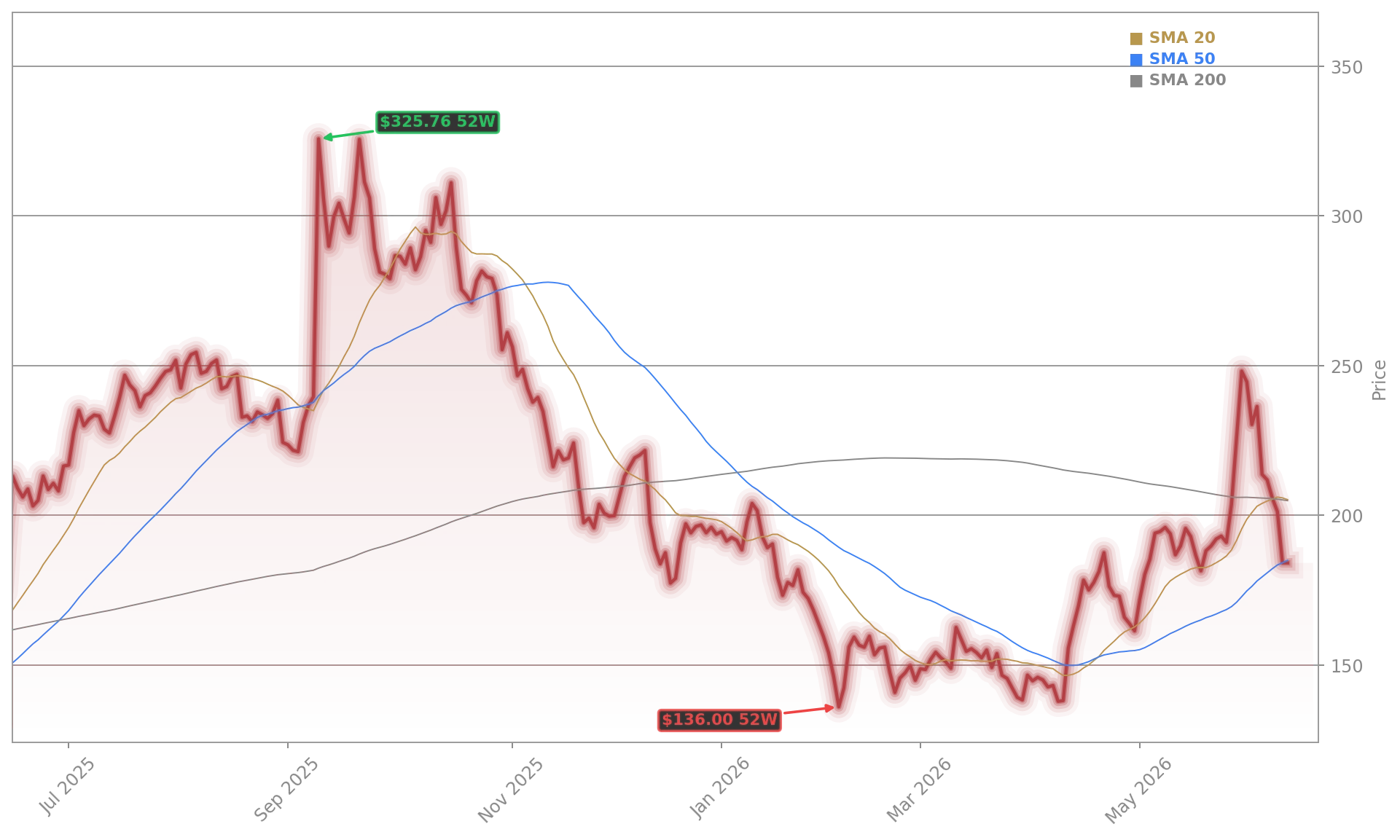
Oracle trades at a forward P/E of 31 — half the multiple of AWS and Azure peers — yet carries significantly higher leverage. Its $713.69 billion market cap sits well below Apple’s $3.4 trillion, but its $553 billion RPO represents roughly nine years of current revenue, a metric no competitor matches. Polymarket traders assign just an 18.5% probability that Q4 cloud revenue clears $11 billion — suggesting skepticism on execution despite bullish guidance. With FY2027 revenue guidance raised to $90 billion and cloud growth projected at 46%–50%, Oracle must prove scalability doesn’t require perpetual dilution. Citigroup recently reiterated its $275 price target, citing RPO conversion as the key catalyst, while RBC Capital Markets upgraded Oracle to ‘Outperform,’ noting its AI infrastructure margin trajectory outpaces Google Cloud and IBM Cloud.
Why Is Wall Street Split on Oracle’s Debt Strategy?
Oracle’s debt-to-EBITDA ratio now exceeds 5.0x — a level typically associated with high-yield issuers — prompting rating agencies to scrutinize its path to self-funding. Interest expense rose 32% to $1.18 billion, and restructuring costs doubled to $153 million as the company pivots toward AI-native engineering. Yet Mizuho’s Panigrahi forecasts free cash flow turning positive in 2029 and reaching $36 billion by 2030 — a pivot that would erase current financing concerns. The hold argument rests on timing: with a consensus 12-month target of $244.03 — essentially flat from current levels — investors are pricing in solid but unspectacular Oracle Earnings. A beat on cloud gross margin or RPO conversion could trigger a wave of target hikes and force portfolio reallocations across the NASDAQ 100.
What Should U.S. Investors Watch in the June 10 Report?
Three metrics will define the Oracle Earnings reaction: (1) Cloud infrastructure gross margin — must hold at or above 32%; (2) RPO conversion rate — investors need to see >15% sequential growth in recognized AI infrastructure revenue; and (3) debt financing plans — any signal of equity dilution or rating downgrades will pressure the stock. Software stocks slid broadly on June 3, with Oracle down over 5% alongside IBM and Salesforce, underscoring sector-wide sensitivity to capital discipline. With 36 of 43 analysts rating Oracle a Buy or Strong Buy — and a median $285 price target — the June 10 report is the inflection point for whether Oracle Earnings validate the AI infrastructure bull case or expose structural leverage risk.
Oracle self-funds growth and financing concerns weighing on sentiment should fade.— Siti Panigrahi, Mizuho
Related Coverage: Oracle’s recent $9.9 billion AI funding round has drawn scrutiny over sustainability — Oracle AI Funding +9.9%: Warning Signs After AI Raise details how investor sentiment is shifting from growth euphoria to capital discipline scrutiny. The article examines warning signs in Oracle’s debt stack and explores whether the company’s AI infrastructure model can scale without triggering credit rating actions or equity dilution.