
Are Oracle Job Cuts a smart AI pivot, or a warning that its spending spree is getting too expensive?

Why Did Oracle Cut 21,000 Jobs?
Oracle Corporation reduced its global headcount from 162,000 to 141,000 full-time employees as of May 31, 2026 — a reduction of 21,000 roles, or 13%. In its annual regulatory filing, the company explicitly tied the Oracle Job Cuts to AI adoption: “The adoption and deployment of AI technologies across our operations have resulted, and may continue to result, in reductions to our workforce.” Restructuring charges surged to $1.84 billion, up from $374 million a year earlier. The cuts spanned Cloud, Health, Sales, and NetSuite units, according to internal notifications obtained by Business Insider. Unlike broad tech layoffs driven by macroeconomic softness, Oracle’s reductions are operationally targeted — accelerating automation, consolidating redundant roles, and aligning staffing with its AI infrastructure buildout.
How Do Oracle Job Cuts Compare to Peers?
Oracle’s 21,000-job reduction places it among the most aggressive tech-sector streamliners in 2026 — though not the largest. Meta cut 8,000 jobs (10% of staff) in May; Amazon slashed roughly 30,000 corporate roles over the past 18 months; Microsoft offered buyouts to 7% of U.S. employees. What distinguishes Oracle’s Oracle Job Cuts is their direct linkage to AI-driven efficiency gains — not just cost containment. Jefferies analyst Brent Thill noted the layoffs create “funding capacity for AI infrastructure investment while addressing a widening productivity gap.” Meanwhile, competitors like Apple and Tesla have held hiring steady or expanded in AI-adjacent hardware and automotive software, highlighting divergent capital allocation philosophies across the tech sector.
What’s the Impact on Oracle’s Balance Sheet?
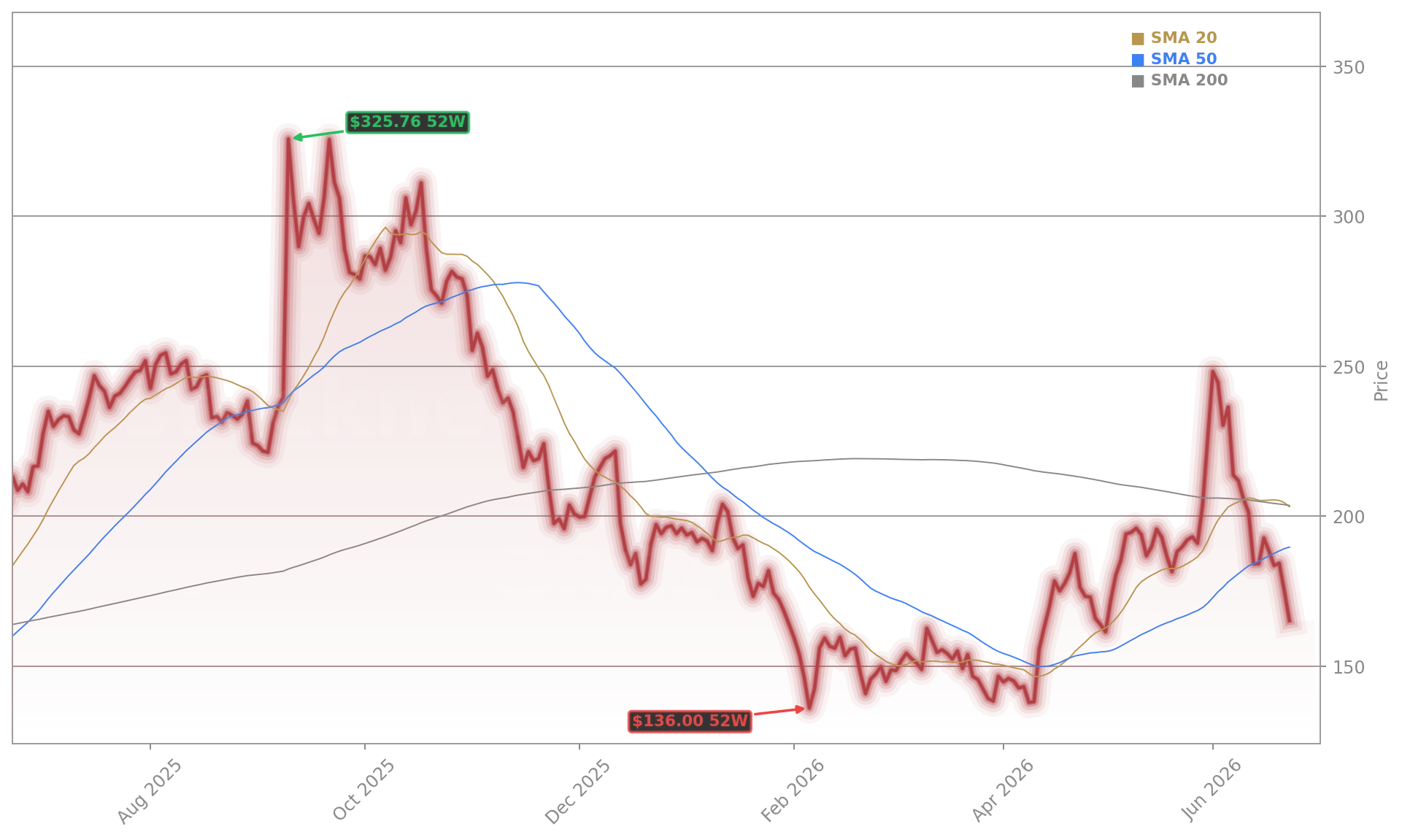
The financial implications are stark. Oracle’s fiscal 2026 capital expenditures soared 162% to $55.7 billion — dwarfing its $21.2 billion spend in fiscal 2025. Net capex guidance for fiscal 2027 stands at $70 billion, with up to $25 billion in prepayments from customers. Free cash flow plunged to negative $23.7 billion, and total debt now exceeds $100 billion. Yet the company maintains $32 billion in trailing-12-month operating cash flow and a 36.3% operating margin. Mizuho reiterated an Outperform rating with a $320 price target, calling Oracle’s $90 billion FY2027 revenue guidance “conservative.” Citigroup analysts, however, warn that the $40 billion in planned FY2027 debt and equity raises risk dilution and margin compression — especially if AI demand falters.
Does the $638 Billion Backlog Offset the Risk?
Yes — but with a timing lag. Oracle’s remaining performance obligations (RPO) hit $638 billion as of May 31, up 363% year-over-year and fueled by a $300 billion, five-year deal with OpenAI and large agreements with Meta and xAI. $75 billion of that RPO is backed by customer-supplied or prepaid GPUs — reducing Oracle’s capital burden. Still, investors remain skeptical: the stock is down 15% over the past 12 months and trades 46.3% below its $343.01 52-week high. The S&P 500, by contrast, is up 25% over the same period. Oracle’s forward P/E sits at 23x, well below its 76x peak last September — reflecting deep uncertainty about the path to positive free cash flow. As RBC Capital Markets points out, “The conversion of RPO into recognized revenue remains the critical catalyst — and the biggest execution risk.”
Oracle Job Cuts: A Strategic Pivot or a Distress Signal?
Wall Street is divided. Of 43 analysts covering Oracle Corporation, 36 rate it Buy or Strong Buy — but consensus targets imply only 37% upside to $252.64. The Oracle Job Cuts are not merely cost-cutting; they are structural repositioning. Oracle is shedding legacy software roles to scale infrastructure engineering, AI operations, and data center deployment teams. Yet the company also warned in its 10-K that restructurings “may lead to shortages of sufficiently skilled employees… and damage to employee morale.” With 31% of staff employed for 10+ years, institutional knowledge loss poses a real operational threat. The market’s skepticism is warranted — but so is the long-term bet: if Oracle delivers on even 60% of its $638 billion backlog, its AI hyperscaler transformation could redefine its earnings power by 2030.
Related Coverage: Oracle’s AI infrastructure momentum is accelerating — the company’s $638 billion backlog reflects unprecedented demand, but investors are demanding proof of execution. Oracle AI Infrastructure Hits $638B Backlog as Capex Jumps explores how the company plans to convert signed contracts into durable revenue. Meanwhile, the broader AI infrastructure trade is under stress: NVIDIA AI Infrastructure -2.7%: Warning or Next AI Leg? examines whether NVDA’s recent pullback reflects a sector-wide recalibration — or a buying opportunity amid trillion-dollar AI spending commitments.
Everything we see shows this market size is in the trillions of dollars per year.— Clayton Magouyrk, Co-CEO, Oracle Corporation
Oracle Job Cuts are now central to understanding Oracle’s evolution from enterprise software leader to AI infrastructure provider. For U.S. investors, the question is no longer whether Oracle can win AI contracts — but whether it can fund, build, and monetize them without jeopardizing financial stability. The next quarterly earnings report will test whether the Oracle Job Cuts are delivering the operational leverage needed to sustain its $70 billion capex runway. For long-term portfolios exposed to the AI infrastructure buildout, Oracle remains a high-conviction, high-volatility exposure — and one worth watching closely.