Can the Riot Platforms Nuclear Partnership with Terrestrial Energy turn a volatile Bitcoin miner into a stable AI power landlord?

How does the Riot Platforms Nuclear Partnership reshape the story?
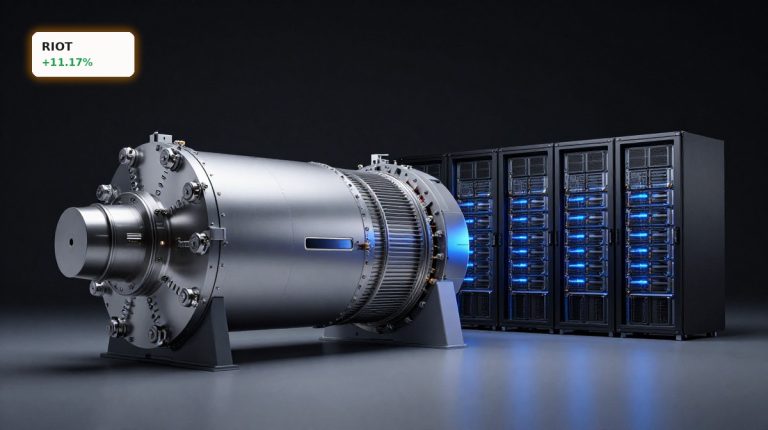
The Riot Platforms Nuclear Partnership with Terrestrial Energy represents a strategic leap in how the company plans to source power for its next generation of data centers. Under a newly signed memorandum of understanding, Riot’s future AI and high-performance computing (HPC) campuses could be directly paired with Terrestrial’s Integral Molten Salt Reactor (IMSR) plants, each delivering roughly 390 MW of capacity. The partners are studying multiple candidate sites, including existing Riot locations in Texas and Kentucky, with a total roadmap of up to 4 GW of nuclear power dedicated to digital infrastructure.
For U.S. investors, the move ties directly into two of Wall Street’s most powerful themes: the surge in energy demand from AI workloads and the hunt for clean, predictable baseload power outside volatile wholesale markets. While mega-cap names like NVIDIA and Apple have captured the AI hardware and platform narrative, Riot is positioning itself as a power-first infrastructure provider whose valuation could be increasingly driven by long-term data center contracts rather than just Bitcoin price cycles.
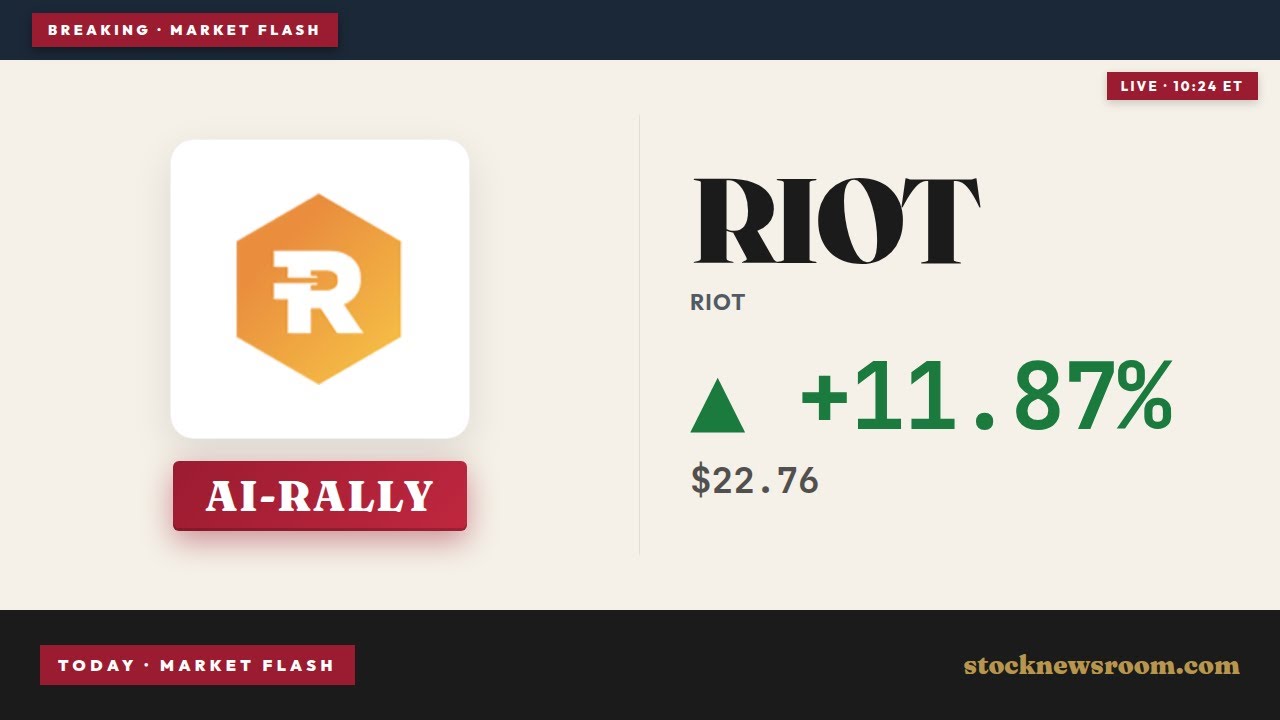
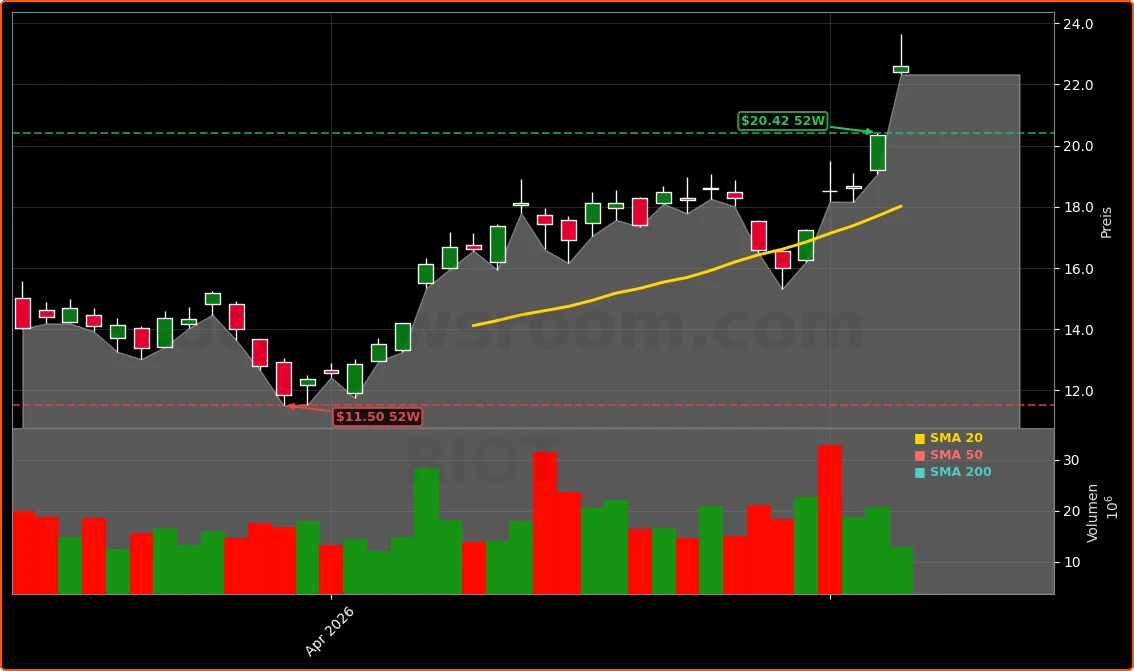
RIOT shares, recently trading around $22.62 and up over 11% on the day, have broken above a multi-year trading band that capped the stock near $20, with bullish traders now eyeing the low-$30s as the next technical zone.
What exactly will Terrestrial Energy and Riot build?
Terrestrial Energy, listed on Nasdaq under the IMSR ticker, is developing Generation IV small modular reactors using molten salt technology. Its IMSR design separates non-nuclear energy conversion systems into a dedicated Thermal and Electric Facility, isolated from regulated nuclear components. This allows hybrid configurations where natural gas or other fuels can supplement power during buildout, providing resilience and potentially earlier commercial operations while reactors are still being completed.
Within the Riot Platforms Nuclear Partnership, the plan is to customize IMSR plants for integration with Riot-developed and operated data centers optimized for hyperscale tenants. Riot’s development team has deep experience across design, engineering, construction, and operations of large-scale campuses, which the company is now repurposing from pure Bitcoin mining toward AI and enterprise compute. The partners will evaluate scaled configurations of power blocks and data center modules, leveraging Riot’s existing basis-of-design for high-density workloads.
Importantly, Terrestrial’s choice to use standard-assay low enriched uranium (SALEU) below 5% U235 avoids dependence on the still-constrained HALEU fuel supply chain that many competing advanced reactor concepts require. That could matter for timing and scalability if U.S. regulators and utilities move faster on SMR approvals than the fuel market can adapt.
How does this fit Riot Platforms’ AI and data center pivot?
The Riot Platforms Nuclear Partnership comes as Riot is already in the midst of a visible pivot toward AI infrastructure hosting. In Q1 2026, the company reported $167.2 million in revenue, including $33.2 million from its new data center segment in its first full quarter of operation. While Bitcoin mining revenue still accounted for the majority at $111.9 million, AI and hosting-related income is now a material line item and growing.
Riot has also secured institutional validation through a major agreement with AMD, which doubled its contracted capacity to 50 MW with options up to 200 MW at Riot’s growing campuses. Several independent analyses note that at full build-out, recurring net operating income from these data centers could transform Riot from a cyclical miner into a more predictable cash-flow story. In parallel, management has emphasized that Bitcoin reserves remain a key, capital-efficient funding pool for capex, reducing reliance on equity issuance during this transition.
Viewed against a crowded field of hyperscale and colocation players, Riot is attempting to differentiate not by competing directly with the largest cloud operators, but by controlling low-cost, flexible power at scale—first via curtailment credits and now potentially via nuclear co-location. That positions the company in a different lane than hyperscale customers such as Tesla’s Dojo or cloud-focused giants, while still tapping into the same AI-driven demand wave.
What are the risks and what should investors watch next?
Despite the excitement around the Riot Platforms Nuclear Partnership, investors should recognize that small modular reactors remain a long-dated, regulatory-heavy bet. IMSR plants still need to clear extensive licensing hurdles in the U.S., including design approvals and site-specific permits. Project timelines, cost inflation for nuclear-grade components, and potential contractor delays all introduce execution risk. Moreover, competition from alternative low-carbon options—such as renewables paired with storage or advanced gas turbines—could influence long-run economics.
In the nearer term, Riot’s share price remains sensitive to Bitcoin volatility and the speed at which AI-related hosting ramps. While Wall Street research desks have become more constructive on the stock’s re-rating potential, many models still treat nuclear capacity as an out-year option value rather than a base case contributor. Key catalysts over the next 12–24 months include additional data center contracts, occupancy milestones at the Corsicana and other campuses, and clearer development schedules for the first nuclear-linked sites in Texas or Kentucky.
This partnership brings together two companies with sector leading capabilities to unlock the tremendous value in IMSR plant supply to data center operations and to build long-term strategic depth in Riot Platforms’ power-first strategy.— Simon Irish, CEO of Terrestrial Energy
For U.S. growth and tech-oriented portfolios, RIOT increasingly sits at the intersection of crypto, AI infrastructure, and advanced energy technology—a high-beta mix that may appeal to investors comfortable with regulatory and commodity risk, but less so to those seeking steady, S&P 500-style exposure.