Can the Roku Home Screen turn a simple interface redesign into Roku’s next major profit engine?

How Does Roku Home Screen Boost Ad Revenue?
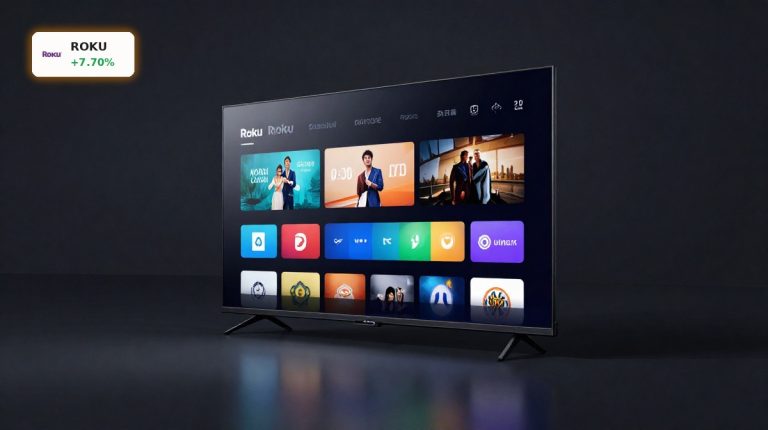
The new Roku Home Screen—launched May 27—is the most significant user experience update in a decade, according to Evercore ISI analyst Robert Coolbrith. Its redesigned layout prioritizes large-format, high-impact ‘Marquee’ ad units, dramatically increasing available impression inventory without adding user friction. Coolbrith notes these placements command premium CPMs and are already being adopted by top-tier brands—including those competing with Apple and Meta for connected TV attention. With ad revenue now accounting for roughly half of Roku’s total business—and up 27% year-over-year—the Roku Home Screen is proving to be a scalable, high-margin engine. That’s critical as digital ad budgets shift toward streaming, where Roku’s 100+ million active homes offer unmatched scale among pure-play platforms.
What Does Evercore’s $185 Target Mean for Wall Street?
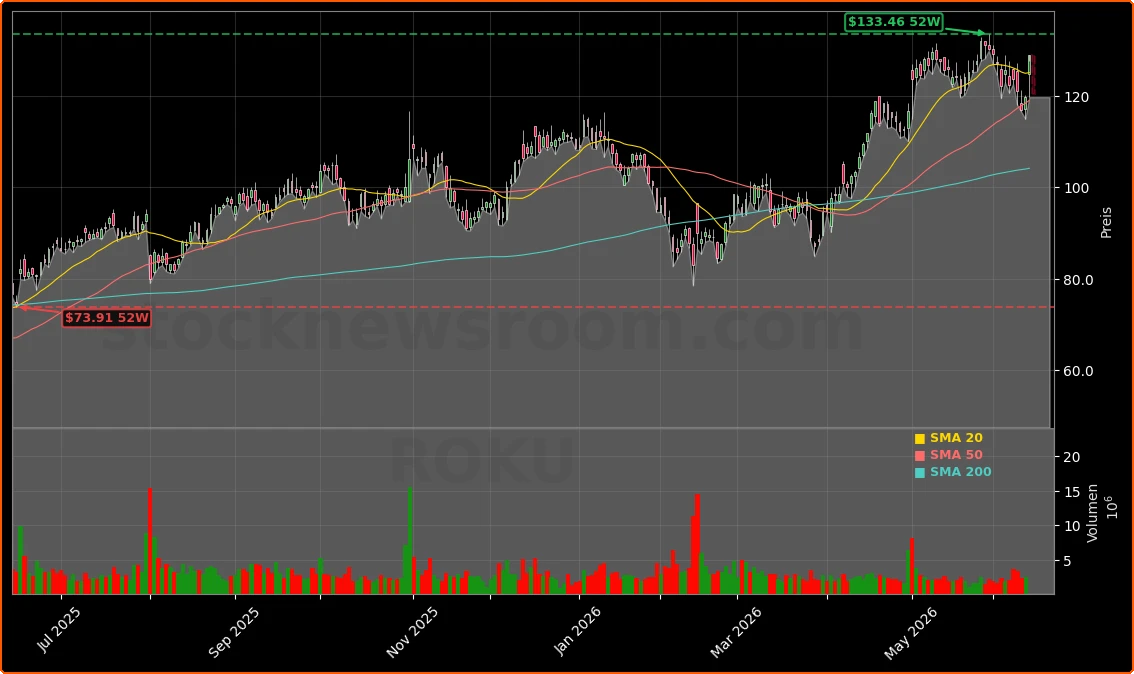
Evercore ISI raised its price target on Roku, Inc. to $185 from $160 and reiterated its ‘Outperform’ rating—citing the Roku Home Screen as the primary near-term catalyst. The $185 target implies 43% upside from Friday’s close and reflects confidence that current consensus estimates underappreciate the interface’s monetization velocity. Notably, Evercore’s upgrade comes just days after Roku, Inc. reported Q1 revenue up 22% year-over-year—the strongest growth in four years—and delivered its fourth straight quarter of positive net income. That ‘beat and raise’ pattern signals a structural shift: Roku, Inc. is no longer a turnaround story but a profit-generating platform with accelerating free cash flow—up 81% on a trailing basis.
How Does Roku Home Screen Compare to Rivals?
Unlike NVIDIA’s AI infrastructure plays or Tesla’s hardware-software integration, Roku, Inc. competes in the high-velocity, low-capital-intensity arena of operating system monetization. Its Roku Home Screen offers a distinct advantage over competitors like Amazon Fire TV and Google TV: full control over the interface, user data, and ad stack. While Alphabet’s $85 billion AI push fuels Google’s ad tech, Roku’s interface-first strategy avoids reliance on LLM inference or cloud infrastructure—keeping margins elevated and execution focused. That agility matters: Roku’s ad revenue growth outpaced streaming hours growth (8%) by a wide margin, confirming deeper user engagement—not just more screen time—is driving returns.
Is Roku, Inc. a S&P 500 Contender Now?
With market cap approaching $15 billion and consistent profitability, Roku, Inc. is gaining traction as a potential S&P 500 addition—especially as the index increases its tech weighting. Its Q1 performance, combined with the Roku Home Screen rollout, reinforces durability in a volatile ad market. Unlike many NASDAQ-listed peers, Roku, Inc. generates positive free cash flow and carries no debt, offering a rare combination of growth and balance sheet strength. That profile resonates with index fund managers seeking profitable, scalable digital infrastructure—especially as connected TV ad spend is projected to grow 19% in 2026, per eMarketer. Wall Street’s focus has shifted from ‘Can Roku monetize?’ to ‘How fast can it scale?’—and the Roku Home Screen answers that question decisively.
What’s Next for Roku, Inc. in Q2 2026?
Roku’s recent launch of a new Home Screen represents the most material update to Roku’s user experience in the past decade. While we see an array of benefits, we think the most salient near-term will be a significant expansion in availability of the large ‘Marquee’ ad unit.— Robert Coolbrith, Evercore ISI
Investors now look to Q2 2026 for confirmation that the Roku Home Screen is delivering sustained ad yield uplift and subscription conversion lift. Early data suggests first-party and third-party streaming service sign-ups are accelerating—another high-margin benefit of the new interface. With the company guiding for continued revenue acceleration and Evercore projecting FY27 upside, the next catalyst may be a dividend announcement or share buyback authorization. For portfolios exposed to digital advertising, streaming infrastructure, and NASDAQ growth, Roku, Inc. represents a focused, high-conviction play—especially as the Roku Home Screen enters its first full quarter of monetization.