Is the S&P 500 Tech Selloff a healthy reset, or the first real crack in the AI-driven bull market?

What triggered the S&P 500 Tech Selloff?
The S&P 500 Tech Selloff was catalyzed by a near-8% plunge in the Philadelphia Semiconductor Index (SOX) — the largest relative drop versus the S&P 500 since April 2025 — amid collapsing chip valuations and waning confidence in AI monetization. Key drivers included falling AI token prices, escalating geopolitical risk from the Strait of Hormuz disruption, and growing skepticism around hyperscaler capital efficiency. As Goldman Sachs strategist Bobby Molavi warned, ‘The correlation between AI strategies is a point to watch — it feels great on the way up, but extremely dangerous on the way down.’ This volatility mirrors late-stage dot-com dynamics, where 5% daily swings became normalized — raising alarms about a potential 10% break without a floor.
Why is Micron Technology the make-or-break catalyst?
Micron Technology’s after-hours earnings report — due Wednesday — is widely viewed as the definitive stress test for the AI infrastructure trade. With TD Cowen raising its price target to $1,500 (from $660) and Goldman Sachs lifting its target to $900 (while maintaining a neutral rating), expectations are sky-high. Both firms cite surging demand for high-bandwidth memory (HBM) and persistent DRAM supply deficits. However, Goldman Sachs cautioned that ‘investor positioning remains very bullish given the dramatic share price run-up,’ signaling vulnerability to any guidance shortfall. A miss could reignite the S&P 500 Tech Selloff, while a beat may catalyze a broad-based recovery in semiconductor and cloud infrastructure names including NVIDIA, Apple, and Tesla.
How is Kevin Warsh reshaping Fed policy — and market risk?
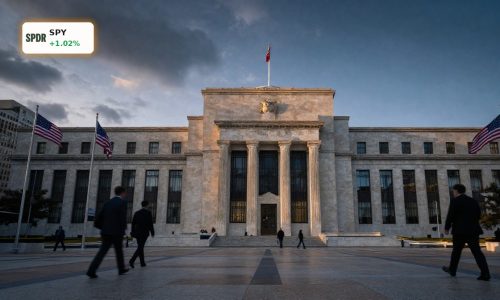
Kevin Warsh’s inaugural FOMC meeting marked a decisive break from Jerome Powell’s easing bias — with the Fed’s statement omitting any easing language for the first time in over a year. His 10-word declaration — ‘Persistently high prices are a burden for the American people’ — confirmed a hawkish pivot. Nine of 18 FOMC members now project at least one rate hike by year-end, with six forecasting multiple hikes. Crucially, Warsh eliminated forward guidance and shortened the policy statement to ~130 words — increasing uncertainty and volatility risk. As RBC Capital Markets analysts noted, ‘Less information means more reaction, not less — especially for rate-sensitive tech multiples.’
Is the S&P 500 still a buy — or is the AI bubble bursting?
Despite the S&P 500 Tech Selloff, the index remains up 9% year-to-date — powered by record Q1 earnings growth of 29%, led by AI enablers: Alphabet, Amazon, Meta Platforms, Micron Technology, and NVIDIA. JPMorgan’s Paul Quinsee emphasizes that ‘if we exclude AI and energy, U.S. earnings growth falls to just 8% — underscoring AI’s outsized role.’ Yet valuation risk is real: the S&P 500 trades at a forward P/E of 22 — a level last seen during the dot-com bubble and pandemic peak. Still, Wall Street’s median year-end target stands at 7,850 (5% upside), with Yardeni Research projecting 10% gains. The key question isn’t whether AI will deliver — but whether near-term monetization justifies current multiples.
What’s next for SPY and the broader market?
Persistently high prices are a burden for the American people.— Kevin Warsh, Federal Reserve Chair
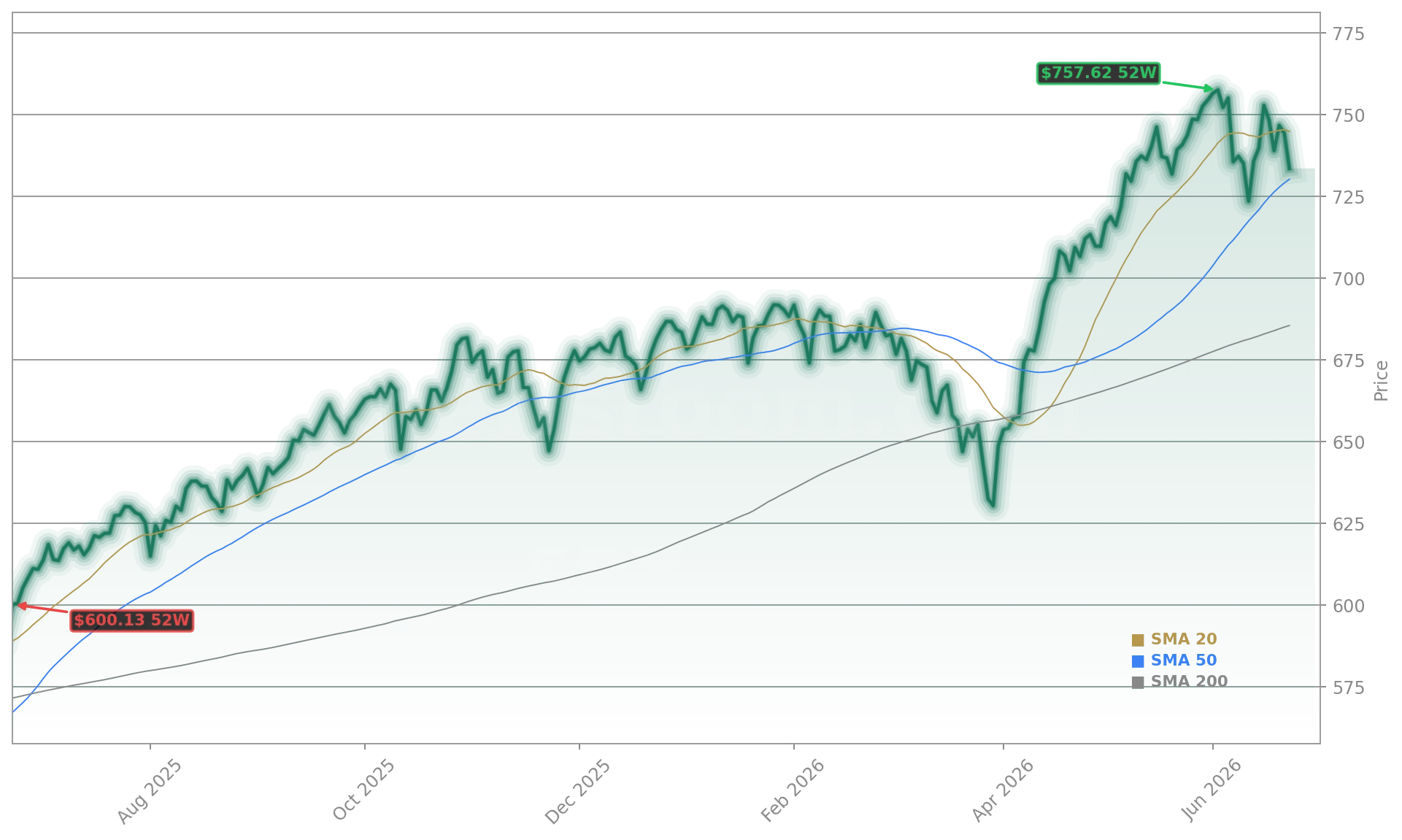
SPY is now testing its 50-day moving average — a critical technical support level. A washout below $730 could trigger further algorithmic selling, while a sustained hold above $735 opens the path to 7,473 — the current index level. Thursday’s PCE inflation data and Friday’s building permits report will test whether the Fed’s tightening narrative holds. Meanwhile, Alphabet’s imminent addition to the Dow Jones — replacing Verizon — underscores tech’s structural dominance: five of the six largest U.S. companies by market cap (including NVIDIA, Apple, Microsoft, Amazon, and Alphabet) now sit in the Dow. For investors, the takeaway is clear: the S&P 500 Tech Selloff is a valuation reset — not a trend reversal — as long as AI revenue growth remains intact.