
Is Super Micro Computer’s massive capital raise a smart AI expansion bet—or an early warning that growth is getting too expensive?

What Does the Super Micro Computer Stock Offering Mean for Dilution?
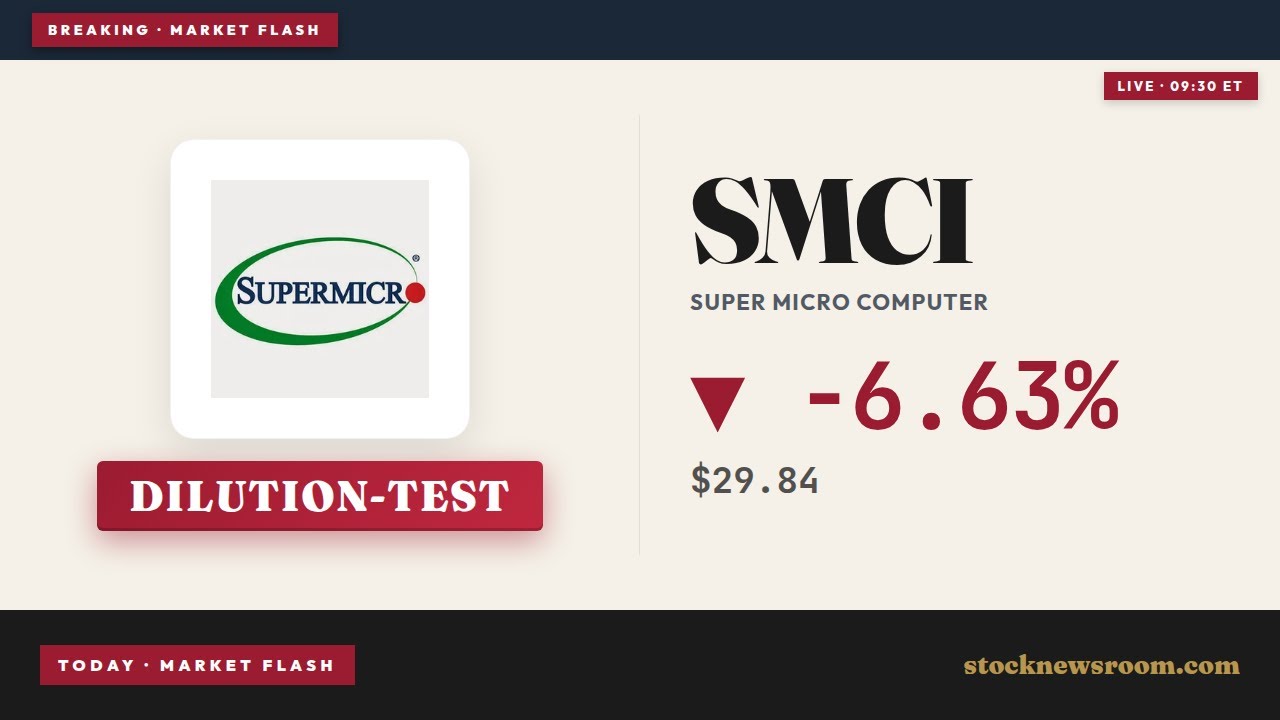
Super Micro Computer, Inc. is offering 45.5 million newly issued common shares at $27.50 each and 75 million American Depositary Shares (ADS) at $50 apiece—raising $7 billion in the first tranche of a $29 billion capital plan. That figure represents nearly 37% of SMCI’s current $19 billion market cap, making it one of the most dilutive raises in the NASDAQ technology sector this year. The company cited ‘strategic growth investments in AI infrastructure, global manufacturing capacity, and R&D acceleration’ as primary drivers. While the capital will fund capacity expansion—including new facilities in Vietnam and Mexico—it also signals that organic cash flow remains insufficient to sustain its breakneck growth trajectory. Citigroup analysts noted the offering ‘underscores execution risk in scaling amid tightening supply chain margins,’ lowering their price target to $34 from $42.
Why Did SMCI Rally After the Announcement?
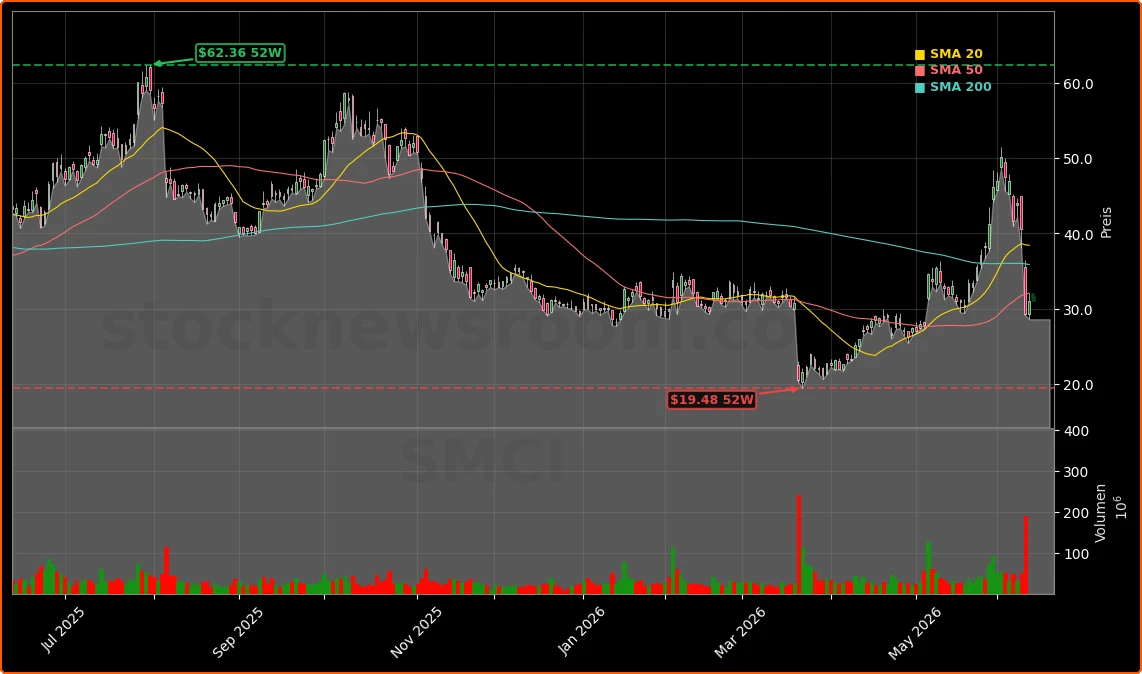
Despite the dilution, SMCI surged 9% intraday following the announcement, then pulled back—only to rebound in after-hours trading to $31.92. That reversal reflects a classic ‘sell the news, buy the dip’ dynamic, amplified by extreme options positioning: the put-call ratio hit 40—a historically bullish extreme—while call volume spiked 76% above its five-day average. Traders focused on the $29.25 level as a magnet for institutional accumulation, with Benzinga identifying it as a ‘regret-driven support zone’ where prior sellers consistently re-entered. That technical resilience—combined with confirmation that major AI customers are still placing multi-billion-dollar orders—gave bulls confidence the pullback was overdone. RBC Capital Markets upgraded SMCI to ‘Outperform,’ citing ‘underappreciated order visibility beyond calendar 2026.’
How Does This Compare to Peers in AI Infrastructure?
Super Micro Computer, Inc. stands apart from peers like Dell Technologies and Hewlett Packard Enterprise—not only in AI server growth (142% YoY in Q1 2026, per internal data) but also in capital structure aggressiveness. While NVIDIA funds R&D via massive operating cash flow and Tesla leverages vehicle financing, SMCI relies heavily on equity. That divergence matters: the $7 billion Super Micro Computer Stock Offering is nearly double Marvell’s entire market cap—and comes just one day after Marvell’s inclusion in the S&P 500 triggered a 2.3% selloff amid institutional rebalancing. Morgan Stanley analysts warn that ‘SMCI’s funding model increases sensitivity to NASDAQ sentiment swings, especially as the S&P 500 tech weight nears 35%.’
Is This a Sign of Strength—or Distress?
Investors are split. On one side: the $33 billion in annualized sales (up 94% YoY) and confirmed design wins with three top-5 hyperscalers suggest real momentum. On the other: $29 billion in planned capital raises over 12 months implies structural cash burn far exceeding current revenue scale. SMCI’s Q1 2026 gross margin dipped to 12.8%—down from 14.1% in Q4—amid rising component costs and expedited logistics. That margin pressure, coupled with the Super Micro Computer Stock Offering, has drawn scrutiny from short sellers who see ‘unsustainable leverage masked by AI hype.’ Yet the $31.92 after-hours price—just above the critical $29.25 support—suggests institutional buyers are stepping in, betting on long-term AI server unit growth outpacing dilution impact.
What’s Next for Super Micro Computer, Inc.?
SMCI’s next catalyst arrives June 24, when it reports Q2 2026 results—expected to show record AI server shipments and revised full-year guidance. Meanwhile, the $7 billion Super Micro Computer Stock Offering closes June 17, with proceeds earmarked for new AI-optimized server lines and chip packaging partnerships. Analysts at Goldman Sachs see ‘clear path to $40 by year-end if Q2 beats and hyperscaler capex stays intact,’ while Deutsche Bank maintains a ‘Hold’ rating, citing ‘valuation risk until dilution is fully absorbed.’ The stock’s next technical test lies at $33.50—the 50-day moving average—and a break above could trigger short-covering rallies.
This isn’t a distress signal—it’s a growth accelerator. We’re building for AI demand that will double again by 2027.— Charles Liang, CEO of Super Micro Computer, Inc.
Related Coverage: Super Micro Capital Raise: $7B Plan Shocks SMCI Investors explores how this capital event reshapes long-term shareholder value. Marvell S&P 500 Inclusion -2.3% as AI Momentum Builds provides context on how index inclusions and AI infrastructure demand are reshaping sector leadership. Both analyses underscore that SMCI’s capital strategy reflects not weakness—but the sheer scale of opportunity in AI infrastructure.