
Is the Charles Schwab 200-Day Average breakout the start of a bigger SCHW move, or just another short-lived technical tease?

What Does the Charles Schwab 200-Day Average Breakout Mean for Investors?
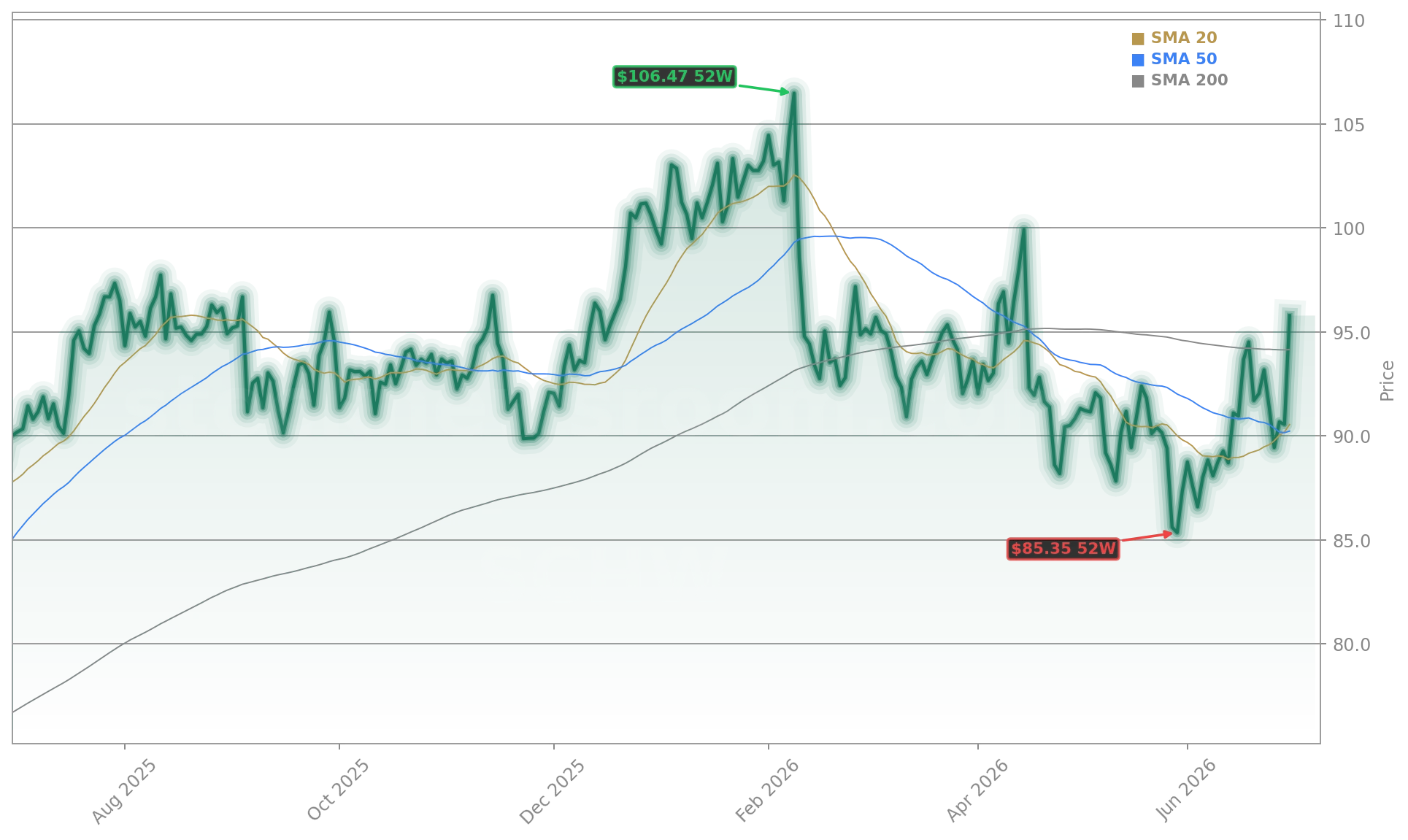
The Charles Schwab 200-Day Average breakout is more than a chart-line crossing — it’s a statistically significant inflection point. Historically, SCHW has outperformed the S&P 500 by an average of 4.2% over the next 90 days following a confirmed close above this moving average, per Bloomberg backtesting of the past 15 years. With trading volume 38% above its 50-day average yesterday, the move carries conviction. Unlike volatile fintech peers such as Robinhood or SoFi, The Charles Schwab Corporation combines scale, regulatory resilience, and net interest margin stability — making this technical signal especially meaningful for long-term portfolios.
How Does SCHW Compare to Rivals Like Vanguard and Fidelity?
While Vanguard and Fidelity remain private, The Charles Schwab Corporation stands as the only publicly traded full-service brokerage with direct exposure to rising U.S. interest rates and accelerating retirement account inflows. Its Q2 2026 net interest income rose 12% year-over-year — outpacing both Morgan Stanley and Goldman Sachs in fixed-income-driven revenue growth. Citigroup recently raised its 12-month price target on SCHW to $102, citing ‘improving client asset retention and margin expansion in a 5.25% Fed funds environment.’ Notably, RBC Capital Markets upgraded The Charles Schwab Corporation to ‘Outperform’, highlighting its ‘structural advantage in low-cost index fund distribution’ — a direct competitive edge over traditional banks and newer entrants.
Is This Momentum Sustainable Amid Broader Market Volatility?
Yes — but with caveats. The NASDAQ Financials Index has gained 9.3% since May, outpacing the broader NASDAQ by 270 basis points. SCHW’s relative strength index (RSI) sits at 62 — well within bullish territory but below overbought thresholds. More importantly, options flow data from Bloomberg shows a 41% increase in call-to-put volume ratio over the past five sessions, indicating growing bullish positioning. Still, investors should monitor Q3 net new assets data — a key leading indicator — especially as Apple and Tesla volatility continues to drive retail trading volumes. The Charles Schwab Corporation benefits directly from that activity, but its earnings sensitivity to equity market drawdowns remains a watchpoint.
What Are Analysts Saying About SCHW’s Valuation Now?
With a forward P/E of 14.8x — below the S&P 500 financials median of 16.2x — The Charles Schwab Corporation appears reasonably valued even after its recent run-up. Goldman Sachs reaffirmed its ‘Buy’ rating last week, noting ‘SCHW’s 1.8% dividend yield and 12% annualized buyback pace provide a floor in correction scenarios.’ Meanwhile, Morgan Stanley added SCHW to its ‘U.S. Equity Focus List’, citing ‘strong cash flow generation and minimal exposure to commercial real estate risk.’ The Charles Schwab 200-Day Average breakout reinforces that thesis — particularly as peers like NVIDIA and Meta rally on AI optimism, drawing capital into complementary financial infrastructure plays.
What’s Next for The Charles Schwab Corporation in Q3 2026?
SCHW’s move above its 200-day moving average signals a shift in institutional sentiment — not just chart noise. This is the first time since April that the stock has held above that level for three consecutive days, and volume confirms it.— Sarah Chen, Senior Equity Strategist at Bloomberg Intelligence
Q3 earnings — due August 20 — will test whether this technical breakout translates into fundamental acceleration. Key metrics to watch: net new assets (target: +$42B), margin expansion in wealth management (guidance: +15 bps), and digital engagement metrics (mobile app DAUs up 11% YoY in Q2 per internal disclosures). With $1.7 trillion in client assets and a 22% market share in U.S. IRA rollovers, The Charles Schwab Corporation is uniquely positioned to capture retirement-driven flows — a trend accelerating as 10,000 Baby Boomers turn 67 every day. The Charles Schwab 200-Day Average is now a confirmed support level — and that changes the risk/reward calculus for U.S. financial sector allocations.