
Can AMD’s AI push in servers and Taiwan turn today’s rally into a longer-term challenge to Intel and Nvidia?

Why is AMD AI Strategy driving shares?
AMD’s latest move appears tied to a broader re-rating of its AI exposure. While NVIDIA remains the clear leader in AI accelerators, AMD is increasingly being viewed as a second-order winner from enterprise and cloud AI spending. Management’s recent emphasis on CPUs has sharpened that view, especially as agentic AI workloads require more high-performance general-purpose compute alongside accelerators.
That matters because AMD’s EPYC franchise continues to gain ground. In Q1 2026, the company posted its fourth straight quarter of record server CPU revenue, while server CPU market share reached 33.2%, up 5 percentage points year over year. Revenue rose 38% to $10.3 billion, data center revenue climbed 57% to $5.8 billion, and adjusted EPS increased 43% to $1.37. For US investors, that mix shift is critical: it shows the AMD AI Strategy is not just about chasing Nvidia in GPUs, but also about capturing the foundational compute layer beneath AI deployments.
Can AMD outgrow Intel in servers?
AMD still trails Intel in server CPUs, but the direction of travel remains favorable. EPYC demand has been supported by strong cloud adoption and by Intel’s manufacturing disruptions, which have constrained supply at key times. AMD’s fabless model, centered on Taiwan Semiconductor Manufacturing, has helped it avoid some of those bottlenecks and scale more flexibly.
Wall Street is also reacting to a larger addressable market. AMD now expects the server CPU market to grow at a compound annual rate of more than 35% through 2030, surpassing $120 billion. That forecast is more aggressive than the company’s prior analyst-day assumptions and suggests management sees AI-driven infrastructure demand broadening faster than expected. In that context, AMD’s CPU comments also ripple across the ecosystem, including rivals tied to Arm-based designs and infrastructure suppliers serving next-generation data centers.
How important is Taiwan for AMD?
Taiwan is becoming central to the next phase of the AMD AI Strategy. AMD said it will invest more than $10 billion in Taiwan’s semiconductor and AI ecosystem to expand packaging and manufacturing partnerships for advanced AI systems. Bloomberg highlighted cooperation with ASE Technology, Powertech, Sanmina, and Inventec, while CNBC said the push will support deployment of AMD’s Helios AI server system later in 2026.
That comes alongside a new partnership with Amkor on advanced chip packaging in Arizona, adding a US manufacturing angle that could appeal to investors focused on supply chain resilience. The bigger takeaway is strategic: packaging capacity is now a competitive weapon in AI. AMD is trying to secure enough advanced capacity to serve hyperscalers while narrowing execution risk versus NVIDIA and keeping pace with ecosystem shifts involving Apple and Tesla in AI hardware and edge computing.
What are analysts watching now?
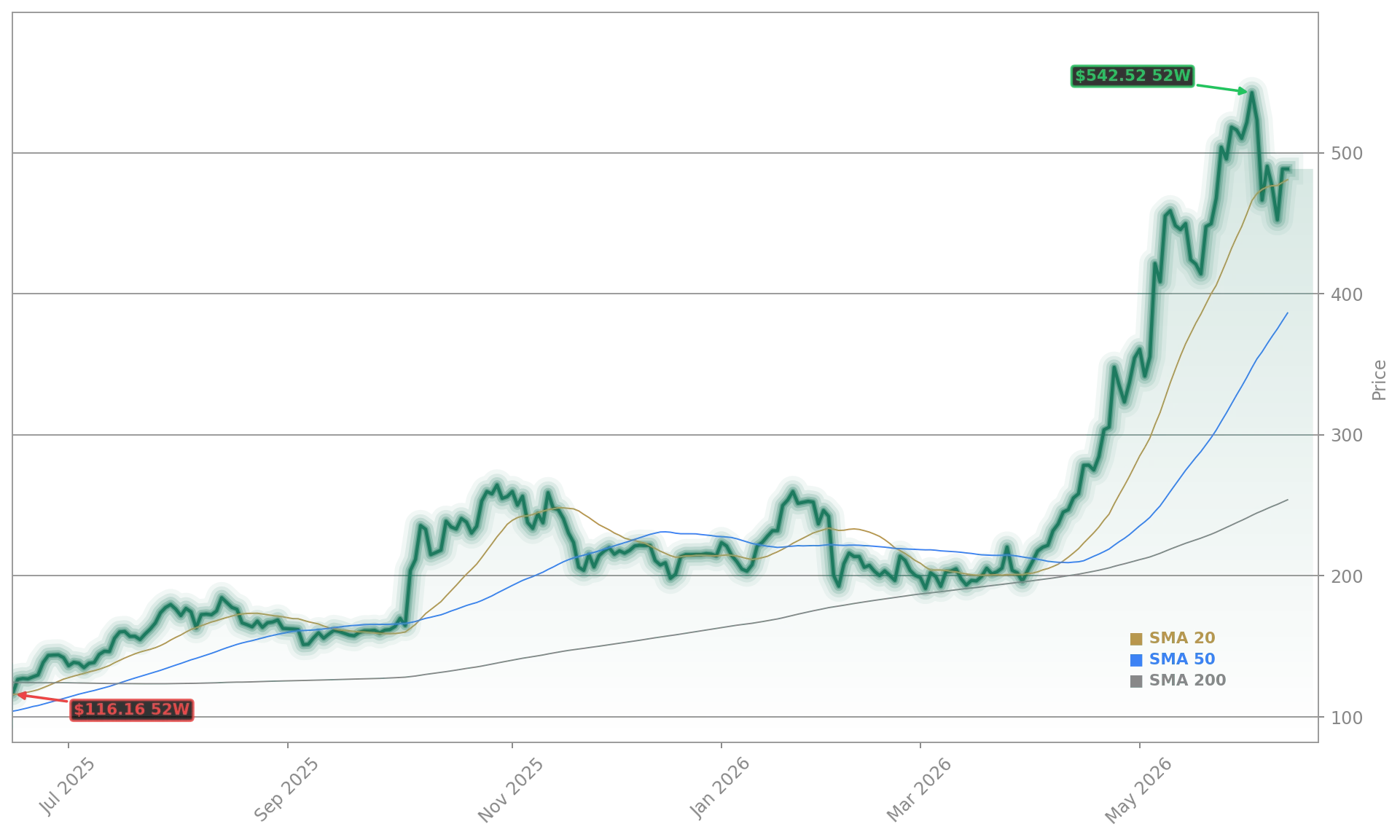
Analyst enthusiasm has become part of the story. Robert W. Baird’s Tristan Gerra recently set a $625 price target on AMD, one of the most bullish calls on the Street. Consensus targets have been lower, but Friday’s move above that broader average shows investors are willing to pay for upside optionality if AI infrastructure spending keeps compounding. MarketBeat also noted a “Moderate Buy” consensus and highlighted fresh congressional stock buying disclosures tied to AMD.
Related Coverage: Earlier this week, stocknewsroom.com examined how inference demand is strengthening the company’s positioning in AMD AI Strategy +7.5% as Inference Momentum Builds. That piece complements today’s move by showing why investors increasingly see AMD as more than a GPU challenger and why CPU traction could become an equally important valuation driver.
We delivered our fourth consecutive quarter of record server CPU revenue.— AMD management
The setup is increasingly clear: the AMD AI Strategy is evolving into a broader infrastructure story built on CPUs, packaging, and selective accelerator gains. If management keeps converting AI demand into server share and capacity expansion, Wall Street may continue to lift expectations. The next catalyst will be proof that this momentum can extend through the second half of 2026.