
Is AMD’s latest surge the start of a new AI-driven breakout, or are investors already pricing in too much perfection?

Is AMD Record momentum justified?
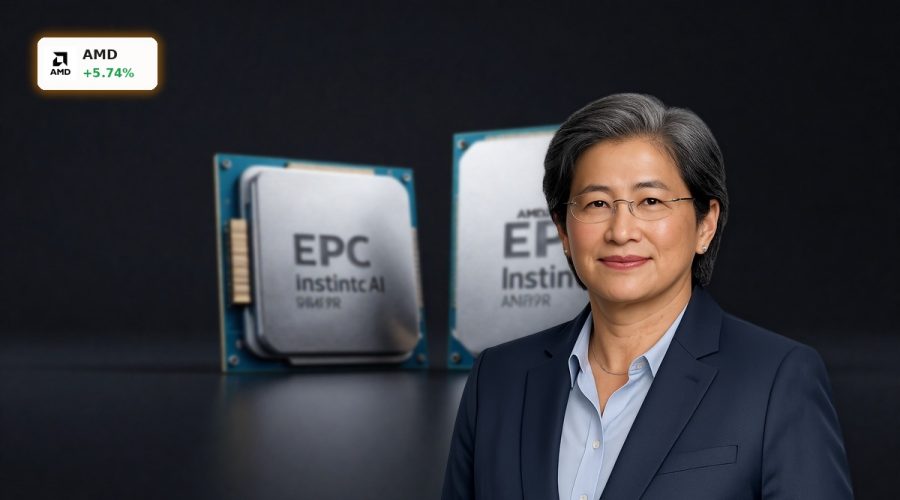
The latest jump comes as AMD continues to outperform much of the chip complex on a one-year basis. Investors are rewarding a business that now has broad AI exposure across EPYC server CPUs, Instinct accelerators, and a growing narrative around inference and AI agents. In Q1 2026, AMD posted revenue of $10.25 billion, up 38% year over year, while data center revenue rose 57% to roughly $5.8 billion. Chief Executive Lisa Su called the quarter outstanding, with AI infrastructure now driving both revenue and earnings growth.
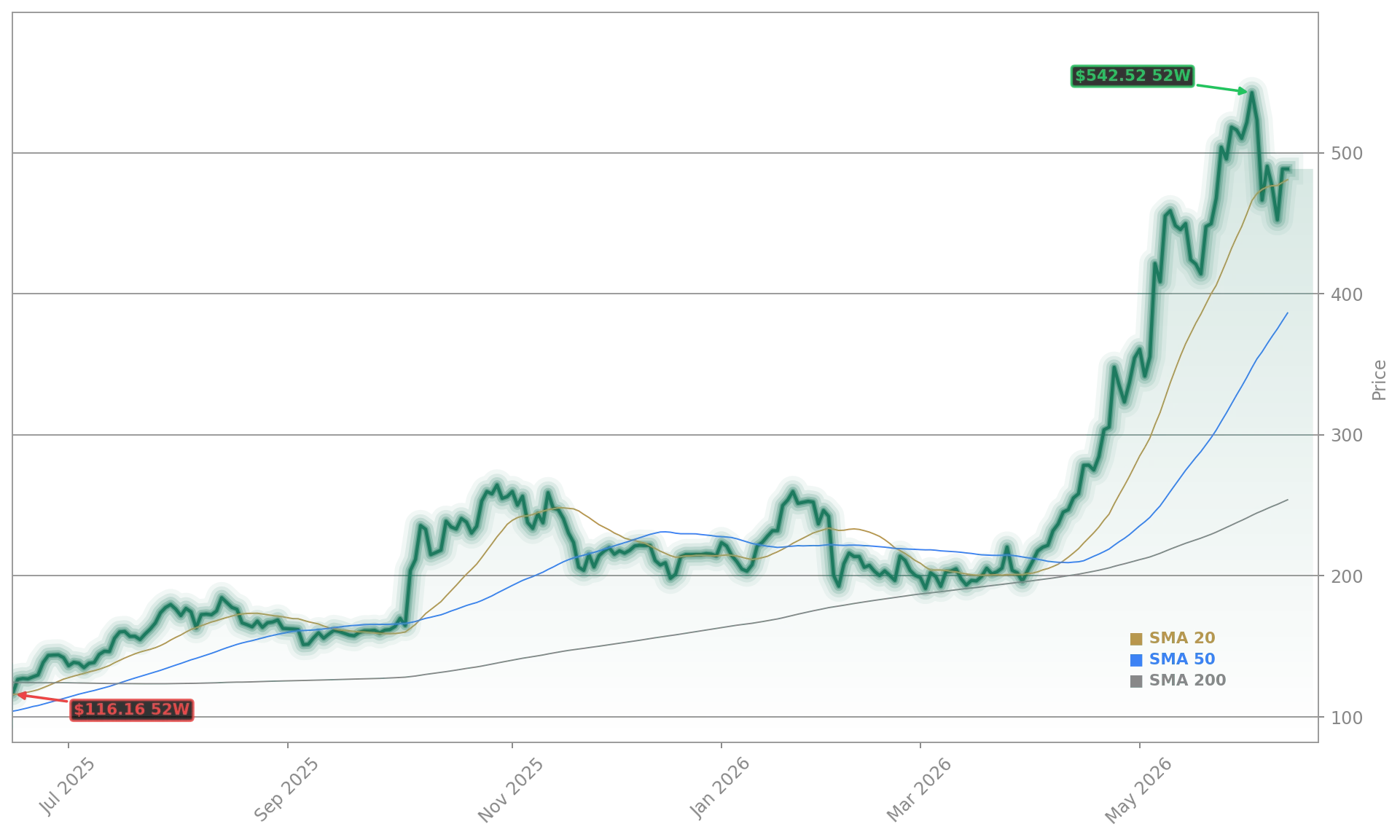
That backdrop helps explain why AMD Record talk keeps resurfacing. Still, investors should be careful with the language: while AMD hit $494.32 intraday Tuesday, market data provided here does not include a verified 52-week high, so the move is best described as a sharp extension of an already powerful rally rather than a confirmed fresh all-time high. Even so, the stock is clearly benefiting from renewed enthusiasm around AI infrastructure names, alongside NVIDIA, Micron Technology, and Intel.
Can AMD hold off NVIDIA and Intel?
That question is central for Wall Street. AMD has become the clear second AI compute story for many portfolios, giving hyperscalers a negotiating counterweight to NVIDIA’s dominance. At the same time, the competitive picture is getting tougher. Nvidia is pushing into CPUs with its Vera platform and sees a potential $200 billion market opening as agentic AI expands. That creates pressure on both AMD and Intel, but it also validates the size of the opportunity.
AMD still trails Intel in CPU market share, yet it has been gaining ground. In the first quarter, AMD held 33.2% of the desktop CPU market, up 5% year over year, while its revenue share reached 37.6%, a sign of pricing strength. That matters as enterprise customers increasingly look for efficient inference hardware and systems capable of running AI agents at scale. Nvidia’s CEO Jensen Huang recently said, “Agentic AI has arrived,” and that comment has reinforced the bull case for AMD’s EPYC lineup.
What are analysts and institutions signaling?
Institutional interest remains supportive even after the stock’s enormous run. MarketBeat highlighted increased ownership from firms including Allstate and Genus Capital Management, while also noting that Legal & General trimmed its position modestly in the fourth quarter. Broadly, Wall Street still carries a “Moderate Buy” consensus on AMD, with an average target around $410, although the current share price now trades above that level. That gap suggests analysts may need to revisit estimates if execution stays strong.
The source materials available for this article did not provide fresh named ratings from firms such as Citigroup or RBC Capital Markets on Tuesday specifically, but existing published consensus remains constructive. Investors are also watching manufacturing progress with Taiwan Semiconductor Manufacturing Company, especially as AMD ramps advanced nodes tied to future AI products. On the consumer side, AMD’s Ryzen chips are still appearing in premium systems, including HP’s new HyperX OMEN 16 VALORANT edition that pairs AMD processors with Nvidia graphics.
Where does AMD go from here?
The near-term setup looks strong, but expectations are undeniably high. AMD is now priced as one of the biggest beneficiaries of the AI buildout, and the next leg higher likely depends on whether data center momentum broadens into sustained accelerator share gains and further CPU wins in inference-heavy workloads. If hyperscaler demand remains robust and agentic AI shifts from theme to spending cycle, the AMD Record narrative could stay alive.
Related Coverage: Readers looking for more context on the company’s recent momentum can also review this look at AMD’s AI strategy and server boom. That piece examines how server growth, Taiwan-linked manufacturing progress, and the broader challenge to Intel and Nvidia are shaping the longer-term investment case. It also helps frame whether this latest rally is sentiment-driven or supported by durable operating trends.
Agentic AI has arrived.— Jensen Huang
AMD Record strength reflects more than a hot trade: it shows Wall Street sees AMD as a serious multi-product AI contender. For investors, the key question is no longer whether AMD belongs in the AI conversation, but whether it can convert demand into lasting share gains. The next earnings report and customer updates should determine whether AMD can keep extending this remarkable run.